What is DTF printing and how does it work?
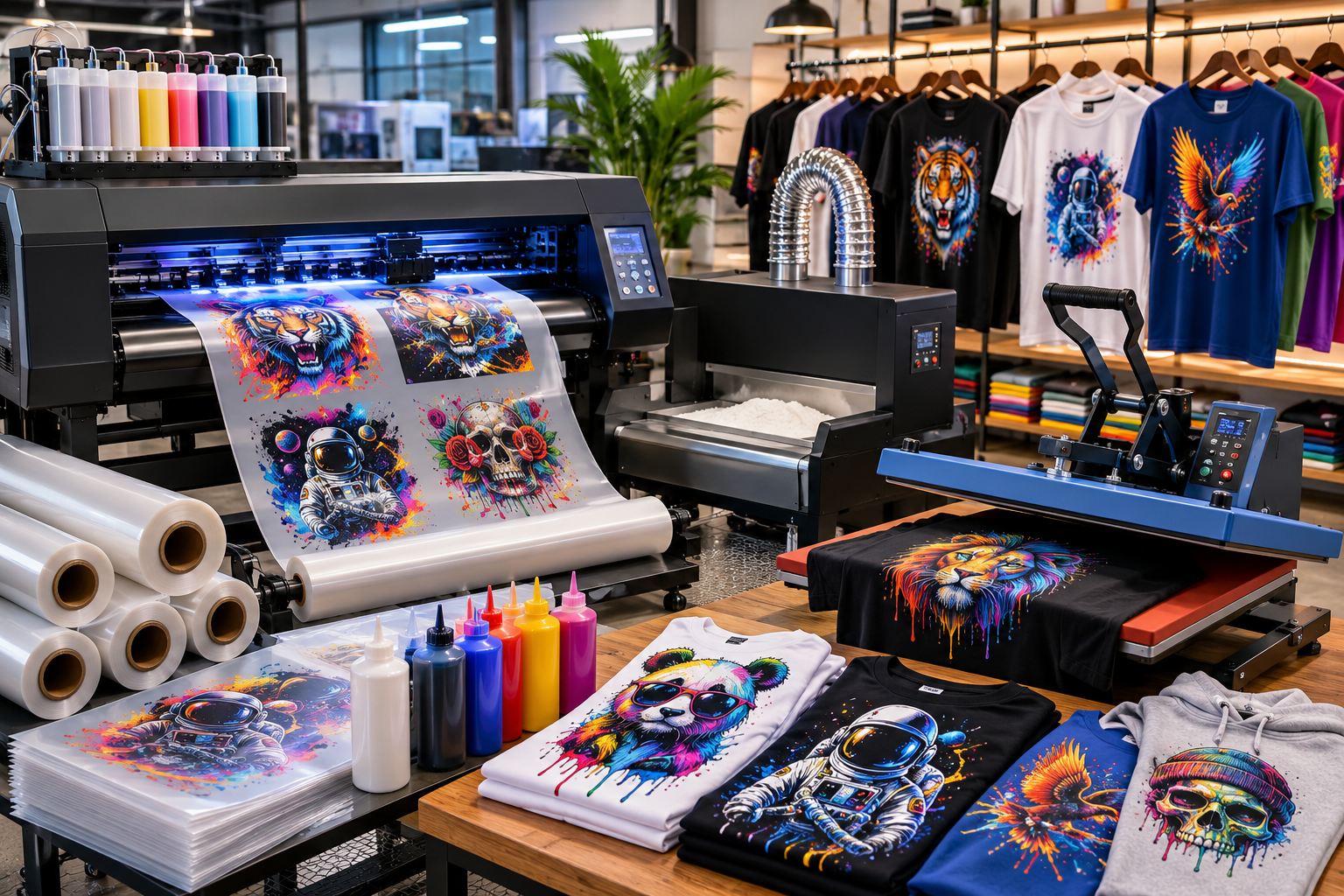
The custom apparel industry has experienced significant growth in recent years, creating demand for printing methods that offer flexibility, durability, and high-quality results. Businesses, entrepreneurs, and apparel decorators are constantly searching for efficient ways to produce custom garments without the limitations of traditional printing methods.
One technology that has gained considerable attention is Direct-to-Film (DTF) printing. Whether you’re starting a custom apparel business or exploring modern printing solutions, understanding how DTF printing works can help you make informed decisions about production and equipment investments.
What Is DTF Printing?
DTF printing, short for Direct-to-Film printing, is a digital printing process that transfers designs onto a special film before applying them to fabric using heat and pressure. Unlike some traditional methods that require specific fabric types or extensive setup procedures, DTF technology offers greater versatility and can be used on a wide range of materials.
Many businesses are investing in DTF Printers because they provide an efficient way to create vibrant, detailed, and durable designs suitable for custom apparel production.
The process allows businesses to produce everything from personalized t-shirts and hoodies to promotional apparel and branded merchandise with consistent quality.
How Does DTF Printing Work?
Understanding the workflow helps explain why this technology has become increasingly popular across the apparel decoration industry.
Step 1: Design Creation
The process begins with a digital design. Graphic artwork is created or imported into design software and prepared for printing.
High-resolution artwork generally produces the best results, ensuring sharp details and accurate color reproduction on the final garment.
Step 2: Printing on Transfer Film
The design is printed onto a specialized transfer film using dedicated printing equipment and specially formulated inks.
Unlike direct garment printing methods, the image is first printed onto the film rather than directly onto the fabric surface.
Step 3: Applying Adhesive Powder
After printing, a layer of adhesive powder is applied to the printed design while the ink remains wet.
This powder plays a critical role because it helps bond the printed image to the garment during the transfer process.
Step 4: Curing the Transfer
The adhesive powder is then cured using heat. This creates a transfer that is ready for application to fabric.
Once cured, the transfer can be stored or immediately applied depending on production requirements.
Step 5: Heat Press Application
The completed transfer is placed onto the garment and applied using a heat press.
Heat and pressure activate the adhesive, permanently bonding the design to the fabric surface.
The result is a vibrant, durable print that can withstand regular wear and washing.
Why Is DTF Printing Becoming So Popular?
Several factors have contributed to the growing adoption of this technology.
Fabric Versatility
One of the biggest advantages is compatibility with multiple fabric types, including:
- Cotton
- Polyester
- Blended fabrics
- Performance wear
- Various textile materials
This flexibility makes it attractive for businesses serving diverse customer needs.
High-Quality Results
DTF technology is known for producing:
- Vibrant colors
- Sharp details
- Smooth gradients
- Strong wash durability
- Consistent print quality
These characteristics help businesses deliver professional-looking products to customers.
Reduced Production Complexity
Compared with some traditional decoration methods, DTF printing often requires less setup time and can efficiently handle short-run and custom orders.
This makes it particularly valuable for print-on-demand businesses and growing apparel brands.
Who Can Benefit from DTF Printing?
The technology is suitable for a wide range of users, including:
Startup Businesses
New entrepreneurs can enter the apparel market without investing in large-scale production systems.
Established Print Shops
Existing businesses can expand service offerings and improve production flexibility.
E-Commerce Brands
Online apparel sellers benefit from the ability to produce customized products efficiently.
Promotional Product Companies
Businesses serving corporate clients can create branded apparel and merchandise with greater ease.
What Equipment Is Required?
A complete production setup typically includes:
- Printing system
- Transfer film
- Specialized inks
- Adhesive powder
- Heat press
- RIP software
Many suppliers offer complete solutions that include equipment, consumables, training, and technical support to help businesses get started more efficiently.
Things to Consider Before Investing
Before purchasing equipment, businesses should evaluate:
- Production volume requirements
- Available workspace
- Maintenance needs
- Technical support options
- Training resources
- Long-term operating costs
Choosing the right solution depends on both current production goals and future growth plans.
Conclusion
DTF printing has become one of the most versatile and accessible technologies in the apparel decoration industry. Its ability to produce vibrant designs on various fabrics while supporting efficient production workflows has made it an attractive choice for businesses of all sizes.
As demand for custom apparel continues to grow, investing in a reliable DTF Printer can help businesses improve production flexibility, maintain quality standards, and create new opportunities for long-term success in the competitive custom printing market.





Post Comment