Virtualization Software Solutions The Invisible Backbone of Tomorrow’s Digital Enterprise
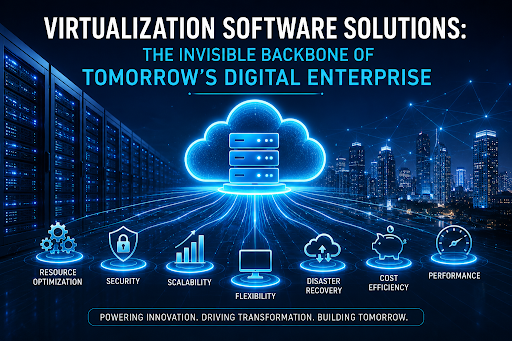
In today’s rapidly evolving digital landscape, businesses rely on technology to remain competitive, efficient, and innovative. From cloud computing and remote work environments to artificial intelligence and big data analytics, modern enterprises require flexible IT infrastructures capable of supporting continuous growth. Behind many of these technological advancements lies a powerful yet often overlooked innovation: Virtualization software Solutions.
While end-users rarely see virtualization at work, it serves as the foundation that enables organizations to maximize resources, reduce costs, and improve operational agility. As companies continue to embrace digital transformation, virtualization has become a strategic necessity rather than a technical luxury. Consequently, businesses across industries are investing heavily in virtualization technologies to create scalable and resilient IT ecosystems.
This article explores how Virtualization software Solutions have become the invisible backbone of tomorrow’s digital enterprise. Additionally, it examines their benefits, applications, challenges, and future potential in an increasingly connected world.
Section 1:
Turning One Machine into Many
At its core, virtualization is the process of creating virtual versions of physical computing resources. Instead of dedicating one server to a single application, virtualization allows multiple virtual machines to operate independently on the same physical hardware.
Each virtual machine functions like a separate computer with its own operating system, applications, storage, and network configurations. As a result, businesses can utilize hardware more efficiently while reducing infrastructure costs.
The Software Layer That Changes Everything
The technology that enables virtualization is known as a hypervisor. This software layer sits between physical hardware and virtual machines, managing resources such as CPU power, memory, storage, and networking.
Without Virtualization software Solutions, organizations would need significantly more hardware to support the same workloads. Therefore, virtualization not only improves efficiency but also simplifies infrastructure management and scalability.
Section 2:
Escaping the Limits of Traditional Infrastructure
Traditional IT environments often suffer from underutilized servers. In many cases, organizations use only a fraction of a server’s total capacity while still paying for maintenance, power, cooling, and management.
By implementing Virtualization software Solutions, businesses can consolidate multiple workloads onto fewer servers. Consequently, they achieve higher utilization rates and lower operational expenses.
Building Agile and Responsive Organizations
Modern businesses must adapt quickly to changing market demands. Virtualization enables IT teams to deploy new servers, applications, and environments within minutes rather than days or weeks.
This agility allows organizations to respond faster to customer needs, launch new services efficiently, and maintain a competitive advantage in fast-moving industries.
Section 3:
Reducing Capital Expenditures
One of the most attractive benefits of virtualization is cost reduction. Since multiple virtual machines can run on a single server, businesses require fewer physical devices.
As a result, organizations spend less on hardware purchases, server rooms, rack space, networking equipment, and maintenance contracts. These savings can then be redirected toward innovation and growth initiatives.
Lowering Operational Costs
Beyond hardware savings, virtualization reduces ongoing operational expenses. Fewer physical servers consume less electricity and generate less heat, which decreases cooling requirements.
Furthermore, IT administrators can manage virtual environments from centralized dashboards. This streamlined management approach reduces labor costs and improves overall efficiency.
Section 4:
The Perfect Partnership
Cloud computing and virtualization are closely connected. In fact, virtualization serves as one of the foundational technologies behind modern cloud services.
Cloud providers use Virtualization software Solutions to divide massive physical infrastructures into flexible virtual environments that customers can access on demand. This model allows businesses to scale resources without investing in additional hardware.
Enabling On-Demand Innovation
Because virtualization abstracts hardware resources, organizations can provision servers, storage, and networking services almost instantly. Consequently, businesses can experiment with new technologies, launch applications faster, and accelerate digital transformation initiatives.
The ability to scale resources dynamically also helps companies handle fluctuating workloads while maintaining optimal performance.
Section 5:
Preparing for the Unexpected
Unexpected outages, cyberattacks, and hardware failures can disrupt business operations and result in significant financial losses. Fortunately, virtualization provides powerful disaster recovery capabilities.
Virtual machines can be replicated, backed up, and restored much more easily than physical servers. Therefore, organizations can recover critical systems quickly when disruptions occur.
Minimizing Downtime
With Virtualization software Solutions, businesses can migrate virtual machines between servers without interrupting operations. This capability supports maintenance activities while minimizing service disruptions.
Additionally, automated failover systems ensure that applications remain available even when hardware failures occur. As a result, organizations achieve higher levels of reliability and resilience.
Section 6: Security in a Virtualized World
Creating Isolated Environments
Security remains a top concern for modern enterprises. Virtualization enhances security by isolating workloads within separate virtual machines.
If one virtual machine becomes compromised, the threat is often contained within that environment. Consequently, organizations can reduce the risk of widespread system breaches.
Advanced Security Controls
Many modern Virtualization software Solutions include advanced security features such as encryption, micro-segmentation, automated compliance monitoring, and secure workload migration.
These capabilities help businesses strengthen their cybersecurity posture while meeting industry regulations and compliance requirements.
Section 7:
Supporting a Distributed Workforce
The global shift toward remote and hybrid work models has transformed business operations. Employees now require secure access to applications and data from multiple locations and devices.
Virtualization enables organizations to provide virtual desktops and remote applications without compromising security. As a result, employees can work productively from virtually anywhere.
Delivering Consistent User Experiences
Virtual desktop infrastructure ensures that users access standardized environments regardless of their physical device. This consistency simplifies IT management and improves user satisfaction.
Furthermore, centralized updates and maintenance reduce administrative overhead while enhancing security across the organization.
Section 8:
Transforming Healthcare, Finance, and Education
Healthcare organizations use virtualization to support electronic medical records, telemedicine platforms, and secure patient data management. Meanwhile, financial institutions leverage virtualization to improve transaction processing and regulatory compliance.
Educational institutions also benefit by providing students and faculty with flexible access to learning resources, virtual labs, and collaborative tools.
Powering Manufacturing and Retail Innovation
Manufacturers use virtualization to optimize production systems, support automation, and improve operational visibility. Similarly, retailers rely on virtualized infrastructures to manage inventory systems, e-commerce platforms, and customer analytics.
These diverse use cases demonstrate the versatility and value of Virtualization software Solutions across multiple sectors.
Section 9:
Moving Beyond Traditional Virtual Machines
As technology evolves, virtualization continues to advance. Containers, microservices, and software-defined infrastructures are expanding the capabilities of traditional virtualization platforms.
These innovations provide greater flexibility, faster deployment times, and improved resource utilization for modern applications.
Supporting Emerging Technologies
Artificial intelligence, machine learning, edge computing, and Internet of Things deployments all benefit from virtualization. By providing scalable and efficient infrastructure, virtualization enables organizations to support increasingly complex workloads.
Consequently, virtualization will remain a critical component of digital transformation strategies for years to come.
Section 10:
Managing Complexity
Although virtualization offers significant benefits, organizations must manage increasing infrastructure complexity. As virtual environments grow, monitoring and resource allocation become more challenging.
Therefore, businesses should invest in management tools and skilled personnel to maintain performance and operational efficiency.
Avoiding Resource Sprawl
Virtual machines are easy to create, which can lead to uncontrolled growth. Over time, unused virtual machines may consume valuable resources and increase management burdens.
Implementing governance policies and regular audits helps organizations maintain a healthy and optimized virtual environment.
Section 11:
Aligning Technology with Business Goals
Successful virtualization initiatives begin with clear objectives. Organizations should evaluate current infrastructure, workload requirements, security needs, and future growth plans before selecting a solution.
A strategic approach ensures that virtualization investments deliver measurable business value and long-term scalability.
Partnering with Trusted Providers
Selecting reliable vendors and technology partners is equally important. Businesses should prioritize platforms that offer strong performance, security features, management capabilities, and ongoing support.
By choosing the right Virtualization software Solutions, organizations position themselves for sustainable success in an increasingly digital economy.
Conclusion:
Technology continues to reshape the way businesses operate, compete, and innovate. Behind many of these advancements stands a powerful yet often invisible force: Virtualization software Solutions.
From reducing costs and improving efficiency to enabling cloud computing, remote work, and disaster recovery, virtualization has become an essential pillar of modern IT infrastructure. Moreover, its role will only grow as organizations embrace artificial intelligence, edge computing, and other emerging technologies.
Businesses that invest in virtualization today are building a stronger, more agile, and future-ready foundation for tomorrow. As digital transformation accelerates, virtualization will remain the invisible backbone that supports innovation, resilience, and long-term growth.





Post Comment