What Homeowners Should Understand Before Their Solar Panels Go Live
Meta Description: A clear look at what happens between solar panel installation and full approval, and why the paperwork matters just as much.
Most homeowners picture solar as a straightforward swap: panels go on the roof, and the system starts producing power almost immediately. Reality looks quite different. Between the day crews finish mounting equipment and the day a system is actually cleared to run, there’s a whole layer of documentation, review, and utility coordination happening behind the scenes. Understanding this gap matters, because solar panels and installation represent only part of what determines whether a project finishes on schedule.
At PTOEdge, we know solar work is more than just installing panels. It also needs clear designs, correct documents, and utility approval before any system can legally begin generating power. Every city has different rules, and small mistakes can slow projects considerably, sometimes without homeowners even realizing why. That is why we handle every detail carefully, because when documentation is accurate from the start, projects move forward smoothly and safely, saving time and reducing stress for everyone involved.
Curious why your project timeline looks longer than expected? Reach out to our team here and get a clear answer about what’s actually happening behind the scenes.
Why Installation Day Isn’t the Finish Line
Watching panels go up feels like the big milestone, and understandably so. However, a system sitting on a roof isn’t legally allowed to generate power until it clears a formal review process involving both the local jurisdiction and the utility company. This distinction often surprises homeowners who assumed their system would be live the moment installation wrapped up.
Between construction and activation, teams handling pto services work through design verification, engineering sign-off, and utility submission before anything gets switched on. Consequently, the timeline homeowners experience depends heavily on how efficiently this documentation moves through the system. A well-managed pto solar process keeps this stage from dragging on longer than necessary.
The Design Work That Happens Before Anyone Touches a Roof
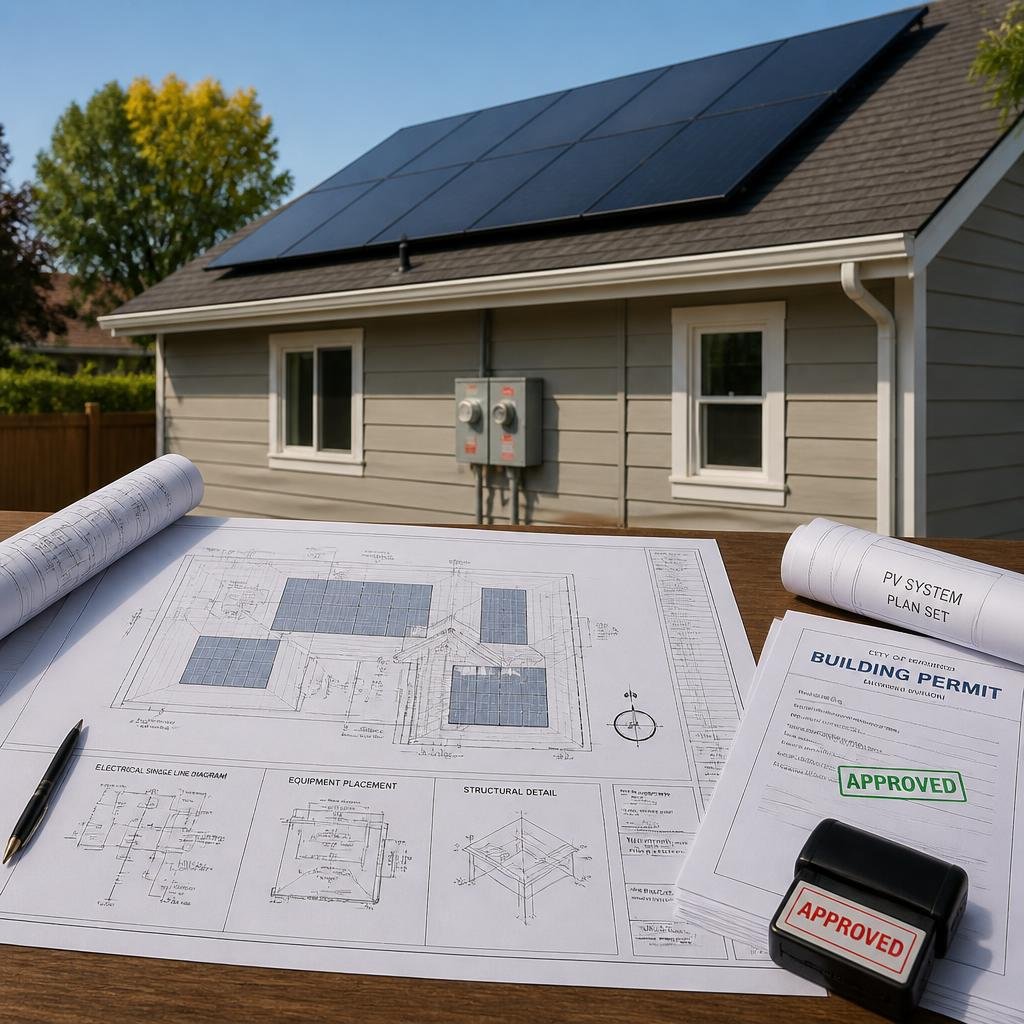
Long before installation crews arrive, every solar project starts with detailed technical planning. This is where pv plan sets come into the picture, documenting electrical schematics, structural mounting details, and equipment specifications for the proposed system. Without accurate solar plan sets, a jurisdiction won’t issue a permit, and construction can’t legally begin at all.
Moreover, pv design services need to reflect actual roof conditions, shading patterns, and structural capacity rather than generic assumptions. A rushed solar planset frequently contains errors that surface later, forcing corrections after installation has already started. A properly drafted Plan Set, by contrast, anticipates these issues early. This is why experienced teams rely on dedicated solar permit plans support rather than rushing this foundational step.
Why an Engineer’s Signature Matters More Than It Seems
Many jurisdictions require a licensed engineer to formally review a system’s design before permits get issued. This step, often called a solar stamping service, confirms that structural and electrical calculations genuinely meet applicable safety codes. A PE Stamp becomes especially important for unusual roof types, older homes, or systems carrying heavier structural loads.
Without this review, some jurisdictions reject applications entirely, regardless of how complete the rest of the paperwork appears. Therefore, pairing careful design work with proper PE Stamp review noticeably improves approval odds on the first submission. This also supports best solar permit design standards overall, since engineers routinely catch risks that a general designer might overlook during initial drafting.
HOA Rules: The Detail That Catches Homeowners Off Guard
For homeowners living in managed communities, hoa solar panel guidelines often introduce requirements that go well beyond standard building codes. Some associations restrict where panels can be visible from the street, while others require separate architectural approval before any installation can begin. Homeowners who skip this step sometimes face unexpected delays right when they’re closest to activation.
Because these rules vary so widely between communities, working with a Permitting team familiar with local HOA patterns genuinely helps. Additionally, resolving HOA concerns during the design phase, rather than after panels are already mounted, prevents costly rework and keeps homeowners from feeling blindsided partway through their project.
Net Metering: What Actually Shows Up on the Utility Bill
Once a system finally clears approval, homeowners usually want to understand one thing clearly: how their electricity bill changes going forward. This is where solar panels net metering becomes genuinely relevant. Net metering credits homeowners for excess electricity their system sends back to the grid, offsetting usage during periods of lower solar production, such as cloudy days or winter months.
However, solar net metering policies differ significantly by state, and sometimes even between individual utilities within the same state. Some utilities offer full retail-rate credit, while others apply reduced compensation structures that change the long-term math considerably. A properly executed Permission to Operate submission ensures the system actually qualifies for whatever program the local utility offers.
Why the Same Project Looks Different Depending on Location
Perhaps nothing surprises homeowners more than learning how much permitting varies between neighboring cities. Every jurisdiction and utility maintains its own submission process, review timeline, and inspection standards. What moves quickly in one town might face repeated delays just a few miles away. This becomes especially clear for homeowners working with teams offering solar permit services san diego, where coastal codes add extra layers of review.
Because of this inconsistency, experienced installers rely on specialized pv permit services rather than treating every jurisdiction the same way. A dedicated Permit Design & AHJ Compliance approach means someone actively tracks local code changes and inspector preferences. That knowledge, built from handling hundreds of projects, prevents the kind of guesswork that leads to avoidable delays for everyday homeowners.
Adding Battery Backup Changes the Timeline Too
More homeowners are pairing solar with battery storage for backup power during outages, and this introduces its own permitting considerations. Battery energy storage permitting involves fire safety, ventilation, and electrical clearance requirements that standalone solar panels never had to address. As a result, jurisdictions often apply stricter review standards to systems that include battery components.
In some areas, local fire departments require separate sign-off before a battery can even be energized, adding another step to an already layered process. Homeowners considering battery backup should factor this additional review time into their overall project expectations from the very beginning.
When the Project Isn’t Just a Rooftop System
Not every solar project is a simple residential rooftop installation. Larger properties, multi-unit buildings, and business owners often fall into commercial solar permit services territory, which involves considerably more complex review. Commercial systems typically carry larger electrical loads and require deeper structural engineering, along with approval from multiple stakeholders before construction can even start.
Utility interconnection studies for these larger systems often take significantly longer than standard residential reviews. Teams managing both residential and commercial work, sometimes described as solar epcs, generally need separate workflows to keep these different project types from slowing each other down.
How the Original Sales Conversation Shapes Everything Later
Interestingly, a smooth approval process often traces back to the very first sales conversation homeowners have with their installer. A well-constructed solar sales proposal sets accurate expectations around system size, projected production, and financing terms from the outset. When proposals rely on rough estimates rather than real site data, the design usually needs revision once actual conditions get measured.
A data-backed Sales Proposal reduces this friction by aligning what’s promised with what’s genuinely achievable on that specific roof. Moreover, accurate proposals support faster PTO application processing later, since the original scope closely matches the final permitted design that gets submitted for approval.
Understanding the Full Journey from Start to Switch-On
It helps homeowners to see the entire process as one connected journey rather than isolated steps. A complete pto installation covers everything from initial design through final utility clearance, not just the day panels get mounted on the roof. Skipping or rushing any stage along the way tends to create problems exactly when homeowners least expect them.
That moment usually arrives during the pto inspection, when an inspector compares the finished installation against the originally approved plan set. If anything doesn’t match, the project pauses until corrections happen and the site gets reviewed again. This is precisely why permission to operate solar timelines depend so heavily on accuracy at every earlier stage, not just the final inspection itself.
Why Coordinated Support Genuinely Benefits Homeowners
As demand for solar continues rising nationwide, installers managing growing project volumes need dependable pto solutions to keep timelines realistic for every homeowner in their pipeline. Solar Installer Growth often stalls when permitting teams can’t keep pace with rising demand, and homeowners feel that slowdown directly through delayed activation dates.
Many installers now consolidate design, engineering, and permitting through Solar App+, a single coordinated workflow that keeps documentation consistent from the very first proposal through final utility sign-off. Because every document flows through one connected process, error rates drop, and homeowners experience considerably fewer surprises along the way.
Wondering how long your own project should realistically take? Get in touch with our team here and get a straightforward answer based on your specific location and system.
Frequently Asked Questions
Why isn’t my solar system live right after installation finishes?
Systems need formal jurisdiction and utility approval before they’re legally permitted to generate power.
How long does the approval process typically take after installation?
Most systems clear final approval within two to eight weeks, depending on local jurisdiction requirements.
Do HOA rules really affect solar installation timelines?
Yes, some associations require separate approval before installation can begin, adding time to the overall process.
Does adding battery storage make approval take longer?
Yes, battery systems typically require additional fire safety documentation beyond standard solar-only permitting.
Why do identical systems get approved faster in some cities than others?
Each jurisdiction sets its own review process, so identical projects can face very different timelines.





Post Comment