Modern Serving Tray Ideas for Desserts and Sweets
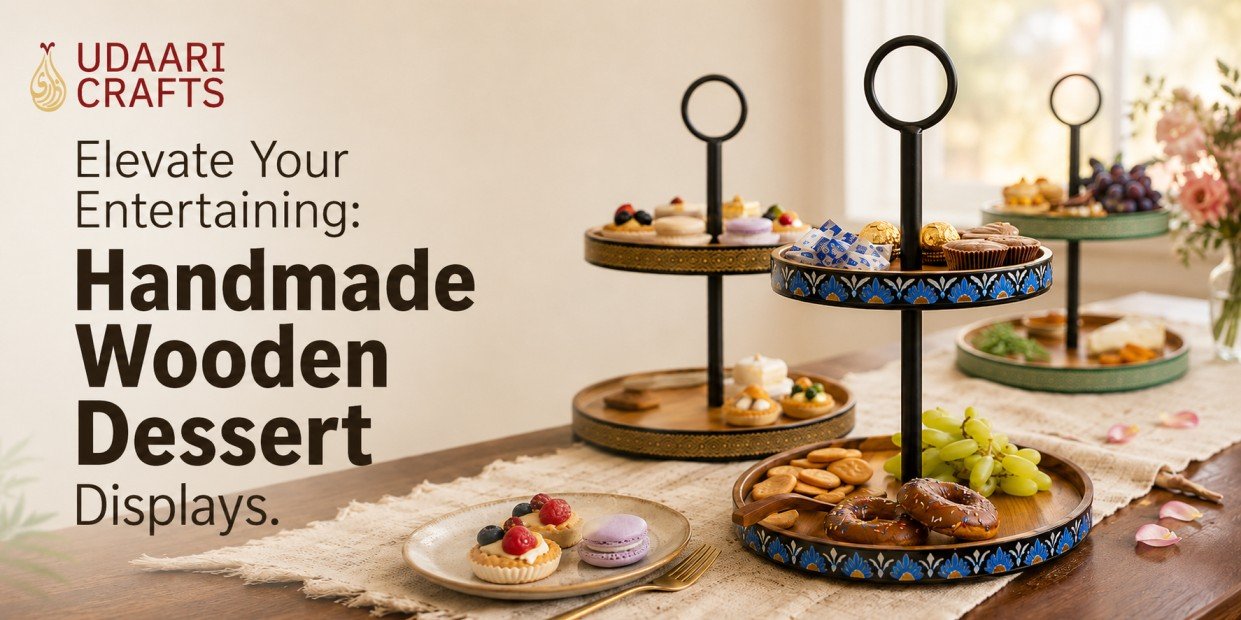
Set ten dishes on a flat surface, and you don’t have a styled table; you have a buffet. Everything competes at the same level, the eye has nowhere to rest, and the effort that went into the food gets lost in the visual noise. The fix is not more, it’s the structure. Height, material, negative space. And increasingly, the material doing the most work on well-styled Pakistani tables is wood.
Good wooden serving tray has become easier to source, with more makers selling home decor online in Pakistan focused specifically on tabletop pieces. What follows is a practical guide to using those pieces well.
Why Wood Works for making the When Other Materials Don’t
Steel and glass are efficient but atmospheric dead ends. A steel tray holds food without competing; a glass platter disappears under it. Neither does anything for the table itself; both reflect or vanish, and the setting ends up looking like a surface rather than a composition.
Wood absorbs light, which means the grain stays visible, so the eye has something to read across the surface, even between dishes. A well-made handmade wooden decor item also holds up to repeated use in a way that ages well, rather than degrading.
At three years, with regular oiling, a wooden piece looks more settled than it did at three months. That is not something most serveware can claim.
The Centerpiece: What the Table Orients Around
What sits at the center of a table, and how high that single decision shapes how everything else is read. Raise the main item by even a few inches, and the table acquires a focal point, a place the eye returns to after scanning the rest.
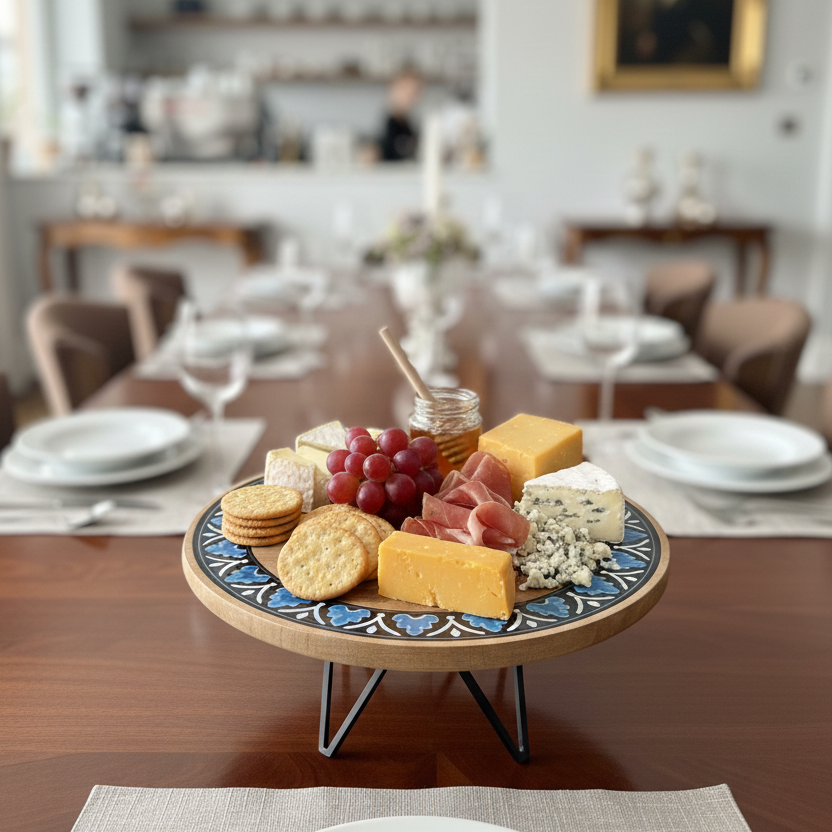
Wood cake stands are the most reliable way to create that elevation. The form is simple enough not to compete with what sits on it, and the material ties a spread together without demanding a matching set.
Round wooden cake stands work particularly well because the circular base frames round cakes and pastries without the host having to engineer the geometry; it handles itself. Guests clock the height before they reach the table. That pause is the point.
Visual Hierarchy: How Pro Stylists Read a Table
The most common mistake on a home dessert table is uniformity of height. Every platter sits at the same level, and the spread reads as full rather than composed. Stylists work in three levels: tall centerpiece, mid-height stands on either side, flat platters filling the space between. The eye travels up, out, and back.
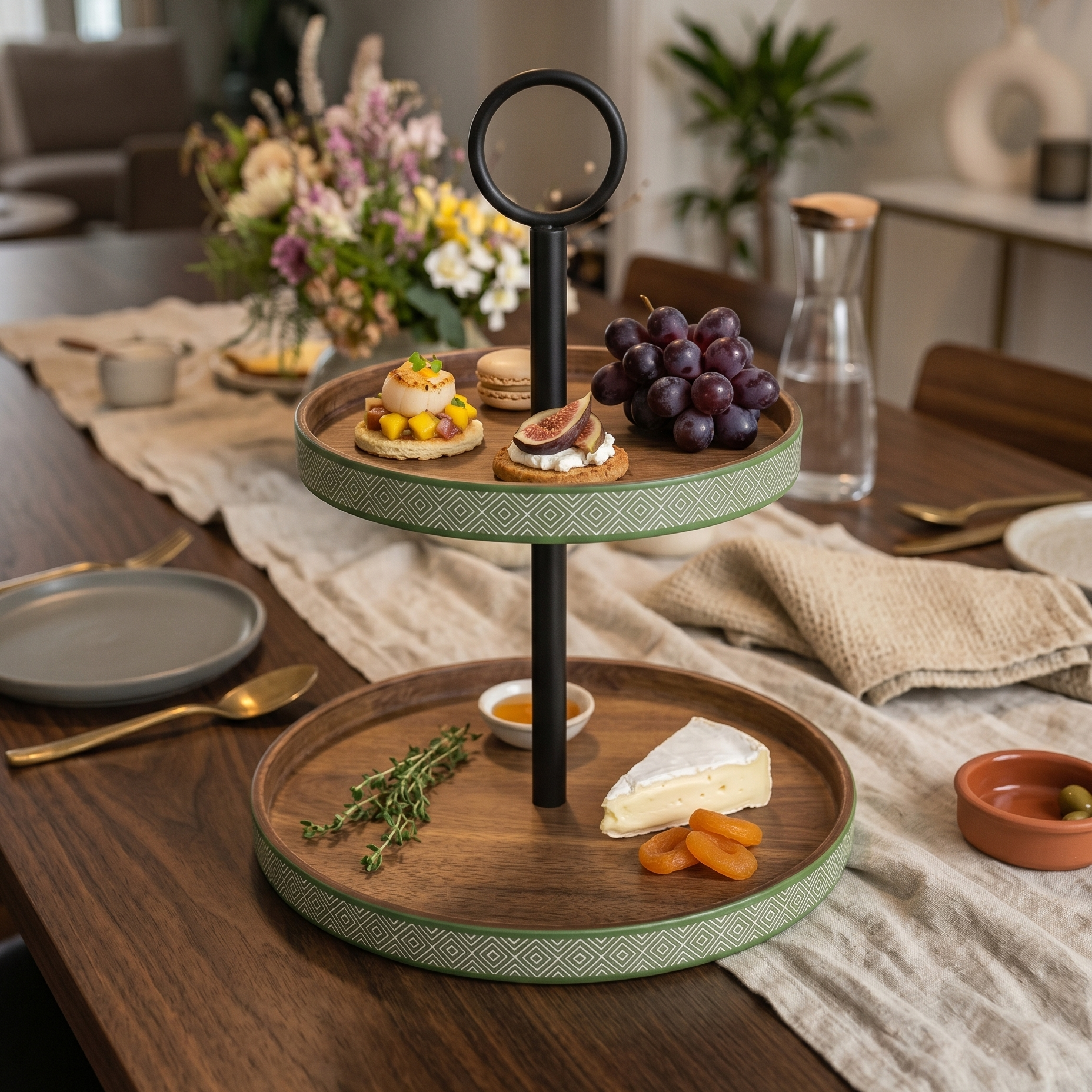
Wooden dessert stands handle the middle tier well; they add enough height to register without competing with the centerpiece, and the material keeps the palette consistent across pieces that don’t match exactly. Leave space between pieces, too.
A table with room to breathe reads as considered; one packed to the edges reads as rushed, regardless of what’s on it. Wooden dessert stands in Pakistan made for tabletop use tend to be proportioned with this spacing in mind.
The Outer Edge: Handling the Smaller Things
The small items, dry fruit, hard candies, and nuts are the ones that clutter a table fastest. In open bowls, they scatter visually, and the bowls themselves disappear. A closed vessel changes this: wooden candy jars with lids turn a small item into a considered one. The lid signals a decision was made about what goes inside, which reads differently than an open bowl of mixed things.
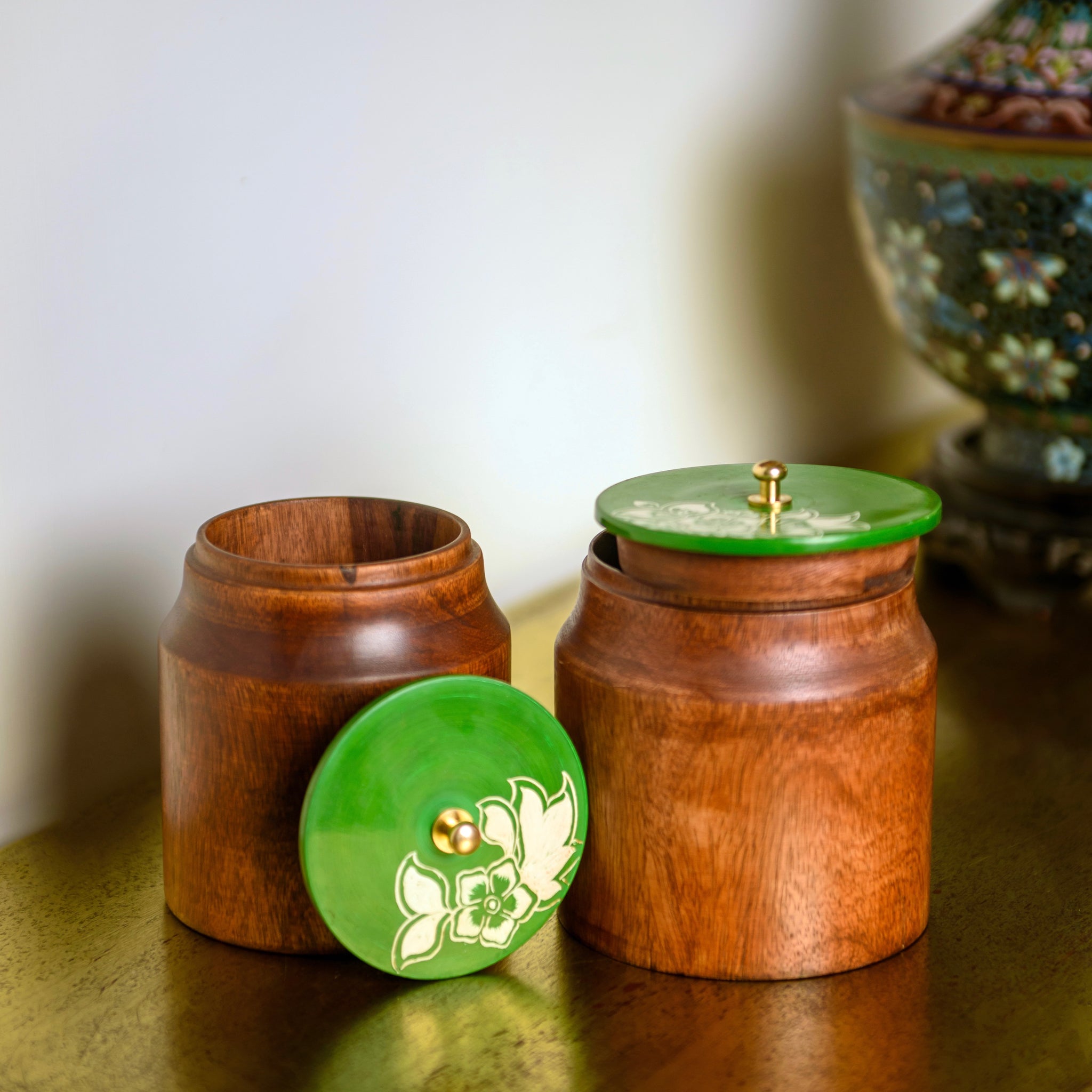
Place wooden candy jars at the outer corners of a spread. Two jars at opposite ends of a long table give it an endpoint; the spread has defined boundaries rather than trailing off. Between gatherings, a well-made jar with a fitted lid sits on a counter and reads as decor. It occupies the space usefully whether or not there is anything to host.
Where to Start
One piece changes more than it should. A single wooden cake stand where there was none before, the food is identical, but the table now has a focal point, and the spread has proportion. Start there, or with a raised tray, or a pair of jars for the edges. Each addition compounds the previous one.
When buying, look for makers where craft is the point: proportions that are considered, wood conditioned rather than just finished, pieces built for use rather than display. Udaari Crafts produces handcrafted wooden table top pieces with that standard in mind, serveware that holds up at a weekly dawat as well as a wedding table. For anyone building a collection meant to be used, it is worth a look.


Post Comment