How to Choose a Bathroom Remodeling Contractor in Columbia
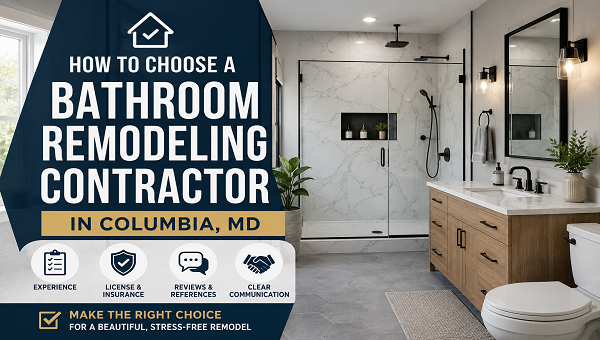
At VCT Kitchen And Bath, I understand that choosing the right contractor can feel harder than selecting tile, fixtures, or a new vanity. A bathroom remodel affects plumbing, electrical work, waterproofing, storage, and daily comfort. Therefore, I believe homeowners should compare contractors carefully instead of hiring the first company they find.
A good contractor should do more than make a bathroom look attractive. Instead, the contractor should protect the home, follow a clear plan, use suitable materials, and communicate throughout the project. For homeowners in Columbia, Maryland, local experience also matters because homes can vary in age, layout, and construction.
Start With the Contractor’s Bathroom Remodeling Experience
First, I recommend looking for a contractor who has real experience with bathroom projects. General construction experience can be helpful. However, bathrooms have special needs that require focused knowledge.
When comparing bathroom remodeling services, I suggest reviewing the contractor’s completed shower, vanity, flooring, tile, and waterproofing projects. These examples show whether the team understands both design and construction.
A bathroom contractor should know how to handle water lines, drains, electrical outlets, lighting, ventilation, and moisture protection. In addition, the contractor should understand how these systems work together.
For example, moving a shower may require changes to the drain and water supply. Likewise, adding heated flooring may require electrical upgrades. Therefore, bathroom experience can help prevent expensive mistakes.
I also ask how often the contractor completes bathroom remodels. A company that regularly handles bathrooms may have stronger systems for planning, scheduling, and material selection.
Check Licenses, Insurance, and Professional Details
Before I trust a contractor with a home, I check whether the business has the proper licenses and insurance. These details help protect the homeowner if something goes wrong.
A contractor should be willing to provide license information when required. In addition, the company should carry general liability insurance and workers’ compensation coverage where applicable.
Liability insurance may help if the project causes damage to the home. Workers’ compensation can protect the homeowner if a worker gets injured on the property.
However, homeowners should not accept a simple verbal claim. Instead, they should ask for current proof and confirm that the business name matches the contract.
I also recommend checking the company’s physical address, phone number, website, and business history. Clear business information makes it easier to contact the contractor during and after the project.
Review Real Bathroom Projects
A strong portfolio can tell me more than a long sales message. Therefore, I always recommend reviewing before-and-after photos from real bathroom renovations.
The portfolio should include several project types, such as:
- Walk-in showers
- Tub-to-shower conversions
- Double vanities
- Small bathroom updates
- Primary bathroom renovations
- Tile flooring projects
- Custom storage
- Accessible bathroom features
I pay close attention to tile alignment, grout lines, shower niches, trim, vanity placement, and fixture spacing. These small details can show the quality of the workmanship.
In addition, I look for projects similar to the homeowner’s bathroom. A contractor may create beautiful luxury bathrooms. However, that does not always show how the team handles small spaces or limited budgets.
Homeowners can also ask whether the photos belong to the contractor. Unfortunately, some businesses use stock images or photos from other companies.
Read Reviews With Care
Online reviews can help, but I do not judge a contractor only by the star rating. Instead, I read what customers say about communication, scheduling, cleanliness, problem-solving, and final quality.
Detailed reviews usually provide more value than short comments. For example, a useful review may explain how the contractor handled a delay, corrected a problem, or kept the homeowner informed.
I also check whether the company responds to reviews. A respectful response to criticism can show that the contractor takes customer concerns seriously.
However, every company may receive an occasional negative review. Therefore, I look for patterns rather than one complaint.
Repeated concerns about missed appointments, unfinished work, surprise charges, or poor communication should raise concern. In contrast, repeated praise for organization, craftsmanship, and reliability can support the contractor’s claims.
Ask Who Will Manage the Project
A salesperson may explain the remodel, but another person may manage the daily work. Therefore, I recommend asking who will serve as the main point of contact.
The homeowner should know:
- Who creates the design
- Who orders materials
- Who manages the schedule
- Who supervises workers
- Who answers questions
- Who handles changes
- Who completes the final inspection
Clear project management can reduce confusion. For instance, the homeowner should not have to contact five different people to get one answer.
I also ask whether the contractor uses employees, subcontractors, or both. Subcontractors are common in remodeling. However, the main contractor should still manage their schedules and quality.
A reliable project manager should inspect the work at important stages. As a result, plumbing, waterproofing, tile, and fixture installation can move forward in the correct order.
Look for a Detailed Consultation Process
The first consultation should involve more than measuring the bathroom. A good contractor should also ask how the homeowner uses the room.
For example, I may ask:
- Who uses the bathroom?
- Is more storage needed?
- Does the bathtub get regular use?
- Would a walk-in shower work better?
- Are there mobility concerns?
- Which features cause daily frustration?
- What budget range feels comfortable?
These questions help create a bathroom that solves real problems. Therefore, the final design should reflect the homeowner’s routine rather than follow one standard layout.
During projects in Columbia, Maryland, I also consider the age of the home and the condition of the current bathroom. Older plumbing, uneven floors, or poor ventilation may affect the plan.
The consultation should also cover design preferences, material options, project timing, and possible limitations. Honest information at the beginning can prevent disappointment later.
Request a Clear Written Estimate
A verbal price does not provide enough protection. Therefore, I recommend requesting a detailed written estimate before approving the project.
The estimate should explain what the price includes. It may list:
- Demolition
- Debris removal
- Plumbing work
- Electrical work
- Waterproofing
- Tile installation
- Vanity installation
- Fixtures
- Painting
- Permits
- Labor
- Cleanup
The estimate should also identify items that are not included. For example, the homeowner may need to purchase mirrors, lighting, or accessories separately.
I compare more than the final total. A lower bid may exclude important work, while a higher bid may include better materials, stronger warranties, or full project management.
Therefore, I ask questions when an estimate looks unclear. A professional contractor should explain each major cost without avoiding the discussion.
Understand the Payment Schedule
The contractor should provide a clear payment plan. However, homeowners should avoid paying the full amount before work begins.
A common schedule may include an initial deposit, progress payments, and a final payment after completion. The exact structure can depend on project size and local rules.
Each payment should connect to a clear stage. For example, one payment may follow material delivery, while another may come after tile installation.
I also recommend using traceable payment methods. Cash payments without receipts can create problems if a disagreement occurs.
Most importantly, the written contract should match the payment schedule. Therefore, both sides understand when each amount becomes due.
Compare the Proposed Materials
Two contractors may offer very different prices because they plan to use different materials. Therefore, I compare product quality before choosing a proposal.
Bathroom materials must handle moisture, cleaning, and daily use. Cheap materials may look fine at first, but they can fail sooner.
I ask about:
- Waterproofing systems
- Tile backer materials
- Grout type
- Shower pans
- Cabinet construction
- Countertop materials
- Plumbing fixtures
- Ventilation fans
- Flooring
- Hardware
The contractor should explain why each product suits the bathroom. For example, a shower needs a complete waterproofing system rather than surface tile alone.
I also ask whether the estimate includes exact products or general allowances. An allowance sets aside a certain amount for a product. However, the homeowner may pay more if the final choice exceeds that amount.
Ask About Waterproofing
Waterproofing is one of the most important parts of a bathroom remodel. Although tile can resist water, grout lines and small gaps can still allow moisture to pass through.
Therefore, the shower needs proper protection behind the finished surface. A skilled contractor should explain the waterproofing system clearly.
I ask how the team protects:
- Shower walls
- Shower floors
- Corners
- Niches
- Benches
- Pipe openings
- Door areas
- Transitions between materials
I also ask whether the team performs a flood test when appropriate. This test can help confirm that the shower base holds water before tile covers it.
A contractor who avoids waterproofing questions may not be the right choice. Hidden water damage can lead to mold, rot, loose tile, and expensive repairs.
Discuss the Project Timeline
Every homeowner wants to know when the bathroom will be ready. However, a trustworthy contractor should provide a realistic schedule rather than an unusually fast promise.
The timeline may depend on:
- Bathroom size
- Design changes
- Material availability
- Permit needs
- Hidden damage
- Custom glass
- Plumbing changes
- Inspection schedules
A basic update may move quickly. In contrast, a full bathroom remodel with layout changes can take several weeks.
I ask when the contractor can start, how long the work should take, and what could cause delays. I also ask whether the team works on several projects at the same time.
A written schedule may change when unexpected issues appear. However, regular updates can help the homeowner understand what is happening.
Evaluate Communication Early
The contractor’s behavior before the project often shows how communication may work later.
I notice whether the company returns calls, arrives on time, answers questions, and sends promised information. Poor communication during the sales stage may continue during construction.
A good contractor should explain technical details in simple language. In addition, the team should discuss problems honestly instead of hiding them.
I also ask how project updates will be shared. Some contractors use phone calls, emails, text messages, or project management software.
The method matters less than consistency. Therefore, the homeowner should know who to contact and when to expect updates.
Ask How Changes Will Be Handled
Homeowners sometimes change their minds after work begins. In addition, hidden problems may require extra work.
Therefore, the contract should explain how change orders will work. A change order is a written update to the original scope, cost, or schedule.
For example, the homeowner may decide to add a heated floor. Alternatively, demolition may reveal damaged plumbing.
The contractor should explain the extra cost and timeline before completing the new work. This process prevents surprise charges.
I avoid contractors who rely only on informal conversations for major changes. Written approval protects both the homeowner and the contractor.
Review the Warranty
A warranty can provide added confidence after the project ends. However, homeowners should understand what it actually covers.
I ask about warranties for:
- Installation work
- Waterproofing
- Cabinets
- Countertops
- Fixtures
- Glass
- Manufacturer products
The contractor’s workmanship warranty may differ from product warranties. Therefore, the homeowner should receive the terms in writing.
I also ask how the company handles a service request after completion. A contractor should provide clear contact information and a reasonable response process.
Homeowners comparing renovation services in Columbia should consider long-term support as well as the initial project price.
Watch for Warning Signs
Some warning signs should make homeowners slow down or continue searching.
I would be cautious if a contractor:
- Refuses to provide a written contract
- Demands full payment in advance
- Cannot show recent projects
- Avoids license or insurance questions
- Gives an unusually low estimate
- Pressures the homeowner to decide immediately
- Uses unclear allowances
- Cannot explain waterproofing
- Provides no warranty details
- Frequently changes contact information
One warning sign may have a reasonable explanation. However, several warning signs together can suggest a larger problem.
Therefore, I recommend trusting both the evidence and the homeowner’s comfort level.
Compare Value Instead of Price Alone
Price matters, but the lowest bid does not always provide the best value.
A complete bathroom remodel should include planning, skilled labor, suitable materials, and careful project management. Therefore, an extremely low estimate may leave out important work.
I compare the contractor’s experience, scope, materials, communication, warranty, and reputation.
A higher-quality project may cost more at the beginning. However, it can reduce repairs and protect the home over time.
The goal should not be to choose the most expensive contractor either. Instead, I look for a fair price that matches the proposed work.
Make Sure the Contract Is Complete
Before work begins, the homeowner should receive a clear written contract.
The contract should include:
- Business information
- Project address
- Detailed scope
- Materials
- Price
- Payment schedule
- Estimated timeline
- Change-order process
- Warranty details
- Cleanup responsibilities
- Permit responsibilities
I read the full agreement before signing. In addition, I ask for changes when any section feels unclear.
A complete contract helps prevent disagreements. As a result, both sides can refer to the same written plan.
Choose a Contractor Who Listens
Technical skill matters, but the contractor should also listen to the homeowner.
A bathroom remodel affects comfort, privacy, storage, safety, and daily routines. Therefore, the contractor should not push every client toward the same design.
I prefer a team that explains options and respects the homeowner’s budget. The contractor should also speak honestly when an idea may not work well.
For projects in Columbia, Maryland, local knowledge, clear planning, and personal attention can make the remodeling experience much smoother.
Key Takeaways
- Check the contractor’s bathroom experience, licenses, insurance, reviews, portfolio, and waterproofing process.
- Compare detailed estimates, materials, timelines, warranties, payment plans, and communication methods.
- Choose a contractor who listens, explains the work clearly, and provides a complete written contract.
Final Thoughts
Choosing a bathroom remodeling contractor takes more than comparing photos and prices. Instead, homeowners should review the contractor’s experience, process, materials, communication, and long-term support.
I believe the best contractor should make the project easier to understand. Therefore, the team should answer questions, explain costs, provide a clear schedule, and discuss possible problems early.
A well-planned bathroom remodel can make the home safer, more comfortable, and easier to use. However, the quality of the final result depends heavily on the people completing the work.
By checking credentials, reviewing real projects, comparing detailed proposals, and asking the right questions, homeowners can make a more confident decision. As a result, they are more likely to receive a bathroom that looks attractive and performs well for years.





Post Comment