How Is Web Scraping Supporting the Next Generation of Business Intelligence Platforms?
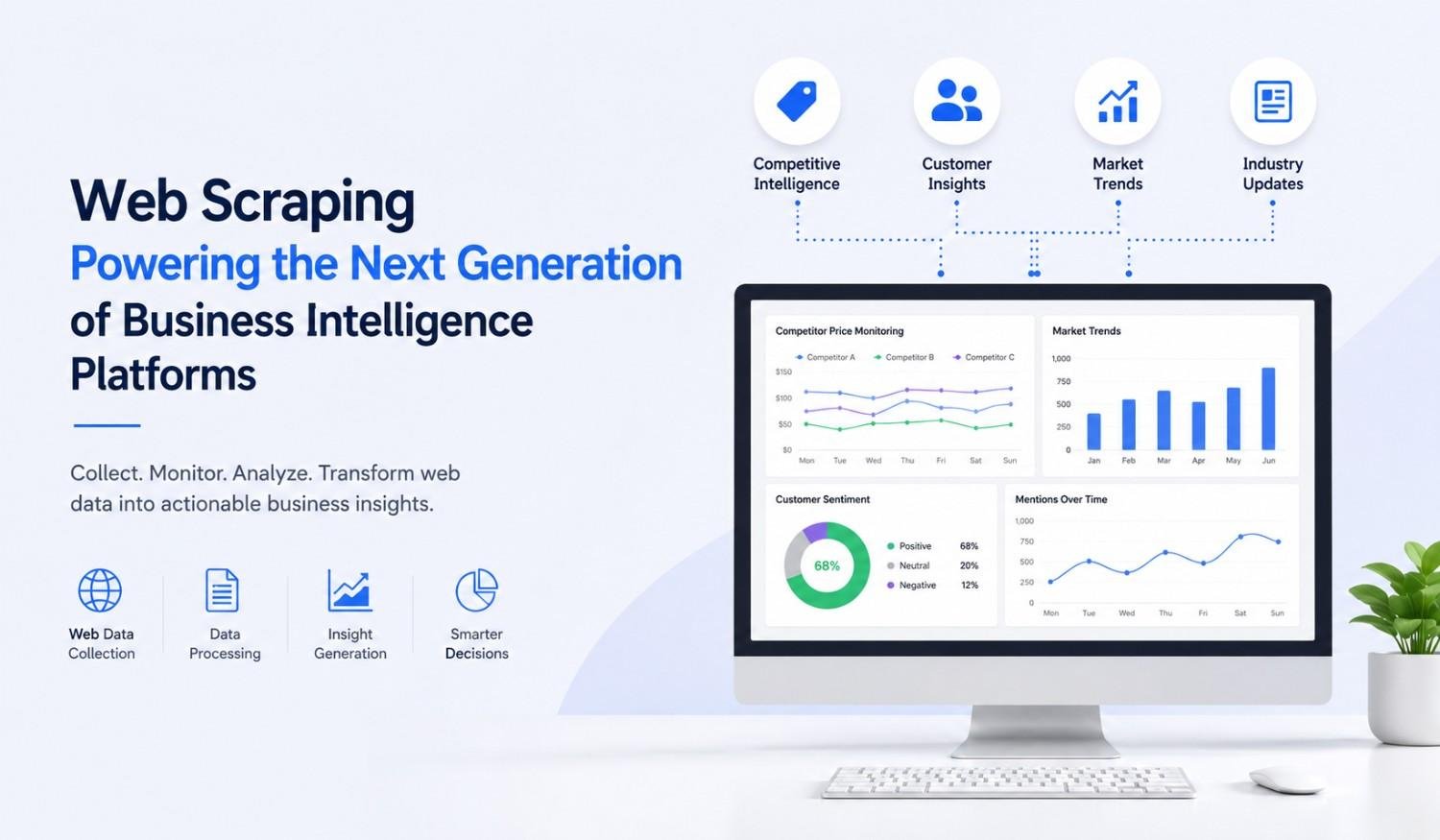
Business intelligence has traveled a long road from static spreadsheets and monthly reports. Organizations today operate in markets that change by the hour, not by the quarter. As a result, decision-makers need access to information that extends beyond their internal systems. Customer behavior, competitor activity, pricing trends, and industry developments all influence business outcomes. This is where web scraping services become valuable. By collecting publicly available information from across the web, businesses can enrich their intelligence platforms with fresh insights and create a more complete picture of the markets they serve.
The Evolution of Business Intelligence Platforms
Traditional business intelligence platforms were designed to explain what happened yesterday. Modern organizations, however, need systems that help predict what may happen tomorrow. Reports and dashboards remain important, but they are no longer enough on their own. Competitive markets reward companies that can identify opportunities and respond quickly to change. Over the years, BI platforms have evolved from reporting tools into decision-support ecosystems. This shift has created demand for broader, more dynamic data sources that help businesses move from reactive analysis to proactive strategy.
Understanding the Role of Web Data in Modern BI
Modern business intelligence depends on more than internal records and transaction histories. Valuable insights often exist outside organizational boundaries, hidden within competitor websites, customer reviews, marketplaces, news sources, and industry portals. Collecting this information manually is time-consuming and rarely sustainable. Web data helps businesses identify trends, monitor changes, and understand market conditions with greater accuracy. When integrated into BI systems, external information fills knowledge gaps and creates a richer analytical environment. Better visibility often leads to better decisions—and every leadership team appreciates fewer surprises during quarterly reviews.
Real-Time Competitive Intelligence at Scale
Competitors rarely send announcements before changing prices, launching products, or entering new markets. Businesses that rely solely on traditional research methods often discover these changes after opportunities have passed. Modern intelligence platforms continuously monitor competitive activity and transform raw information into actionable insights. Pricing adjustments, promotional campaigns, product availability, and customer feedback become visible in near real time. A project once revealed a competitor changing product descriptions weekly to improve search rankings—a reminder that valuable intelligence sometimes hides in the smallest details. Staying informed allows organizations to respond with confidence rather than guesswork.
Enhancing Customer Intelligence Through External Data
Customer surveys provide useful feedback, but they capture only part of the story. Consumers freely share opinions across review platforms, social channels, discussion forums, and industry communities. External customer data helps organizations understand sentiment, expectations, frustrations, and emerging preferences. Combining internal CRM records with outside insights creates a more complete customer profile. Marketing teams can refine messaging, sales teams can improve engagement strategies, and support teams can address recurring concerns more effectively. Understanding customers from multiple perspectives often reveals opportunities that traditional reporting systems overlook entirely.
Supporting Predictive Analytics and Forecasting
Predictive models are only as reliable as the data supporting them. Historical records remain valuable, yet they often fail to capture sudden market shifts or changing consumer behavior. External data introduces fresh variables that improve forecasting accuracy. Market trends, competitor movements, economic indicators, and customer sentiment all contribute valuable context. Advanced analytics platforms use these signals to anticipate demand fluctuations, identify potential risks, and uncover growth opportunities. Forecasting becomes significantly more effective when organizations can see both what happened yesterday and what appears likely to happen next.
Industry Applications Driving BI Innovation
Different industries use business intelligence in unique ways, but the goal remains consistent—making smarter decisions through better data. Retailers analyze pricing trends and product demand. Financial firms monitor market sentiment and investment signals. Healthcare organizations track research developments and regulatory changes. Manufacturers evaluate supplier performance and supply chain conditions. Regardless of industry, external information expands visibility beyond internal operations. The organizations achieving the greatest success are often those that connect diverse data sources into a single intelligence ecosystem, creating insights that competitors struggle to replicate.
The Growing Importance of Automated Data Pipelines
Manual data collection once worked when information volumes were manageable. Today, businesses face enormous streams of constantly changing data. Gathering, organizing, and analyzing information manually creates delays, inconsistencies, and unnecessary costs. Automated pipelines solve these challenges by collecting data continuously and feeding it directly into analytical systems. Information moves from source to dashboard with minimal human intervention. Teams spend less time gathering data and more time interpreting results. In many organizations, automation has become the difference between reacting to events and staying ahead of them.
Data Quality—The Foundation of Successful Business Intelligence
Sophisticated dashboards and advanced analytics cannot compensate for poor-quality data. Inaccurate, outdated, or duplicated information can quickly undermine confidence in business intelligence initiatives. Successful organizations prioritize validation, cleansing, standardization, and monitoring processes. Consistent data quality ensures that reports remain reliable and actionable. One common observation across analytics projects is that stakeholders rarely question good data—but they remember every mistake. Building trust in intelligence platforms requires a strong commitment to accuracy. Reliable insights begin with reliable information, regardless of how advanced the technology may be.
Challenges Businesses Must Address
Although external data offers significant value, implementation comes with challenges. Managing large volumes of information requires scalable infrastructure and effective processing strategies. Data quality must be monitored continuously to maintain accuracy. Organizations also need clear governance frameworks to ensure responsible data usage. Compliance considerations cannot be overlooked, particularly when dealing with large-scale information collection initiatives. Businesses that approach these challenges strategically often gain the greatest long-term benefits. Success depends not only on collecting data but also on managing it efficiently, ethically, and consistently.
The Future of Business Intelligence and Web-Based Data Collection
Business intelligence continues to evolve toward greater automation, intelligence, and speed. Artificial intelligence is enhancing analytical capabilities by identifying patterns and generating insights that would be difficult to discover manually. Decision-makers increasingly expect real-time visibility into changing business conditions. Future BI platforms will combine internal records, external information, predictive analytics, and AI-driven recommendations within unified environments. The result will be faster decisions supported by deeper context. Organizations that embrace these innovations today will be better positioned to navigate tomorrow’s challenges and opportunities.
Conclusion
The next generation of business intelligence platforms depends on comprehensive, timely, and accurate information. Internal data remains important, but it tells only part of the story. External market intelligence adds depth, context, and perspective that organizations need to compete effectively. As technology continues to advance, businesses will increasingly rely on connected data ecosystems that deliver insights in real time. At Kanhasoft, we view intelligence as more than reporting—it is the ability to see what others miss, act before others react, and transform information into measurable business value.






Post Comment