Fixed Frame vs Motorized Screens: Pros, Cons & Best Uses
Choosing the right projection screen is one of the most important decisions when setting up a home theater, conference room, classroom, or commercial presentation space. While projector technology often receives the most attention, the screen itself plays a major role in determining image quality, viewing experience, and overall performance. Among the most popular options available today are fixed-frame screens and motorized screens. Each offers unique advantages and is designed for different environments and usage requirements.
Understanding the differences between these screen types can help buyers make a more informed decision based on space, budget, aesthetics, and functionality. Whether the goal is creating a dedicated home cinema or equipping a professional meeting room, selecting the right screen can significantly improve viewing quality and user experience.
Understanding Fixed Frame and Motorized Screens
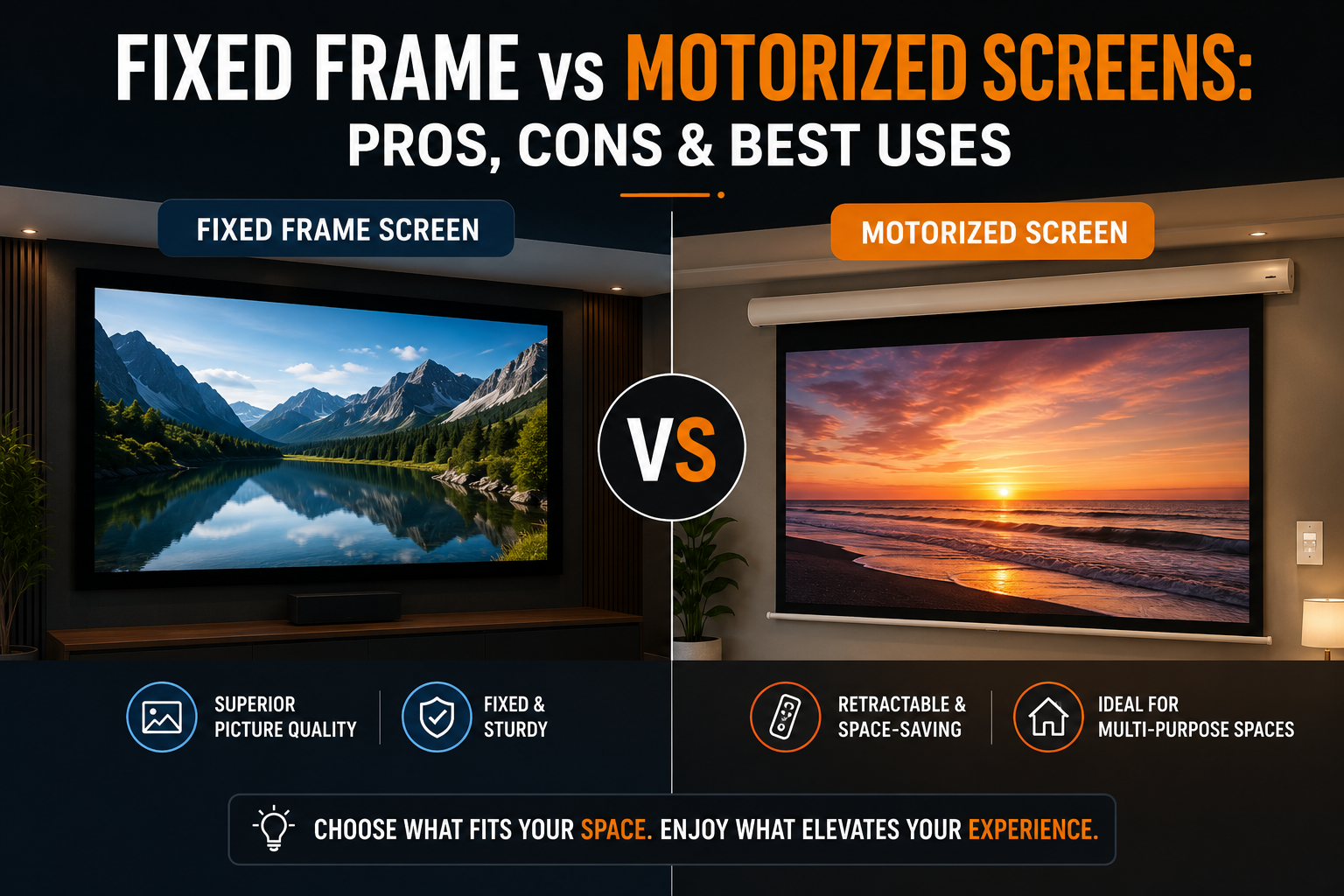
A Fixed Frame Projection Screen is permanently mounted to a wall and features a rigid frame that keeps the screen material perfectly tensioned. Because the surface remains flat at all times, fixed frame screens are known for delivering exceptional image quality and consistency. These screens are commonly used in dedicated home theaters, simulation rooms, and professional viewing environments where the screen remains visible at all times.
Motorized screens, on the other hand, are designed for flexibility and convenience. These screens can be rolled up into a housing unit when not in use and lowered electronically whenever needed. A motorised projector screen is often preferred in multipurpose spaces where users want to maintain room aesthetics without having a permanently visible screen.
Both screen types support modern projection technologies and can be used with various projector models. However, their performance, installation requirements, and practical applications differ significantly.
Pros and Cons of Fixed Frame Screens
Fixed frame screens are widely regarded as the best option for achieving maximum image quality. Because the screen surface is permanently stretched across a rigid frame, it remains perfectly flat without wrinkles or waves. This creates sharper images, improved contrast, and more accurate color reproduction.
Another advantage of fixed frame screens is their durability. Since there are no moving components, maintenance requirements are generally lower, and the screen remains consistently ready for use. For dedicated home theaters where aesthetics are built around the screen itself, fixed frame models often provide a professional cinema-like appearance.
However, fixed frame screens are not suitable for every environment. Their permanent installation means they occupy wall space continuously, which may not be ideal for conference rooms, classrooms, or living rooms that serve multiple purposes. Installation can also require more planning because the screen location cannot be changed easily once mounted.
The visible frame and fixed positioning may also limit flexibility for users who need adaptable room layouts or occasional screen usage.
Pros and Cons of Motorized Screens
Motorized screens offer a high level of convenience and versatility. Their retractable design allows users to hide the screen completely when it is not needed, preserving room aesthetics and maximizing available space. This makes them particularly popular in boardrooms, training facilities, educational institutions, and modern living rooms.
The automated operation adds convenience and professionalism. Users can lower or retract the screen with the push of a button, remote control, or integrated automation system. This seamless operation enhances the overall user experience, especially in professional environments where presentations occur frequently.
Motorized screens are also ideal for spaces that require flexibility. Rooms can quickly transition between presentation mode and regular use without permanent visual obstruction.
Despite these benefits, motorized screens typically cost more than fixed frame alternatives due to their electronic components and installation requirements. Because they include motors and moving parts, periodic maintenance may also be necessary to ensure reliable operation. Over time, some lower-quality models may develop slight surface waves if the screen material is not properly tensioned.
While premium motorized screens offer excellent image quality, fixed frame models generally maintain a slight advantage when absolute surface flatness is the primary concern.
Best Uses for Different Environments
The choice between fixed frame and motorized screens largely depends on how the space will be used. Dedicated home theaters often benefit most from fixed frame screens because image quality is the highest priority. The permanent installation complements a cinema-focused setup and creates an immersive viewing experience.
Corporate meeting rooms and conference facilities frequently favor motorized screens because they provide flexibility without compromising room design. When presentations are not taking place, the screen can remain hidden, creating a cleaner and more professional appearance.
Educational institutions often choose motorized screens for classrooms and training rooms because they allow teachers and presenters to adapt spaces for different activities throughout the day. Similarly, event venues and multipurpose halls benefit from retractable screens that can be deployed only when required.
For luxury residential installations, the decision often depends on room design. Dedicated media rooms typically use fixed frame screens, while living rooms and shared entertainment spaces commonly incorporate motorized solutions to maintain interior aesthetics.
Factors to Consider Before Choosing
Several factors should influence the final decision. Room size, viewing distance, lighting conditions, installation flexibility, and budget all play important roles. Buyers should also consider how frequently the screen will be used and whether the space serves multiple functions.
Long-term maintenance requirements, automation preferences, and future upgrade plans should also be evaluated. A screen that aligns with both current and future needs will provide greater value and satisfaction over time.
Investing in a high-quality screen is just as important as selecting the right projector. Even the most advanced projector cannot achieve its full potential if paired with an unsuitable projection surface.
Conclusion
Both fixed-frame and motorized screens offer excellent benefits, but the best choice depends on the intended application. Fixed frame screens deliver superior image consistency and are ideal for dedicated viewing environments where performance is the primary goal. Motorized screens provide flexibility, convenience, and space-saving advantages that make them perfect for multipurpose rooms and professional settings.
By understanding the strengths and limitations of each option, buyers can select a projection screen that enhances image quality, complements the room design, and delivers the best viewing experience for their specific needs.



Post Comment