Woven Charger Plates | Coastal Seagrass Summer Entertaining
Introduction
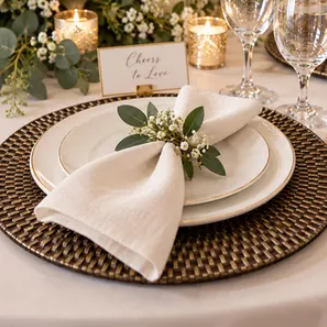
Woven charger plates do something a plain white table never manages. They make a summer dinner feel like it belongs by the water, even when you’re hosting in a backyard three miles from the nearest beach.
The natural, tight weave catches the light, softens everything stacked on top of it, and gives guests something to look at before the food arrives. Here’s how to build a coastal seagrass table that looks relaxed but intentional, using pieces that mix easily and survive real parties.
Why Seagrass Texture Works So Well in Summer
Texture is the quiet secret of a good table. Summer food is bright and fresh, so the tableware underneath can afford to be earthy and a little rough. That contrast is exactly why a seagrass look feels so right between June and September. It reads as sun-dried, breezy and handmade, the opposite of stiff formal dining.
There’s a practical side too. A woven layer hides small scuffs and crumbs better than glossy surfaces do, and it adds warmth to cool-toned dishes. Think of it as the sand under a pale blue sky, the thing that grounds the whole picture.
Traditional basket weaving is the craft behind this look, and you can see its logic on a table. Over-under patterns create small shadows, and those shadows are what make a flat plate setting feel dimensional. Natural fibers also forgive imperfection. A slightly uneven edge looks charming rather than sloppy, which is a relief when you’re hosting twelve people and can’t fuss over every detail.
If your guests already love the beachy, collected-over-time aesthetic, you don’t need to explain a thing. They’ll feel it the second they sit down.
Layering the Place Setting Properly
Before you buy anything, it helps to know what a charger actually does. It’s a large decorative base that sits under the dinner plate, there to frame the setting rather than hold food. Most guides on a classic place setting agree on the order: charger first, then dinner plate, then salad or soup bowl on top, with napkin and cutlery around it.
Size matters more than people think. At Regal Room Co., the gold charger set runs 13 inches with a fluted rim, and that’s a good benchmark. You want the charger to peek out about an inch or so past your dinner plate, no more. Too big and it crowds the neighbor’s setting. Too small and it looks like a mistake.
Now, where does the seagrass idea come in? Use your woven layer as the base, then bring in something smooth and glazed above it. A white porcelain or stoneware plate on a textured base is a classic pairing, rough meets refined. If you want one metallic touch, a single gold element at the host’s seat or on dessert plates is plenty. Don’t stack three finishes at every setting, or the table starts to compete with the food.
Choosing a Coastal Color Palette
Coastal doesn’t have to mean navy stripes and anchors. Honestly, I’d steer away from that. A softer palette feels more current and photographs better too.
Start with natural linen. A set of twelve linen napkins in a warm natural tone sits beautifully beside woven fibers, because both come from the same earthy family. Linen wrinkles a little, and that’s part of its appeal. Nobody expects a beach-inspired table to look pressed within an inch of its life.
Next, add sage green. Sage cheesecloth napkins in a set of twelve bring a gentle, seaside-herb color without shouting. The airy cheesecloth texture drapes loosely, which suits a laid-back dinner. Then a terracotta runner, around 35 by 120 inches, gives the center of the table a sunset warmth that pulls everything together.
A quick rule I use: pick one dominant neutral, one accent color, and one metallic. Natural linen, sage and a touch of gold is almost impossible to get wrong. It’s calm and fresh, and it lets the food be the colorful part.
Making the Table Outdoor-Ready
Here’s where many summer tables fall apart, literally. Glass and fine china are lovely, but they’re nerve-wracking on a patio with kids, wind and a crowded dessert course.
Melamine dinnerware is the sensible answer. It’s the break-resistant material behind a lot of patio dishes, and the shop carries 12-piece sets for four in cream crackle, sage green and several other shades. The cracked-ice and crackle finishes look surprisingly refined next to natural fibers. You get the coastal feel without the anxiety of a dropped plate.
Food safety deserves a mention too, because heat is the real enemy of outdoor entertaining. The USDA’s danger zone is the range between 40°F and 140°F, where bacteria multiply quickly, and the general guidance is not to leave perishable food out more than two hours, or one hour above 90°F. So serve cold dishes in small batches and keep refills in the cooler.
Candlelight rounds out the evening. Wood hurricane candle holders shield flames from a breeze, which is the whole point when you’re eating outside after sunset.
Adding Height and Warmth to the Centerpiece
Flat tables look unfinished. Once the place settings are done, look up, because height gives the eye somewhere to travel.
A gold cake stand set of three, in 8, 10 and 12 inch rounds, works double duty. Stack it with peaches, lemon tarts or a simple pile of figs and it becomes your centerpiece and your dessert display in one move. I love this trick for smaller tables where a big floral arrangement would block conversation.
Wood candle holders in washed brown tones echo the weave underneath, so the whole setup feels cohesive rather than assembled from random shopping trips. Group three or four in odd numbers and vary their heights a bit. Then scatter a few small bowls of lemons or shells between them.
Keep sightlines open, though. If you can’t see the person across from you, it’s too tall. Eye level should be clear, and anything higher than about 12 inches needs to be slim and airy.
Quick Setup Tips From Someone Who’s Made the Mistakes
Set the table the day before if you can. It’s the single best stress reducer. Lay the runner first, then chargers, then plates, then napkins, and leave glassware for the final hour. Fold napkins loosely. A simple relaxed fold or a casual tuck suits natural linen far better than a fussy fan.
Also, test one full setting before multiplying it by eight. You’ll catch problems early, like a charger that’s too big or a color that clashes with your fence. For general etiquette questions, the Emily Post Institute is a trustworthy reference, though honestly, a coastal table forgives most rules.
Frequently Asked Questions
Do I need a charger under every plate?
For a sit-down dinner, yes, it keeps the look consistent. For casual buffets, skip them.
Can I mix gold and natural fibers?
Absolutely. One metallic accent against earthy textures looks polished, not flashy.
What size should the charger be?
About 13 inches is standard, extending roughly an inch beyond the dinner plate.
Are melamine plates safe for outdoor dining?
They’re designed for it, though check the maker’s care label and avoid microwaving them unless stated.
How many napkins should I buy?
Plan one per guest plus a few spares. Sets of 6 or 12 make this easy.
Conclusion
A great summer table isn’t about spending more. It’s about layering texture, keeping colors calm, and choosing pieces that survive a real evening outdoors. Start with woven charger plates, add natural linen and sage, bring in sturdy melamine, and finish with candlelight and a little height. That’s the whole formula.
If you’d like to browse the napkins, runners, cake stands and dinnerware mentioned here, you’ll find them all at Regal Room Co., a Florida-based shop focused on seasonal entertaining. Pour something cold, set the table early, and enjoy the evening.




Post Comment