Why Paid Advertising and Website Design Must Work Together
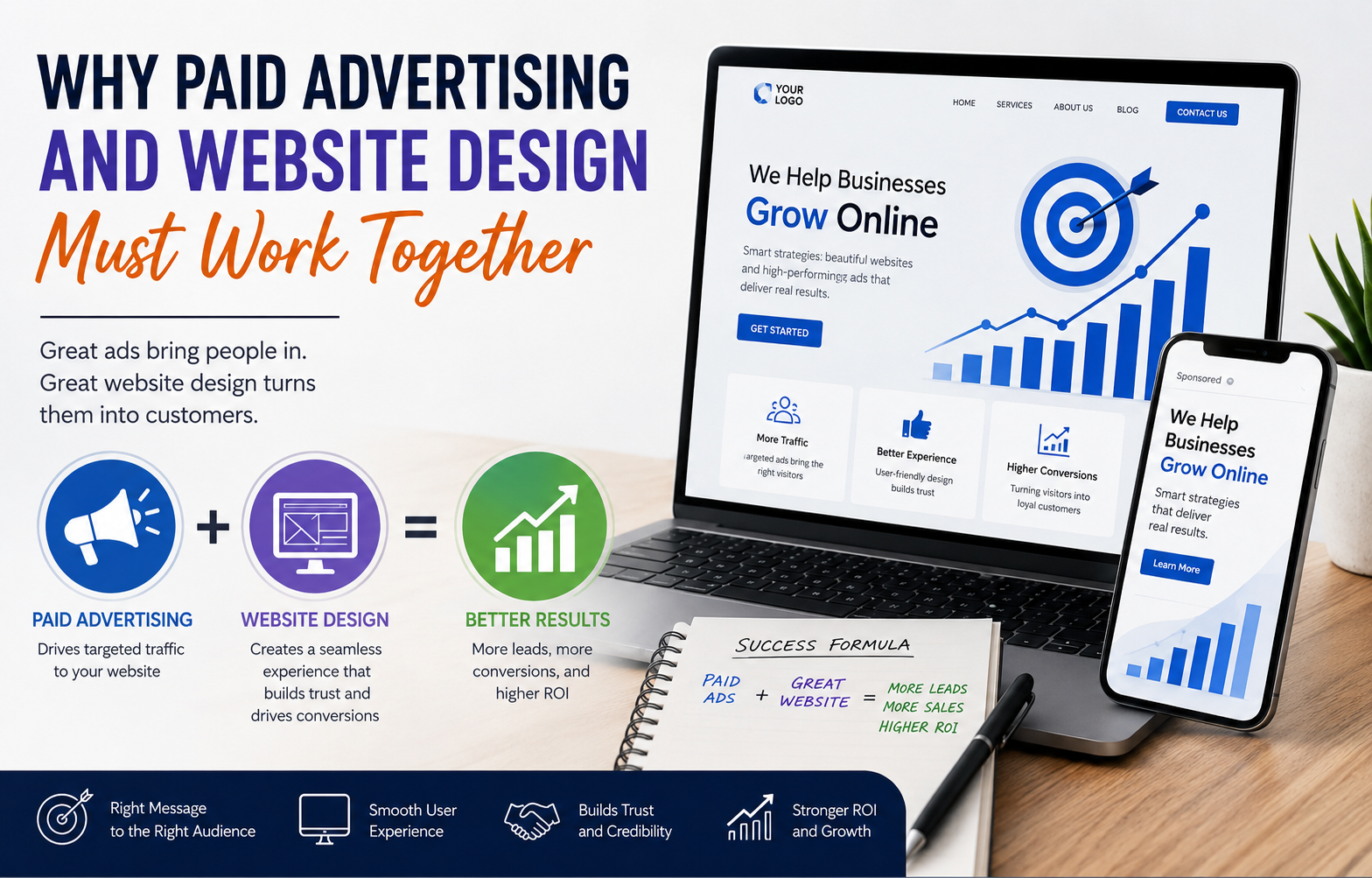
Businesses today have more ways than ever to reach potential customers online. From search engines and social media platforms to display advertising and video campaigns, paid advertising can generate visibility almost instantly. However, visibility alone does not guarantee results. Many businesses invest significant budgets into advertising campaigns only to discover that clicks do not always turn into leads, inquiries, or sales. The missing piece is often the website experience.
A well-planned advertising campaign and effective website design services should work together as part of the same strategy. One attracts visitors, while the other guides them toward taking action. When these two elements operate separately, businesses often struggle to achieve the return on investment they expect from their marketing efforts.
Understanding how paid advertising and website design complement each other can help businesses improve conversions, reduce wasted ad spend, and create better experiences for their customers.
The Real Purpose of Paid Advertising
Many business owners view paid advertising as a tool for generating traffic. While that is technically true, traffic itself is not the ultimate goal. The purpose of advertising is to attract qualified visitors who are likely to become customers. Whether someone clicks a Google Ads campaign, a Facebook advertisement, or a sponsored LinkedIn post, they arrive with a specific expectation. They clicked because something caught their attention or promised to solve a problem.
The website they land on must immediately confirm that they are in the right place. If there is a disconnect between the advertisement and the landing page, visitors often leave within seconds. This results in wasted advertising budget and lost opportunities.
First Impressions Matter More Than Ever
Online users form opinions incredibly quickly. Research consistently shows that visitors make judgments about a website within seconds of arriving. Imagine a business running a highly targeted advertising campaign. The ad looks professional, communicates value clearly, and attracts the right audience. The visitor clicks the ad and lands on a website that looks outdated, loads slowly, or is difficult to navigate.
The experience immediately creates doubt. People may question the company’s professionalism, credibility, or ability to deliver quality results. Even if the business offers an excellent product or service, poor design can undermine trust before a conversation even begins. A strong website design helps reinforce the confidence that the advertisement initially created.
Advertising Brings Visitors; Design Converts Them
One of the biggest misconceptions in digital marketing is that advertising alone drives sales. In reality, advertising opens the door. Website design helps visitors move through it. When users arrive on a website, they need clear guidance. Effective design ensures that visitors can easily understand:
- What the business offers
- Why it matters
- How it solves their problem
- What action they should take next
Without this clarity, visitors often become confused or distracted. Good website design removes unnecessary friction. It creates a natural path that leads visitors from curiosity to conversion.
This conversion could be:
- Filling out a contact form
- Requesting a quote
- Booking an appointment
- Making a purchase
- Downloading a resource
- Calling the business directly
Every advertising campaign becomes more effective when the website supports these goals.
User Experience Directly Impacts Advertising Performance
Many advertising platforms consider user experience when evaluating campaign performance. For example, Google measures landing page quality as part of its advertising system. Relevant, user-friendly landing pages can contribute to better ad performance and potentially lower advertising costs. This creates an important connection between advertising and design. A website that loads quickly, functions smoothly, and delivers relevant information can improve the overall effectiveness of advertising campaigns.
n the other hand, poor user experiences often result in:
- Higher bounce rates
- Lower conversion rates
- Reduced engagement
- Higher advertising costs
- Lower return on investment
Businesses sometimes focus entirely on ad optimization while ignoring the landing page experience. This approach often limits results regardless of how much advertising budget is invested.
Consistency Builds Trust
People trust businesses that appear consistent. When users click an advertisement, they expect the website to reflect the same message, tone, and visual style. For example, if an advertisement promotes a specific solution, discount, or offer, the landing page should immediately reinforce that message. Consistency helps visitors feel confident that they have arrived at the right destination. Inconsistent experiences can create confusion.
Imagine clicking an advertisement promoting a particular service and arriving on a homepage that barely mentions it. Visitors may wonder whether the offer still exists or whether they misunderstood the advertisement. Strong alignment between advertising and website design helps eliminate these doubts and supports better conversion rates.
Mobile Users Expect Seamless Experiences
A large percentage of paid advertising traffic comes from mobile devices. People often discover businesses while scrolling social media, searching on their phones, or browsing during short breaks throughout the day. If the website is not optimized for mobile users, businesses risk losing a significant portion of potential customers.
Mobile-friendly design should include:
- Fast loading speeds
- Easy navigation
- Readable text
- Clickable buttons
- Simple forms
- Responsive layouts
When advertising drives mobile traffic to a poorly optimized website, conversion opportunities disappear quickly. Businesses that combine strong advertising campaigns with excellent mobile design are better positioned to capture modern consumer attention.
Landing Pages Improve Campaign Results
One common mistake businesses make is directing all advertising traffic to their homepage. While homepages serve an important purpose, they are often designed for multiple audiences and objectives. Dedicated landing pages provide a more focused experience. A landing page can be tailored specifically to the message, audience, and goals of an advertising campaign.
This allows businesses to:
- Deliver highly relevant information
- Reduce distractions
- Highlight specific benefits
- Address customer concerns
- Encourage a clear call to action
The closer the connection between the advertisement and the landing page, the more likely visitors are to convert.
Data Reveals Opportunities for Improvement
One of the advantages of digital marketing is the ability to measure performance. Advertising platforms provide valuable data about user behavior, while website analytics reveal what happens after visitors arrive.
Together, these insights help businesses understand:
- Which ads generate the best traffic
- Which pages convert most effectively
- Where visitors abandon the process
- What content drives engagement
- Which design elements influence conversions
When advertising and website design teams work together, businesses can continuously improve performance using real-world data. Small adjustments often produce meaningful improvements over time.
Better Design Maximizes Marketing Investment
Every click generated through paid advertising has a cost. Whether a business spends a few hundred dollars or thousands each month, every visitor represents an investment. A poorly designed website reduces the value of that investment. In contrast, a conversion-focused website helps businesses generate more leads and sales from the same advertising budget. This means that improving website design can sometimes deliver better results than simply increasing ad spend. Rather than constantly paying for more traffic, businesses should ensure they are maximizing the value of the traffic they already receive.
The Most Successful Businesses Combine Both
The strongest digital marketing strategies do not treat advertising and website design as separate activities. Instead, they view them as interconnected parts of the customer journey. Paid advertising creates awareness and attracts potential customers. Website design builds trust, provides information, and encourages action. When both work together, businesses create a seamless experience that benefits users and improves marketing performance. Companies that understand this relationship are often able to generate stronger conversion rates, improve customer engagement, and achieve better returns from their marketing investments.
Conclusion
Paid advertising can place a business in front of the right audience, but attracting visitors is only part of the equation. Once someone arrives on a website, their experience determines whether they stay, engage, and ultimately become a customer. An effective website supports advertising efforts by creating trust, improving usability, delivering relevant information, and guiding visitors toward meaningful actions. Without a strong website experience, even the most carefully planned advertising campaigns can struggle to deliver results.
Businesses looking to maximize their digital marketing performance should view paid advertising and website design as partners rather than separate investments. When both work together, they create a more effective path from click to conversion, helping businesses achieve sustainable online growth.






Post Comment