Why Los Angeles Social Skills Groups Work Better Than Practicing Alone
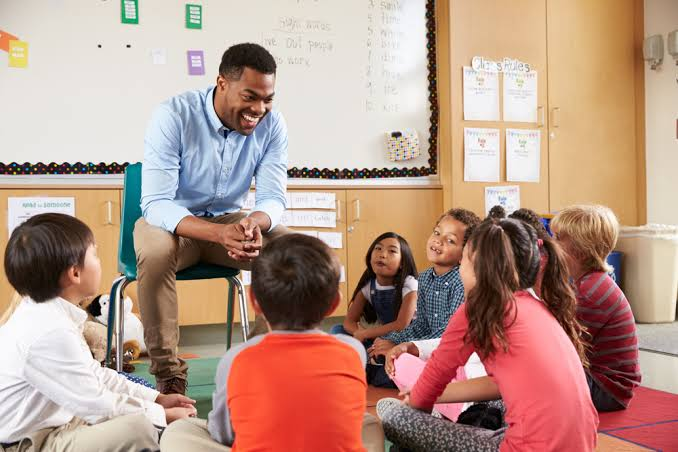
It is a reasonable question: if someone struggles with conversation or reading social cues, why not simply practice at home, one-on-one, until it clicks? The answer is that social skills are, by definition, social. They cannot be fully rehearsed in isolation any more than someone could learn to swim on dry land. A young child, a teenager, and an adult all need the same thing to grow socially: other people to practice with, in real time. That is exactly what a group provides, and it is why the group setting does something solo practice cannot.
The Limits of Practicing Alone
Working on social skills alone has real value for building a foundation, but it hits a ceiling quickly. A person can memorize what to say, yet conversation is never a script. It is a live exchange full of unexpected replies, shifting tones, and split-second timing that no rehearsal with a single familiar person can fully capture.
Practicing alone also removes the very thing that makes social situations hard: unpredictability. Real interactions involve people who interrupt, change the subject, misread a cue, or respond in ways you did not expect. Learning to handle that comfortably requires being in it, not just imagining it. A person can feel completely ready after solo practice and still be caught off guard the moment a real conversation veers somewhere unrehearsed, because the challenge was never the words themselves but the live, unscripted give-and-take around them.
What a Group Setting Adds
This is where Los Angeles social skills groups change the equation. Grounded in the principles of Applied Behavior Analysis, they turn the abstract goal of “being social” into concrete practice with actual peers. A skill is introduced, modeled by trained behavior professionals, and rehearsed through role-play, and then, crucially, it is used in a live moment with other participants.
A group offers a supportive space full of exactly the interactions a person needs to rehearse: joining a conversation already in progress, handling a disagreement, noticing when someone else wants a turn. These are things that are hard to manufacture in solo practice, because they require other people behaving like other people.
Learning From Peers, Not Just Coaches
There is another advantage a group brings that one-on-one work cannot. In a group, a person learns not only from the professional guiding the session but from peers, watching how others handle a moment, taking turns, and reading a range of reactions rather than just one familiar face.
That variety builds flexibility. A skill practiced with several different people, each with their own style, becomes far more robust than one rehearsed with a single partner. It is one of the clearest reasons Los Angeles social skills groups outperform solo work: they surround a person with the range of real reactions that flexibility requires.
Individual Goals Within the Group
A common worry is that a group means everyone gets the same generic lesson. Well-run groups work the opposite way. They address both individual and group goals at once, so each participant has their own targets, chosen to match their development level and needs, while sharing the collective experience.
This dual focus means a quieter member and a more outgoing one can be in the same room and each be challenged in the right way. Strong social skills training Los Angeles modifies its curriculum to fit each person, so no one is stretched too far or held back.
Support for Every Age and Stage
Groups are not built primarily for young children with everyone else added on. They welcome people across the lifespan, from the earliest days after a first diagnosis through adolescence and into adulthood, organized by developmental stage so the practice fits the participant.
Younger children build early confidence through play and cooperation. Teens practice initiating conversations and navigating friendships. Adults work on communication, self-advocacy, and everyday problem-solving in work and community life. At every age, well-designed social skills training in Los Angeles offers the same core value that solo practice cannot: real peers to learn with.
Why Families and Patience Matter
Families extend what the group starts. Parents, caregivers, and loved ones see daily life up close, and when they know what a person is working on, they can reinforce it in the moments between sessions where habits actually form.
Growth also takes patience. Social behavior is complex and hard to master, generalize, and maintain, so progress comes gradually rather than overnight. With individualized support, a genuine partnership with the family, and time, the skills built among peers become ones a person can carry, step by step, into every part of their life.


Post Comment