Why Hiring AI Developers Is No Longer Optional for Business Automation in 2026

There’s a version of AI adoption that looks cool from the outside.
You subscribe/Paid to a few tools, plug in a chatbot, connect some workflows with a no-code platform, and tell the board you have an AI strategy. It demos well. Leadership nods along. You feel like you’re keeping up.
Then six months pass. The chatbot gives inconsistent answers. The automations break every time a process changes. Nobody on your team trusts the outputs. The expected cost savings never materialise. And you’re left wondering where the money went.
If this sounds familiar, you’re not alone and the problem almost certainly isn’t the AI. It’s how it was built.
According to research from RAND, 80% of AI projects deliver no measurable business value. MIT data shows that 95% of generative AI pilots never scale beyond the initial experiment. These aren’t failures of technology. They’re failures of implementation. And they’re almost always the result of the same root cause: businesses trying to build AI systems without people who actually know how to build them.
The Difference Between Using AI and Building With AI
This distinction matters more than most business owners realise.
Using AI means prompting a chatbot, generating marketing copy, or dragging blocks around in a no-code automation tool. These are genuinely useful skills, and there’s real value in getting your team comfortable with them.
Building with AI is something else entirely. It means designing systems that integrate cleanly with your existing infrastructure. It means anticipating edge cases before they cause problems in production. It means building workflows that scale without breaking, and produce outputs your team can actually trust day to day.
The gap between these two things is where most business AI investments go wrong. Tools get bolted onto processes they don’t fit. Automations are designed by people who understand the software but not the business logic underneath it. And the result is technical debt that compounds systems that work until they don’t, and are expensive and time-consuming to fix when they break.
An experienced AI developer understands both sides of that equation. They ask about your business outcomes before they talk about technology. They know when AI is the right solution — and crucially, when it isn’t.
What You’re Actually Losing by Not Hiring AI Developers?
The cost of under-investing in AI talent isn’t just a missed opportunity. It’s an active, compounding disadvantage and it shows up in four specific ways.
1. Technical debt that compounds
Automations built without proper architecture break at scale. The shortcut that saves two weeks of development time in 2025 often costs two months of firefighting in 2026. Many businesses that rushed AI implementation without proper engineering support are now spending more to rebuild than they would have spent doing it correctly from the start.
2. Wasted budget from low adoption
Teams don’t trust outputs they don’t understand. Without proper integration and onboarding built into the process from day one, employees quietly ignore the system. They work around it. The tool keeps billing your card every month, but the expected productivity gains never materialise. Research consistently shows this is one of the most common and expensive hidden costs of AI implementation.
3. Data security and compliance exposure
AI systems that touch customer data, financial records, or internal communications without proper governance create real legal risk. This is the area where DIY AI projects most frequently create problems that are expensive and reputationally damaging to resolve particularly as regulatory scrutiny of AI systems increases.
4. Competitive lag you can’t easily close
The businesses investing in proper AI infrastructure now are creating compounding advantages. Their systems learn and improve over time. Their teams build institutional knowledge about what works. The gap between these organisations and those still experimenting with off-the-shelf tools grows wider every quarter and it becomes harder to close the longer you wait.
The ROI Case Is Already Settled
For businesses that implement AI well, the returns are significant and measurable.
Research from 2026 shows a median ROI of 300% over three years for organisations that implement AI automation correctly. 84% of companies that approach AI implementation with clear goals and proper technical support report positive ROI. And 53% of investors now expect to see positive returns on AI investments within six months or less a signal of how mainstream confident AI deployment has become.
The economics become particularly compelling when you look at scale. A business doing $2 million annually that implements well-designed operational automation can support 50% growth without a proportional increase in headcount. That’s not a theoretical projection it’s a pattern being repeated across sectors right now, in businesses of every size.
The caveat, which is worth repeating: these numbers apply to businesses that implement AI correctly. The ROI for businesses that treat AI as a plug-and-play tool, without dedicated expertise, looks very different.
What Good AI Development Actually Looks Like?
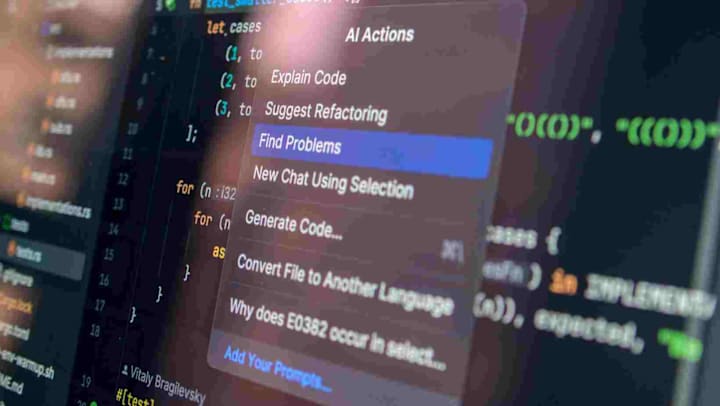
When you hire the right AI developers, the process looks fundamentally different from deploying a SaaS tool.
It starts with a genuine understanding of your workflows where the real friction is, what data you already have, and what success looks like in terms you can measure. Good AI developers ask uncomfortable questions early: Is your data clean enough to build on? Which processes actually follow predictable patterns, and which ones have too many exceptions to automate reliably? What does “done” look like in three months, and how will you know if it worked?
From there, it moves to architecture: designing systems that integrate with what you already have, handle exceptions without breaking, and produce outputs your team can verify and trust.
The business results, when this is done well, are specific: shorter time to complete key workflows, lower error rates on repetitive tasks, faster customer response times, and the ability to handle significantly more volume without adding headcount.
When to Hire AI Development and What to Look For?
The right moment to bring in AI developers is earlier than most business owners expect. You don’t need a fully formed AI strategy first a good AI developer will help you build one. What you do need is one or two workflows where the friction is measurable and the potential impact is clear.
When you’re evaluating candidates or development agencies, a few things matter more than credentials:
Production experience beats certifications – Ask to see systems they’ve built that are running in live business environments, not slide decks or demos. Anyone can demo well; production systems reveal whether someone actually knows what they’re doing.
Business questions come before technology questions – If the first conversation is primarily about tools and platforms, that’s a warning sign. The best AI developers lead with outcomes: what are you trying to achieve, how will you measure it, and what does success look like for your team?
Strong teams combine multiple disciplines – Production-ready AI automation requires AI expertise, data engineering, backend development, and domain understanding. Be appropriately sceptical of any individual or team claiming deep expertise across all of these simultaneously.
A Real Example of the Right Kind of Developer
Want to see what a solid AI developer looks like?
Check out Davinder S. on Upwork. He specializes in Voice AI agents, Python automation, n8n, and Make. He has a Top Rated Plus badge, 95% job success rate, and thousands of hours of real client work.
You can view his profile here: Davinder S. on Upwork
The Window Is Still Open But It’s Closing
In 2026, the adoption curve is steep and the gap between AI leaders and AI laggards is widening every quarter. The encouraging reality: most of your competitors are still in the tool-dabbling phase. They’re subscribed to the same platforms you are, generating content with the same chatbots, and wondering why they’re not seeing the results the case studies promised.
The businesses that move from using AI to building with AI properly, with the right people will have a structural advantage that compounds over time. They’ll handle more volume with the same team. They’ll make faster, better-informed decisions. They’ll spend less time on processes that don’t require human judgement, and more time on the work that does.
Hiring AI developers is no longer a luxury reserved for enterprises with dedicated technology budgets. It’s the decision that determines whether your AI investment actually pays off or becomes one more entry in the very long list of cautionary statistics about what AI could have done.
The technology works. The question is whether it’s being built by someone who knows how.
FAQ (People ASK)
Q1: Can’t I just use no-code tools instead of hiring developers?
You can for very simple tasks. But for anything important or complex, no-code tools often create more problems than they solve in the long run.
Q2: How much does it cost to hire AI developers?
Rates vary widely. Freelance AI specialists usually charge $80–$200+ per hour depending on experience. Project costs depend on scope.
Q3: When is the right time to hire AI developers?
Now, especially if you have clear repetitive processes that are wasting time or causing errors. You don’t need a full strategy first.
Q4: Should I hire locally or remotely?
Many successful businesses use skilled remote developers with good communication and track records.
Q5: What should I look for in an AI developer?
Real production experience, strong client reviews, and someone who asks about your business goals first instead of just tools.
The Bottom Line
Thinking about AI automation for your business? The most important first step is identifying one high-friction workflow where success would be measurable. Start there and bring in someone who’s built production systems before, not just run experiments.






Post Comment