Why Cyber Security Managed Service Providers Have Become a Business Necessity for Modern B2B Organizations
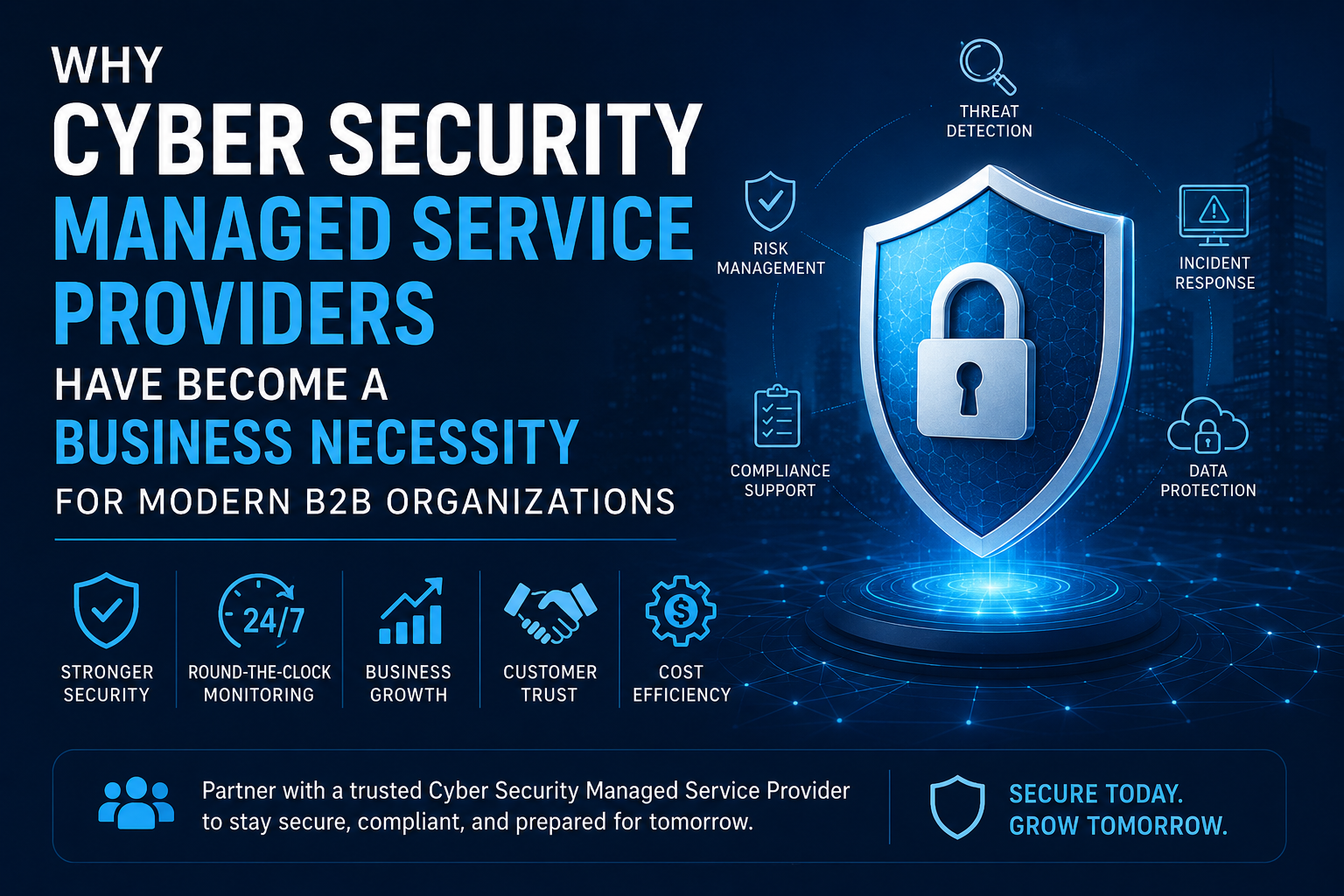
The New Reality of Business Security
A few years ago, cybersecurity was often treated as an IT problem. Today, it has become a boardroom issue.
The reason is simple. Cyberattacks no longer target only large enterprises. Small and mid-sized businesses have become attractive targets because many lack dedicated security teams and advanced protection systems. At the same time, organizations are adopting cloud platforms, remote work environments, SaaS applications, and connected devices faster than ever before.
This digital transformation creates opportunities for growth, but it also expands the attack surface.
According to IBM’s Cost of a Data Breach Report, the average cost of a data breach continues to exceed millions of dollars globally. Beyond financial losses, businesses face damaged reputations, regulatory penalties, customer churn, and operational disruptions.
This is why many organizations are turning to cyber security managed service providers (MSSPs) to strengthen their defenses without building expensive in-house security operations.
What Are Cyber Security Managed Service Providers?
Cyber security managed service providers are specialized companies that monitor, manage, and protect an organization’s IT environment from cyber threats.
Instead of hiring a large internal cybersecurity team, businesses partner with an MSSP that delivers security expertise, technologies, and 24/7 monitoring as a managed service.
Typical services include:
- Security monitoring and threat detection
- Vulnerability assessments
- Incident response
- Security Information and Event Management (SIEM)
- Endpoint protection
- Firewall management
- Cloud security monitoring
- Compliance support
- Security audits and reporting
Think of an MSSP as an extension of your internal IT team, focused entirely on reducing cyber risk.
Why Traditional Security Approaches Are Falling Short
Many businesses still rely on periodic security reviews or basic antivirus software. Unfortunately, modern cyber threats move much faster than traditional security practices.
Consider a typical ransomware attack.
An employee clicks a malicious email attachment. Within minutes, attackers gain access to the network. Sensitive files are encrypted. Business operations stop. Customers are affected. Revenue takes a direct hit.
By the time the problem becomes visible, the damage has often already occurred.
Cyber security managed service providers address this challenge through continuous monitoring and real-time threat detection. Instead of reacting after an incident, they identify suspicious activity before it becomes a crisis.
The Business Benefits of Working with Cyber Security Managed Service Providers
1. Improved Business Continuity
Downtime is expensive.
Whether it’s an e-commerce platform, customer portal, payment system, or internal application, every minute of disruption impacts productivity and revenue.
Managed security providers monitor systems around the clock, helping organizations identify and contain threats before they affect critical operations.
This proactive approach supports stronger business continuity and operational resilience.
2. Access to Specialized Expertise
Cybersecurity talent remains one of the most competitive hiring markets in the world.
Many organizations struggle to recruit and retain security analysts, threat hunters, incident responders, and compliance specialists.
Partnering with an MSSP provides immediate access to a team of experienced professionals without the recruitment challenges and long-term staffing costs.
For many businesses, this expertise would be difficult and expensive to build internally.
3. Better Cost Predictability
Building an internal Security Operations Center (SOC) requires significant investment.
Businesses must purchase security tools, hire specialists, provide training, and maintain infrastructure.
Managed security services replace unpredictable security expenses with a predictable monthly cost model.
This allows leadership teams to budget more effectively while maintaining enterprise-grade protection.
4. Faster Threat Detection and Response
The speed of response often determines the severity of a cyber incident.
Research consistently shows that organizations that detect and contain breaches quickly experience significantly lower financial impacts.
Cyber security managed service providers use advanced monitoring platforms, automation tools, and experienced analysts to investigate alerts and respond rapidly.
This reduces the “dwell time” attackers spend inside business networks.
5. Stronger Customer Trust
Customers care about security.
Whether you’re handling financial information, healthcare records, customer data, or proprietary business information, clients expect strong protection measures.
Organizations that demonstrate a mature cybersecurity strategy often gain a competitive advantage during sales conversations, vendor evaluations, and contract negotiations.
Security is increasingly becoming a business differentiator rather than just a technical requirement.
Cyber Security as a Growth Strategy
Many executives still view cybersecurity as a cost center.
That perspective is changing.
Modern cybersecurity directly supports business growth.
When companies operate secure digital environments, they can:
- Launch new digital services faster
- Expand into regulated markets
- Build customer confidence
- Support remote work securely
- Meet compliance requirements
- Accelerate cloud adoption
In other words, strong security creates opportunities rather than limitations.
The most successful organizations understand that cybersecurity enables innovation.
How to Choose the Cyber Security Managed Service Provider
Not all providers offer the same capabilities.
Before selecting a partner, evaluate these areas:
Industry Experience
Look for providers with experience supporting businesses in your industry. Compliance requirements and threat landscapes vary significantly between sectors.
24/7 Monitoring Capabilities
Cyber threats don’t follow business hours. Continuous monitoring is essential for effective protection.
Incident Response Expertise
Ask about response procedures, escalation processes, and average response times.
Scalability
Choose a provider that can support future business growth without requiring major service changes.
Compliance Support
If your organization must meet standards such as PCI DSS, ISO 27001, HIPAA, or GDPR, ensure the provider has proven compliance expertise.
Transparent Reporting
Security leaders need clear visibility into threats, vulnerabilities, and risk trends through regular reporting and dashboards.
The Future of Managed Cyber Security
Cyber threats are becoming more sophisticated every year. Artificial intelligence, ransomware-as-a-service, supply chain attacks, and cloud vulnerabilities continue to reshape the threat landscape.
At the same time, businesses are becoming more digital, more connected, and more dependent on technology.
This combination makes professional cybersecurity management increasingly important.
Organizations that invest in managed security today position themselves to operate more confidently, scale more efficiently, and compete more effectively in the years ahead.
Conclusion
Cybersecurity is no longer optional for modern businesses. As digital environments become more complex, organizations need continuous protection, expert guidance, and rapid threat response. Cyber security managed service providers deliver all three while helping businesses reduce risk, improve efficiency, strengthen customer trust, and support long-term growth.






Post Comment