Powering Tomorrow: The Ultimate Guide to Industrial & Commercial Energy Storage Systems
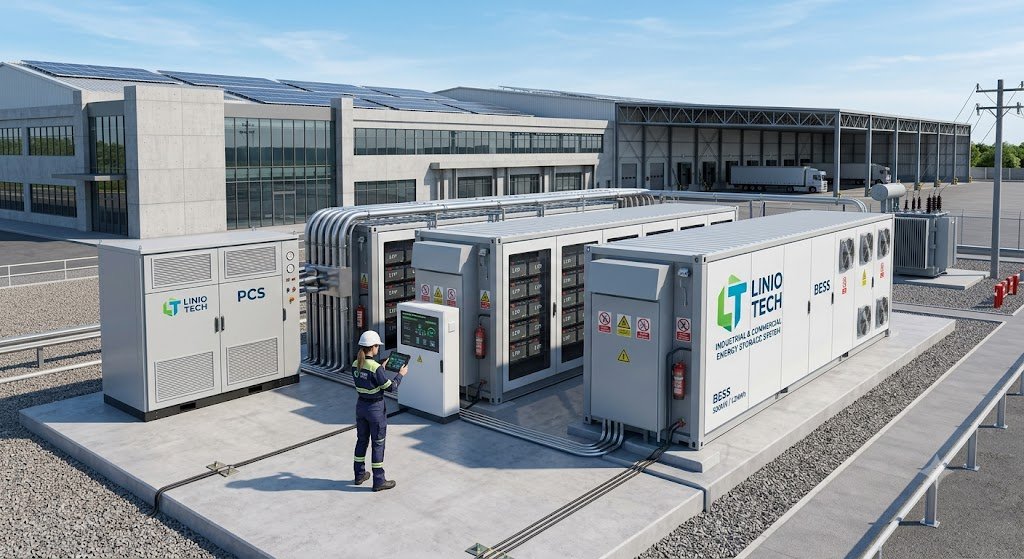
In an era defined by volatile energy markets, skyrocketing peak demand charges, and an urgent push toward corporate sustainability, businesses are facing an unprecedented challenge: how to optimize power consumption without sacrificing operational efficiency. Enter the Industrial & Commercial Energy Storage System (BESS). Once a niche technology for off-grid operations, these advanced battery systems have pivoted to become the backbone of modern corporate energy strategies. Whether you run a manufacturing plant, a data center, or a sprawling retail complex, understanding and deploying commercial energy storage is no longer just an eco-friendly statement—it is a vital financial strategy.
What is an Industrial & Commercial Energy Storage System?
At its core, an Industrial & Commercial Energy Storage System is a sophisticated, high-capacity battery setup designed to store electricity from the grid or local renewable sources (like solar panels) and discharge it when needed most.
Unlike small residential batteries, these commercial-scale systems are engineered to handle massive loads and integrate seamlessly with complex industrial electrical grids. They typically utilize advanced Lithium-ion (LFP or NMC) chemistry, managed by an intelligent Energy Management System (EMS) that automates when the system charges and discharges for maximum cost-efficiency.
Key Benefits: Why Businesses are Investing in BESS
Deploying a commercial energy storage system offers a multi-layered return on investment (ROI). Here is how it transforms your operational bottom line:
Peak Shaving and Reducing Demand Charges
For most commercial enterprises, utility bills are split into two main categories: total energy consumed ($kWh$) and peak demand charges ($kW$). Demand charges are calculated based on the single highest 15-minute spike in your energy usage during a billing cycle.
How BESS helps: When your facility’s power consumption spikes (e.g., turning on heavy machinery in the morning), the storage system instantly discharges power. This “shaves” the peak off your grid usage, drastically reducing your monthly utility bill.
Seamless Emergency Backup Power (Uninterruptible Power Supply)
A sudden power outage can cost an industrial facility thousands of dollars per minute in lost productivity, spoiled inventory, and damaged equipment. Modern commercial storage systems act as a massive, near-instantaneous Uninterruptible Power Supply (UPS), keeping critical assembly lines, servers, and automated systems running smoothly during grid failures.
Maximizing On-Site Renewable Energy
If your facility has installed commercial solar panels, you’ve likely run into the issue of intermittency—solar energy is produced during the day, but your peak operations might run late into the night. A BESS allows you to store excess daytime solar energy and use it whenever it’s most financially advantageous, moving you closer to true energy independence.
Capitalizing on Time-of-Use (TOU) Arbitrage
Many utility companies charge different rates for electricity depending on the time of day. Energy is expensive during “peak” afternoon hours and cheap during “off-peak” night hours. An intelligent energy storage system charges itself when electricity is cheap and discharges to power your facility when grid prices skyrocket.
Capacity vs. Power Rating
It’s crucial to understand the difference between Kilowatts ($kW$) and Kilowatt-hours ($kWh$).
-
Power ($kW$): How much energy the system can discharge at any given moment. (Crucial for peak shaving).
-
Capacity ($kWh$): Total amount of energy the system can hold. (Crucial for long-duration backup power).
Safety and Thermal Management
Industrial batteries generate heat. Look for systems featuring advanced, liquid-cooling thermal management and robust fire suppression systems that comply with stringent local and international safety standards (such as UL 9540A).
Scalability and Modular Design
Your business will grow, and your energy needs will evolve. Choosing a modular BESS allows you to expand your capacity easily in the future by adding more battery racks without overhauling your entire electrical infrastructure.
Future Trends in Commercial Energy Storage
The energy landscape is shifting rapidly. Over the next few years, we expect to see Virtual Power Plants (VPPs) become mainstream. Businesses with automated storage systems will be able to aggregate their battery capacities and sell power back to the grid during regional energy crises, turning a standard corporate cost center into an active revenue-generating asset.
Furthermore, advancements in solid-state batteries and enhanced AI-driven EMS software will continue to drive down the total cost of ownership while extending battery lifespans well beyond the current 10-to-15-year average.
Conclusion
The transition toward a smarter, more resilient grid is happening now. Relying solely on traditional utility infrastructure leaves your business vulnerable to rising costs, unpredictable blackouts, and tightening carbon regulations. Implementing a robust Industrial & Commercial Energy Storage System is the definitive way to take control of your energy destiny.
At Linio Tech, we specialize in engineering high-performance, safe, and highly efficient commercial energy storage solutions tailored to your unique operational demands. From initial load profiling and system design to seamless on-site installation and smart EMS integration, Linio Tech empowers your business to slash operational costs, meet sustainability targets, and guarantee uninterrupted productivity.
Also see our guide.



Post Comment