Optolong Filters Pakistan: Outsmarting City Light Pollution
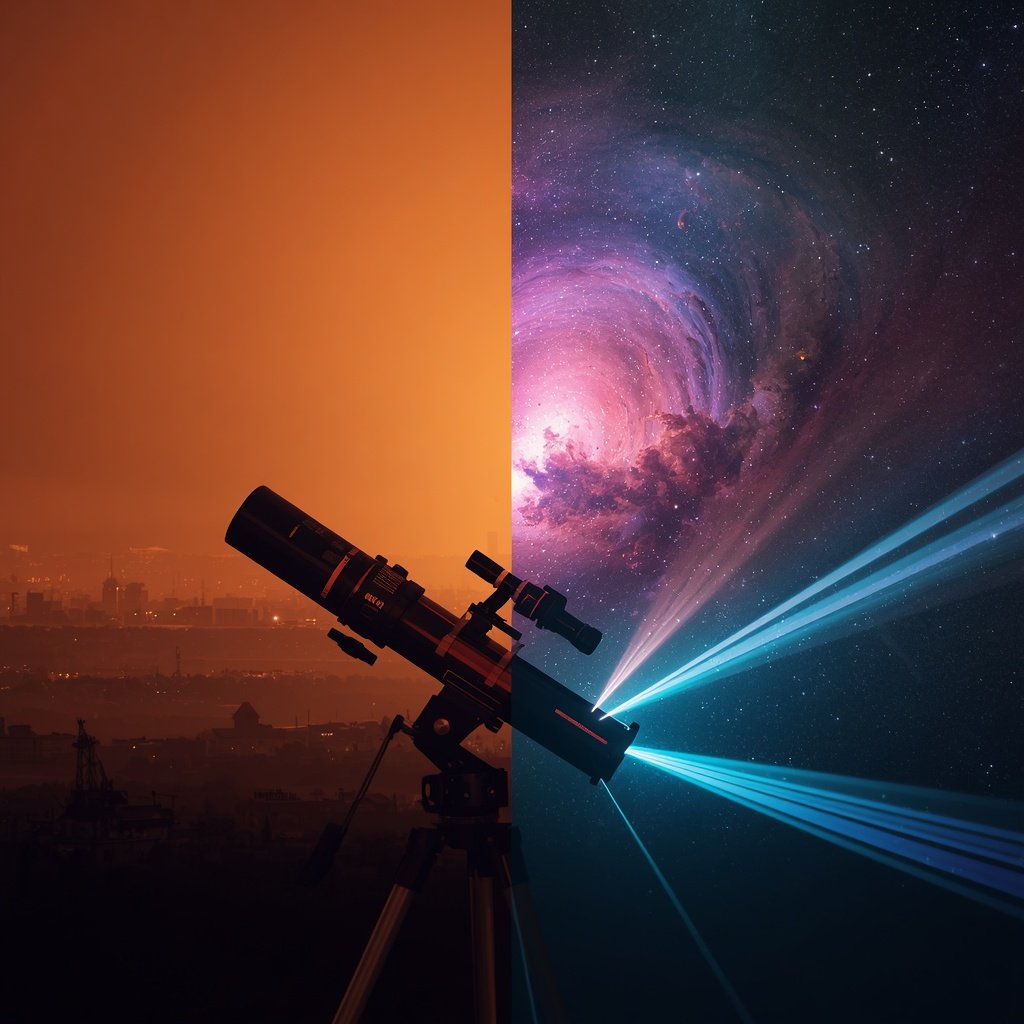
If you’ve ever tried imaging a nebula from your rooftop in Multan, Lahore, or Karachi and ended up with a washed-out orange mess instead of the crisp cosmic colors you saw online, you already know the real enemy of astrophotography in Pakistan isn’t cloud cover. It’s the sodium-orange glow sitting over every city. That’s precisely the problem an entire category of gear exists to solve, and Optolong happens to make some of the best solutions on the market.
For anyone unfamiliar, Optolong is a Chinese optical company, but don’t let that confuse you with the cheap unbranded imports flooding local marketplaces. This is a globally respected filter manufacturer used by imagers everywhere, and here in Pakistan, Sky Deep is the exclusive authorized source for their entire lineup. Their Optolong collection covers everything from narrowband imaging filters to simple light pollution suppression filters for beginners.
What These Filters Actually Do
A camera sensor doesn’t know the difference between starlight and a streetlamp two kilometers away. It just captures photons. Optolong’s filters work by physically blocking specific wavelengths of light, the ones streetlights and sodium-vapor bulbs pump into the sky, while letting through the exact wavelengths that nebulae and emission regions emit. The result is images with real contrast and color, captured from locations that would otherwise be considered hopeless for deep-sky work.
This matters more in Pakistan than in a lot of other countries, honestly. Truly dark skies here usually mean a multi-hour drive out of the city, which isn’t realistic for a Tuesday night imaging session. Filters let you do meaningful astrophotography from your own backyard instead.
Starting Simple: Broadband and CLS Options
If you’re newer to this and shooting mostly broadband targets or general deep-sky objects under moderately light-polluted skies, the Optolong CLS 2″ Mounted Filter is a sensible entry point. It cuts through common artificial light frequencies without being so aggressive that you lose natural star colors, making it a good all-rounder for someone still experimenting with their setup.
Dual-Band Filters: The Sweet Spot for Most Imagers
This is where things get genuinely exciting, and where most serious hobbyists in Pakistan end up spending their money. Dual-band filters isolate two specific emission lines, typically Hydrogen-alpha and Oxygen-III, letting you capture rich nebula detail even under a fairly bright sky.
The Optolong L-eNhance Light Pollution Dual-Bandpass 2″ Imaging Filter is one of the most popular filters in this category worldwide, and for good reason. It works well with both mono and color cameras and handles moderate light pollution gracefully. If you’re shooting with a DSLR specifically, there’s also a dedicated Optolong L-eNhance Light Pollution Dual-Bandpass Imaging Clip Filter for Canon EOS APS-C, which clips directly inside compatible Canon bodies instead of screwing onto a lens or telescope.
For those dealing with genuinely bad skyglow, the Optolong L-Para 2″ Dual Band Filter pushes the isolation further, giving cleaner backgrounds in heavily light-polluted urban zones without crushing star color entirely.
Going Narrowband for Serious Detail
Once you’re comfortable with dual-band imaging and want to push into true narrowband territory, the individual wavelength filters open up a whole different level of control. The Optolong H-Alpha 7nm CCD 1.25″ Mounted Filter and its larger sibling, the Optolong H-Alpha 7nm CCD 2″ Mounted Filter, isolate hydrogen-alpha emissions with enough precision to shoot through a full moon and still pull usable data, something broadband filters simply can’t manage.
For sharper, more demanding narrowband work, the Optolong H-Alpha 3nm CCD 2″ Filter narrows that bandpass even tighter, cutting out more background noise at the cost of needing a slightly longer exposure to compensate.
Full SHO Filter Kits for the Hubble Palette Look
If you’ve seen those iconic, richly colored nebula images where every gas cloud has its own distinct hue, that’s typically the Hubble palette, built from separate Hydrogen-alpha, Sulfur-II, and Oxygen-III exposures blended together. Optolong sells complete filter sets specifically for this workflow.
The Optolong 1.25″ Filter Set with H-Alpha, SII, and OIII Filters covers the essentials for smaller imaging trains, while the Optolong 2″ Filter Set with H-Alpha, SII, and OIII Filters suits larger sensors and telescopes needing the bigger filter diameter. For imagers who also want broadband LRGB capability in the same kit, both the Optolong 1.25″ Filter Set with LRGB, H-Alpha, SII, and OIII Filters and the Optolong 2″ Filter Set with LRGB, H-Alpha, SII, and OIII Filters bundle everything needed for full-color and narrowband imaging into one purchase.
For the tightest possible signal isolation, the Optolong 3nm SHO 2″ Mounted Filter Kit sits at the top of the lineup, built for imagers chasing the cleanest, most detailed narrowband captures from genuinely bright skies.
Buying From a Source That Actually Stands Behind It
Filters are precision optical coatings, and a scratched or poorly manufactured knockoff can quietly ruin months of imaging data without you even realizing it’s the filter’s fault. This is exactly why sourcing matters so much here. Sky Deep is the only authorized Optolong dealer in Pakistan, meaning every filter sold is genuine, correctly coated, and backed by a real warranty if anything’s wrong out of the box.
They also don’t carry unbranded Chinese optical clones of any kind, so you’re never left wondering whether the coating quality matches what’s advertised. When you’re spending anywhere from a modest sum on a single CLS filter to a substantial investment on a full SHO kit, that authenticity guarantee is worth far more than saving a few thousand rupees on a questionable alternative.
Matching a Filter to Your Actual Sky
Not every filter suits every situation. Someone imaging from a genuinely dark rural spot needs different glass than someone shooting from a rooftop in central Lahore. Before buying, it’s worth comparing bandpass specs across the full range of Optolong filters at Sky Deep to figure out which suppression level actually matches your local sky conditions rather than guessing based on what looked good in someone else’s Instagram post.
Not Sure Which Filter Fits Your Setup?
Choosing between dual-band, narrowband, and full SHO kits gets confusing fast, especially when your camera type, telescope aperture, and local light pollution all affect the right choice differently. Rather than guessing and wasting money on the wrong filter, message Sky Deep’s team directly through their contact page and describe your camera, telescope, and typical shooting location. They’ll help you land on the exact filter that fits your setup instead of the one that simply has the most reviews.
Frequently Asked Questions
Is Sky Deep the only authorized Optolong dealer in Pakistan?
Yes, Sky Deep is the sole authorized Optolong dealer in the country, ensuring every filter sold is genuine and properly sourced.
Does Sky Deep sell unbranded Chinese filter copies?
No, Sky Deep does not stock unbranded Chinese optical products at all. Every Optolong filter listed is authentic factory stock.
Are Optolong filters bought from Sky Deep covered by warranty?
Yes, all Optolong products purchased through Sky Deep include proper warranty backing, unlike most unofficial resellers.
Which Optolong filter is best for beginners dealing with city light pollution?
Dual-band filters like the L-eNhance are usually the best starting point since they balance strong light pollution suppression with easier processing.
Can I use Optolong filters with a DSLR camera instead of a dedicated astro camera?
Yes, Optolong makes clip-in filters designed specifically for DSLR and mirrorless bodies, so you don’t need a dedicated astronomy camera to use them.





Post Comment