Best Non-Surgical Skin Treatments Available in Mississauga in 2026
| Quick Answer
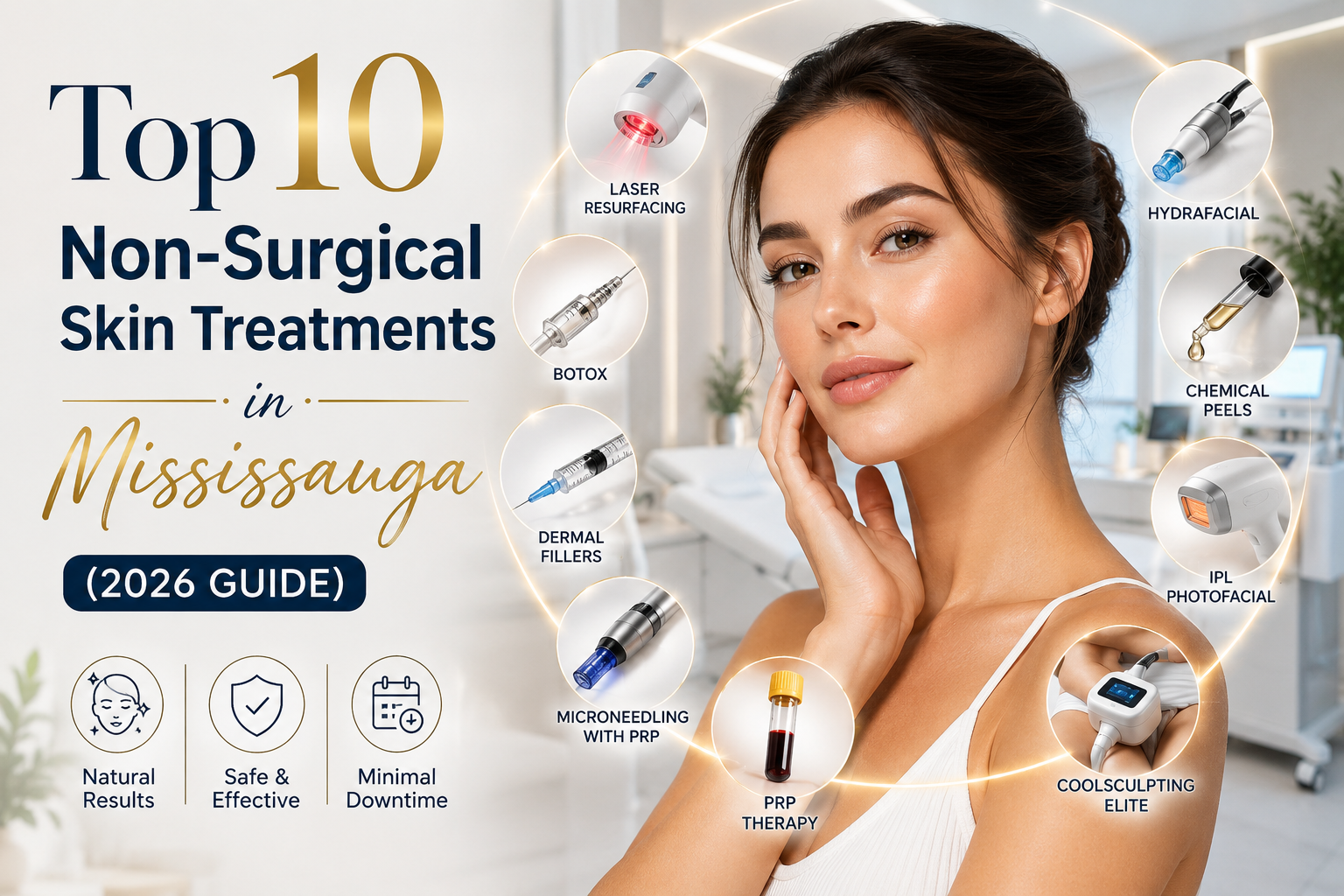
The most effective non-surgical skin treatments available in Mississauga in 2026 include laser skin resurfacing, Botox and dermal fillers, microneedling with PRP, Hydrafacial, chemical peels, IPL photofacials, radiofrequency (RF) skin tightening, and CoolSculpting for body contouring. Each treatment addresses different concerns,from fine lines and pigmentation to skin laxity and acne scarring,and all are available at physician-supervised medical spas across Mississauga, including at GlamDerm Cosmetic Clinic. |
Why Non-Surgical Skin Treatments Are Dominating Aesthetic Medicine in 2026
The global shift away from invasive cosmetic surgery toward minimally invasive and non-surgical alternatives is one of the defining trends in modern aesthetic medicine. According to the International Society of Aesthetic Plastic Surgery (ISAPS) 2024 Global Survey, non-surgical procedures now account for more than 68% of all cosmetic aesthetic treatments performed worldwide, a figure that has grown by 22 percentage points since 2015.
In Mississauga, this trend is mirrored and amplified by the city’s diverse, health-conscious, and digitally connected population. Residents are better informed about their options than ever before, and they are increasingly choosing treatments that offer meaningful, visible results with minimal downtime, no general anaesthesia, and no surgical risk. The medical spas and cosmetic clinics along the Hurontario corridor, near Square One, and throughout Mississauga’s residential neighbourhoods have responded by investing in the latest generation of non-surgical devices and expanding their injectable and regenerative medicine offerings.
This guide covers the ten most sought-after non-surgical skin treatments available in Mississauga in 2026. For each treatment, you will find a plain-language explanation of the science behind it, the concerns it addresses, the realistic results you can expect, the number of sessions typically required, and the key questions to ask any provider before you book.
Top Non-Surgical Skin Treatments in Mississauga for 2026
1. Fractional Laser Skin Resurfacing — Best for Acne Scars & Photoageing
Fractional laser resurfacing remains one of the gold-standard non-surgical skin treatments in Mississauga for patients dealing with moderate-to-severe acne scarring, photoageing, and texture irregularities. The treatment works by delivering thousands of microscopic laser columns deep into the dermis, triggering the skin’s natural wound-healing cascade and stimulating fresh collagen synthesis. Because only a fraction of the skin surface is treated at each session, leaving surrounding tissue intact, recovery is significantly faster than with older ablative laser platforms.
In 2026, Mississauga clinics predominantly offer two fractional laser modalities: fractional CO₂ (carbon dioxide) for deeper remodelling and fractional Erbium for lighter resurfacing with minimal thermal effect. The choice between them depends on your Fitzpatrick skin type, the severity of your concerns, and your tolerance for downtime. Patients with darker skin tones (Fitzpatrick IV–VI) require a specialist with experience in melanin-rich skin to minimize the risk of post-inflammatory hyperpigmentation (PIH).
Clinical studies published in Lasers in Surgery and Medicine report average acne scar improvement of 51–75% after three fractional CO₂ sessions, with results continuing to develop for up to six months as new collagen matures. For photoageing, patients typically see measurable improvement in texture and radiance after a single session, with optimal outcomes following a series of two to three treatments spaced six to eight weeks apart.
- Sessions required: 1–3 for skin texture; 3–5 for moderate acne scarring
- Average cost in Mississauga: $400–$900 per session depending on treatment area and device
- Best candidates: Adults with acne scars, sun-damaged skin, or early signs of ageing; not recommended during active breakouts or in patients on isotretinoin
2. Botox & Neuromodulators — Best for Dynamic Wrinkles & Preventative Ageing
Botulinum toxin (Botox, Dysport, Xeomin, Nuceiva) continues to be the single most performed non-surgical aesthetic treatment in Canada. According to RealSelf’s 2024 Trends Report, neuromodulator injections account for over 40% of all medical spa procedure volume in major Canadian urban centres, and Mississauga is no exception. The treatment temporarily relaxes the targeted facial muscles that cause expression-related wrinkles, lines that deepen over years of repetitive movement.
The clinical administration of neuromodulators has evolved considerably. In 2026, experienced injectors in Mississauga routinely offer customized dosing protocols tailored to individual facial anatomy, muscular activity, and aesthetic goals. Beyond conventional wrinkle treatment, current applications include jaw slimming (masseter reduction for patients who grind their teeth or want a softer jawline), hyperhidrosis (excessive sweating) treatment, brow lifting, lip flip, and the Nefertiti neck lift, all performed without a single incision.
Results onset within 3–7 days and typically last 3–4 months, though regular patients often find that consistent treatment extends the duration over time as muscular activity gradually diminishes. The key to natural-looking outcomes lies in accurate dosing and precise anatomical placement, which is why choosing a physician-led clinic or a nurse injector with advanced training is non-negotiable.
- Sessions required: Single treatment; repeat every 3–4 months for maintenance
- Average cost in Mississauga: $10–$14 per unit; most areas require 20–60 units
- Best candidates: Adults 25+ with dynamic wrinkles or a preventive approach to facial ageing
3. Dermal Fillers — Best for Volume Restoration & Facial Contouring
Hyaluronic acid (HA) dermal fillers are the complementary partner to neuromodulators, addressing the volume loss and structural changes that occur as we age rather than just muscular movement. HA is a naturally occurring substance in the body that attracts and retains water, making it an ideal filler material, it integrates smoothly with surrounding tissue and is fully reversible with hyaluronidase enzyme if the outcome requires adjustment.
Leading HA filler brands available at top cosmetic clinics in Mississauga include Juvederm Voluma, Restylane Lyft, and Sculptra (a poly-L-lactic acid biostimulator that works differently by triggering collagen production over several months). The “liquid facelift”, a combination of strategic filler placement and Botox, has emerged as one of the most requested combination treatments at Mississauga medical spas, offering surgically significant facial rejuvenation without a single incision or general anaesthetic.
Longevity varies by product and treatment area: lip fillers typically last 6–12 months; cheek and jawline fillers can persist 12–18 months; and Sculptra results develop gradually but can last up to two years. As with all injectable treatments, safety depends entirely on the skill and anatomical knowledge of the practitioner. Vascular complications from filler, while rare, are a recognized risk, another compelling reason to seek treatment only at physician-supervised facilities.
- Sessions required: 1 treatment; touch-ups at 6–18 months depending on area
- Average cost in Mississauga: $650–$900 per syringe; most areas require 1–3 syringes
- Best candidates: Adults experiencing facial volume loss, asymmetry, or seeking feature enhancement
4. Microneedling with PRP — Best for Skin Texture, Scars & Natural Glow
Microneedling, also known as collagen induction therapy (CIT), uses a device fitted with fine medical-grade needles to create controlled micro-injuries in the skin’s dermis. These micro-channels trigger the body’s natural repair response: fibroblast activation, new collagen synthesis, and elastin production. On its own, microneedling is an effective treatment for improving skin texture, reducing pore size, and softening superficial acne scars. When combined with platelet-rich plasma (PRP), the results are significantly amplified.
In a PRP-enhanced session, a small amount of the patient’s blood is drawn, processed in a centrifuge to concentrate the growth-factor-rich plasma, and then applied topically during the microneedling procedure so it penetrates the freshly created micro-channels. The growth factors in PRP, including PDGF, TGF-β, VEGF, and EGF, accelerate tissue regeneration and collagen remodelling at a cellular level. Research published in the Journal of Cutaneous and Aesthetic Surgery confirms that PRP-enhanced microneedling produces statistically superior outcomes compared to microneedling alone across all measured parameters of skin quality.
This treatment is also used at several Mississauga PRP clinics for scalp applications to address androgenic hair loss, with studies demonstrating measurable increases in hair follicle density and diameter after a series of three to four scalp PRP sessions.
- Sessions required: 3–6 sessions spaced 4 weeks apart for optimal results
- Average cost in Mississauga: $450–$700 per session (PRP-enhanced); $250–$400 for microneedling alone
- Best candidates: Adults seeking natural-looking improvement in skin quality, texture, or early hair thinning
Learn more about PRP therapy at GlamDerm → https://www.glamderm.ca/services/platelet-rich-plasma/
5. Hydrafacial MD — Best for Instant Radiance & Sensitive Skin
The Hydrafacial MD has achieved near-ubiquitous status among non-surgical skin treatments in Mississauga’s medical spa market, and for good reason. It delivers immediate, visible results with zero downtime, making it one of the few treatments suitable for patients who want to look their best the same day. The multi-step vortex technology simultaneously exfoliates, extracts impurities, and infuses the skin with a customized blend of hydrating serums and antioxidants.
The procedure is divided into three core phases: cleansing and exfoliation (using a mild lactic and salicylic acid blend to loosen dead skin cells and sebum), extraction (using painless suction to clear pores of blackheads and debris), and hydration (infusing the skin with hyaluronic acid, peptides, and antioxidants tailored to your skin concern). Booster serums targeting specific issues, pigmentation, redness, growth factors, can be added to the standard protocol.
Its suitability for virtually all skin types, including sensitive and rosacea-prone skin, gives it a uniquely broad appeal. Many patients incorporate Hydrafacial into their monthly skincare maintenance routine alongside more intensive treatments such as laser or chemical peels performed quarterly. It is an excellent starting point for first-time medical spa clients in Mississauga who want to understand how their skin responds to professional treatment before committing to more advanced procedures.
- Sessions required: 1 for immediate glow; monthly for maintenance
- Average cost in Mississauga: $175–$280 per session; booster add-ons $50–$150
- Best candidates: All skin types; particularly beneficial for dehydrated, congested, or dull skin
6. Medical-Grade Chemical Peels — Best for Pigmentation & Skin Renewal
Medical-grade chemical peels represent one of the most evidence-rich non-surgical skin treatments available, with a clinical history spanning more than five decades. Unlike over-the-counter peels available at pharmacies, medical-grade formulations, available exclusively at licensed clinics—use higher-concentration active acids (glycolic, salicylic, TCA, mandelic, or Jessner’s solution) that penetrate beyond the superficial epidermis to achieve meaningful structural change.
In 2026, Mississauga cosmetic clinics offer a tiered range of peel depths. Superficial peels (AHA/BHA concentrations up to 30%) deliver light exfoliation with no downtime and are often used as monthly maintenance. Medium-depth peels (TCA 20–35%) address pigmentation, fine lines, and mild textural irregularities with 3–5 days of visible peeling. Deep peels (Phenol-based) are less commonly performed but can achieve dramatic rejuvenation in a single session—though they require careful patient selection and extended aftercare.
For Mississauga’s highly diverse patient population, the choice of peel formulation and concentration must be carefully matched to Fitzpatrick skin type. Darker skin tones are more susceptible to PIH from aggressive peels and require mandelic acid, azelaic acid, or low-concentration TCA formulations under experienced clinical oversight. This is one area where the physician-supervised model of medical spas provides a meaningful safety advantage over beauty salons.
- Sessions required: 1–6 depending on concern severity and peel depth
- Average cost in Mississauga: $100–$400 per session
- Best candidates: Patients with pigmentation, dull skin, or early ageing; requires sun avoidance post-treatment
7. IPL Photofacial — Best for Sun Damage, Redness & Rosacea
Intense Pulsed Light (IPL) therapy uses broad-spectrum light energy—filtered to target specific chromophores (pigment and haemoglobin) in the skin—to address two of the most common complexion concerns: brown spots from sun exposure and red, uneven tone from vascular conditions such as rosacea and telangiectasia. Unlike lasers, which emit a single focused wavelength, IPL delivers multiple wavelengths simultaneously, making it a versatile tool for improving overall complexion quality in a single treatment type.
The mechanism differs by target. For pigmented lesions (sun spots, age spots, freckles), IPL energy is absorbed by melanin in the dark lesion, causing it to fragment and eventually rise to the surface as a temporary darkening before shedding. For vascular lesions (redness, broken capillaries), IPL energy is absorbed by oxyhaemoglobin in the blood vessel wall, causing the vessel to collapse and gradually be reabsorbed. Patients commonly describe treated sun spots as appearing darker and coffee-ground-like for 5–7 days before clearing.
IPL is most effective for patients with lighter skin tones (Fitzpatrick I–III) where the contrast between target chromophore and surrounding skin allows precise energy delivery. For Fitzpatrick IV and above, the risk of inadvertent absorption by background melanin requires careful energy calibration or alternative treatment modalities.
- Sessions required: 3–5 sessions spaced 3–4 weeks apart
- Average cost in Mississauga: $250–$450 per session for full-face
- Best candidates: Fair-to-medium skin tones with visible sun damage, rosacea, or diffuse redness
8. Radiofrequency (RF) Skin Tightening — Best for Laxity & Jawline Definition
Radiofrequency skin tightening has undergone a significant technological leap in recent years, with devices such as Morpheus8 (fractional RF microneedling), Thermage FLX, and Sofwave now available at leading Mississauga medical spas. RF energy heats the collagen fibres in the deep dermis and subcutaneous tissue to a precise therapeutic temperature (typically 60–70°C), triggering immediate collagen contraction (visible as immediate tightening) and stimulating long-term neocollagenesis over the following 3–6 months.
Morpheus8, a fractional RF microneedling device, has become particularly popular in 2026 for its ability to simultaneously remodel the dermis and address subdermal fat for a dual tightening and contouring effect. It is one of the few non-surgical treatments clinically validated for use on darker skin tones without the pigmentation risks associated with laser or IPL. Clinical studies show average skin tightening improvements of 20–35% in laxity scores after a series of three treatments.
For patients who are not yet ready for a lower face lift but are noticing early jowling, neck looseness, or loss of jawline definition, RF skin tightening provides a credible non-surgical alternative with progressive results that continue to develop for six months post-treatment. Thermage FLX—the latest generation of capacitive RF—remains the device of choice for patients who prefer a single-session treatment over a series.
- Sessions required: 1 (Thermage FLX) to 3 (Morpheus8 series)
- Average cost in Mississauga: $800–$2,500 per session depending on device and area
- Best candidates: Adults 35–65 with mild-to-moderate skin laxity; not a replacement for surgical lifting in advanced cases
9. CoolSculpting Elite — Best Non-Surgical Fat Reduction Treatment
CoolSculpting Elite, the second-generation cryolipolysis platform from Allergan Aesthetics, is the only FDA-cleared non-surgical fat reduction treatment available at Mississauga medical spas. The device uses precisely controlled cooling to target and crystallize subcutaneous fat cells at a temperature that destroys fat cells without damaging overlying skin or surrounding tissue. The crystallized fat cells undergo apoptosis (programmed cell death) and are gradually metabolized by the lymphatic system over 8–12 weeks.
The Elite platform introduced redesigned applicators with C-shaped cups that achieve better tissue contact and up to 18% greater fat layer reduction per cycle compared to the original CoolSculpting system, according to Allergan’s clinical data. Dual sculpting—treating two areas simultaneously with two applicators—is available at equipped Mississauga clinics and cuts total treatment time in half for patients targeting multiple areas.
It is important to emphasize that CoolSculpting is a body contouring treatment, not a weight-loss solution. Ideal candidates are within 15 kg of their target weight but have persistent localized fat deposits that are resistant to diet and exercise. Results are permanent in the treated area, as the destroyed fat cells do not regenerate—provided the patient maintains a stable weight post-treatment.
- Sessions required: 1–3 cycles per area; results visible at 8–12 weeks
- Average cost in Mississauga: $600–$1,200 per applicator cycle
- Best candidates: Near-ideal weight adults with localized fat pockets; not suitable for obese patients
10. PDRN / Polynucleotide (PN) Therapy — The Emerging Biostimulator of 2026
Polynucleotide (PN) therapy—also known as PDRN (polydeoxyribonucleotide)—is the standout emerging non-surgical skin treatment gaining traction at Mississauga cosmetic clinics in 2026. Derived from salmon DNA (which shares a high degree of biocompatibility with human DNA), polynucleotides are injected intradermally to stimulate fibroblast activity, tissue regeneration, and profound deep hydration. Unlike HA fillers, which primarily add volume, PN therapy works biologically to improve the skin’s intrinsic quality from within.
Originally developed in South Korea and now widely adopted across Europe and increasingly in Canada, PN injectables such as Juvelook, Nucleofill, and Rejuran Healer deliver measurable improvements in skin elasticity, fine-line depth, and overall luminosity that patients and clinicians describe as a “skin quality reset.” A 2023 meta-analysis in the Aesthetic Surgery Journal examining 12 randomized controlled trials found statistically significant improvements in skin hydration, elasticity, and collagen density compared to placebo at 8-week follow-up.
For Mississauga patients who have already optimized their injectable Botox and filler regimen and are looking for the next level of skin quality improvement, PN therapy represents a scientifically credible and minimally invasive option. It is particularly well-suited for the delicate under-eye area, where traditional fillers can cause fluid retention, and for patients who prefer a biostimulating approach over volumization.
- Sessions required: 3–4 sessions spaced 2–4 weeks apart; annual maintenance
- Average cost in Mississauga: $500–$800 per session
- Best candidates: Adults seeking deep skin quality improvement and rejuvenation beyond standard injectables
Non-Surgical Skin Treatments: Side-by-Side Comparison
Use the table below to quickly identify which treatment best matches your primary skin concern, recovery tolerance, and budget:
| Treatment | Best For | Sessions | Downtime | Cost/Session |
| Fractional Laser | Acne scars, photoageing | 3–5 sessions | 3–7 days | $400–$900 |
| Botox | Dynamic wrinkles | Every 3–4 mo | None | $200–$800 |
| Dermal Fillers | Volume loss, contouring | 1 treatment | 1–3 days | $650–$900/syr |
| Microneedling + PRP | Texture, scars, hair loss | 3–6 sessions | 1–3 days | $450–$700 |
| Hydrafacial | Dullness, congestion | Monthly | None | $175–$280 |
| Chemical Peel | Pigmentation, renewal | 1–6 sessions | 0–7 days | $100–$400 |
| IPL Photofacial | Sun damage, rosacea | 3–5 sessions | 1–3 days | $250–$450 |
| RF Skin Tightening | Laxity, jawline | 1–3 sessions | Minimal | $800–$2,500 |
| CoolSculpting Elite | Stubborn fat pockets | 1–3 cycles | None | $600–$1,200 |
| PN Therapy | Skin quality, hydration | 3–4 sessions | 1–2 days | $500–$800 |
How to Choose the Right Non-Surgical Skin Treatment in Mississauga
With ten high-quality options available, the challenge is identifying the right treatment—or combination of treatments, for your specific skin concerns, lifestyle, and budget. Here is a framework that our clinical consultants at GlamDerm use with every new patient:
Step 1: Define Your Primary Concern
Be specific. “I want better skin” is a starting point; “I have post-inflammatory hyperpigmentation on my cheeks from acne three years ago” is a treatment brief. Different concerns map to different modalities: pigmentation responds best to IPL or chemical peels; laxity requires RF or biostimulators; volume loss needs fillers; texture irregularity responds to fractional laser or microneedling.
Step 2: Consider Your Downtime Tolerance
Non-surgical does not always mean no downtime. Fractional laser resurfacing and medium-depth chemical peels involve several days of visible peeling and redness. If you need to be presentable at work within 24 hours, Hydrafacial, Botox, and polynucleotide therapy are better-suited options. Discuss your schedule honestly with your practitioner so the treatment plan is realistic.
Step 3: Verify Skin Type Compatibility
Your Fitzpatrick skin type—a scale of I (very fair, burns always) to VI (very dark, never burns)—determines which treatments are safe for you without a meaningful risk of adverse pigmentation. Always disclose your ethnic background and how your skin responds to sun exposure. A competent clinic will conduct a Fitzpatrick assessment as part of the intake process.
Step 4: Evaluate the Provider, Not Just the Treatment
The same treatment on the same device can produce excellent or mediocre results depending entirely on the skill of the practitioner and the quality of pre- and post-treatment care. Check qualifications through the CPSO or CNO public registers, ask to see actual before-and-after photos from the clinic’s own patients (not stock images), and ensure a detailed consultation precedes any treatment recommendation.
Industry Statistics: Non-Surgical Treatments in Canada (2026)
| Key Data Points
• Non-surgical procedures account for 68%+ of all global cosmetic treatments (ISAPS 2024) • Botox remains Canada’s #1 aesthetic treatment by volume for the 9th consecutive year (RealSelf 2024) • Canadian medical aesthetics market projected at CAD $1.8B by 2027 (Grand View Research 2024) • PRP facial satisfaction rate exceeds 78% based on peer-reviewed clinical data (J. Cosmetic Dermatology 2023) • Average first-treatment age in Canadian urban markets has declined to 32 years (RealSelf 2024 Trends) • RF skin tightening shows 20–35% measurable improvement in laxity scores after 3 sessions (clinical studies) • Polynucleotide therapy market in Canada grew 340% year-over-year from 2023 to 2025 (industry estimates) |
Frequently Asked Questions About Non-Surgical Skin Treatments in Mississauga
Q1. What is the most effective non-surgical skin treatment for anti-ageing in Mississauga?
There is no single universally best treatment because ageing affects different people differently. However, a well-designed combination protocol is consistently more effective than any single modality. A common evidence-based approach for comprehensive facial rejuvenation combines Botox (to relax dynamic wrinkles), hyaluronic acid fillers (to restore volume), RF skin tightening or fractional laser (to improve texture and laxity), and polynucleotide or PRP therapy (to optimize overall skin quality). During a consultation at a qualified Mississauga medical spa, a practitioner can assess your specific concerns and recommend the optimal sequence and combination.
Q2. How long do non-surgical skin treatment results last?
Duration varies significantly by treatment type. Botox results last 3–4 months; dermal fillers 6–18 months depending on area and product; CoolSculpting fat reduction is permanent in treated areas (assuming stable weight); laser resurfacing results develop over 3–6 months and can last years with appropriate sun protection and skincare maintenance; Hydrafacial provides an immediate glow lasting 4–6 weeks; RF skin tightening results continue developing for 6 months and can last 1–2 years. Most treatments benefit from periodic maintenance to sustain outcomes.
Q3. Are non-surgical skin treatments safe for dark skin tones in Mississauga?
Yes, but provider selection is critical. Several treatments—including certain laser modalities, IPL, and aggressive chemical peels—carry a meaningful risk of post-inflammatory hyperpigmentation (PIH) or hypopigmentation in Fitzpatrick IV–VI skin types when performed by inexperienced practitioners. Safer options for darker tones include RF microneedling (Morpheus8), mandelic acid peels, polynucleotide therapy, Hydrafacial, and Nd:YAG laser. Always confirm that your clinic has documented experience treating darker skin tones and ask to see representative before-and-after photos.
Q4. Can I combine multiple non-surgical treatments in one visit?
Yes, combination treatments are common and often synergistic. Botox and dermal fillers are routinely performed in the same session. Microneedling is frequently combined with PRP and applied serums. Hydrafacial can precede a light chemical peel. However, not all combinations are appropriate on the same day—for example, aggressive laser resurfacing should not be combined with injectables in the same session due to infection risk and compromised healing. Your practitioner will design a sequenced treatment plan that maximizes outcomes safely.
Q5. How do I find a qualified non-surgical skin treatment provider in Mississauga?
Verify physician credentials through the CPSO public register at cpso.on.ca. For nurse injectors, check the College of Nurses of Ontario (CNO) register. Ask any prospective clinic: who will perform the treatment; what device they use and when it was last serviced; how many procedures of this specific type the practitioner has performed; and whether they carry hyaluronidase on site (essential for emergency reversal of filler complications). A clinic that cannot answer these questions clearly is not the right choice regardless of pricing.
Q6. What is the difference between Botox and dermal fillers?
Botox (botulinum toxin) temporarily relaxes the muscles responsible for expression-related wrinkles—such as forehead lines and crow’s feet—by blocking the nerve signal to the muscle. It does not add volume. Dermal fillers, typically hyaluronic acid-based, physically fill space beneath the skin to restore volume, smooth folds, and enhance contours. They do not affect muscle movement. Many patients benefit from both, as they address complementary aspects of facial ageing: Botox targets dynamic lines caused by movement, while fillers address static lines and volume loss visible even at rest.
Q7. Is there a right age to start non-surgical skin treatments?
There is no universally correct age, but patterns have emerged from clinical practice. Preventive Botox—low-dose neuromodulator treatment to slow the formation of deep expression lines before they become static—is increasingly popular among patients in their mid-to-late twenties. Hydrafacials and light chemical peels are beneficial from the mid-twenties onward as maintenance. More intensive treatments such as fractional laser, RF tightening, and dermal fillers typically become relevant in the thirties and beyond as ageing-related changes become more apparent. The best starting point is a consultation with an experienced practitioner who can assess your individual skin and advise based on your goals.
Conclusion
Non-surgical skin treatments have reached a level of sophistication in 2026 that would have been unimaginable even a decade ago. Whether your concern is dynamic wrinkles, volume loss, skin laxity, persistent pigmentation, acne scarring, unwanted fat, or simply a desire for healthier, more radiant skin, there is now a clinically validated, non-invasive solution available at qualified medical spas across Mississauga.
The key to exceptional outcomes is not simply choosing the right treatment—it is choosing the right provider. Physician oversight, transparent consultation, evidence-based protocols, and attentive aftercare are the qualities that separate transformative results from disappointing ones. Use the criteria and frameworks in this guide as your evaluation checklist before booking any treatment.
As Mississauga’s aesthetic medicine landscape continues to evolve, staying informed and consulting with qualified professionals remains your most powerful tool for making decisions that are right for your skin, your health, and your goals.
Ready to Find the Right Treatment for Your Skin?
GlamDerm’s clinical team offers complimentary, no-obligation skin consultations to help you identify which non-surgical treatments are best matched to your specific concerns, skin type, and lifestyle. No pressure, no generic protocols,just an honest, evidence-based conversation about what will genuinely work for you. Book your consultation: https://www.glamderm.ca



Post Comment