Munich Walking Tour Itinerary for an Unforgettable Day
Designing the Perfect Single-Day Munich Walking Itinerary
Munich rewards extended exploration across multiple days, but for visitors with a single day available, a carefully designed walking itinerary can deliver a remarkably complete introduction to the city’s history, culture, and character. The key to a successful single-day Munich walking itinerary is realistic planning — selecting a coherent set of highlights that can be visited thoroughly rather than attempting to see everything superficially. This hour-by-hour itinerary guides you through the best of Munich’s walking experience in a sequence that minimizes backtracking, maximizes atmosphere at each location, and leaves time for the spontaneous discoveries and leisure moments that make any travel day genuinely memorable.
Morning: Eight to Ten O’Clock — Arriving in the Old City
Begin your day at Marienplatz before the crowds arrive, when the square has a quieter morning character quite different from its midday tourist intensity. The Glockenspiel does not perform until eleven, but the square and the New Town Hall facade deserve unhurried attention before the day’s visitors fill the space. Walk south to the Viktualienmarkt as the market stalls are opening and local shoppers begin their daily rounds — this is when the market is most authentically itself, operating as a functioning food market rather than a tourist attraction. Purchase a coffee and a freshly baked pretzel from a market stall for a breakfast experience that is entirely and perfectly Munich.
Mid-Morning: Ten to Twelve — Churches and Squares
Walk south along Sendlinger Strasse to the Asamkirche, which opens at nine and is best experienced in the morning light that plays through the church’s limited windows onto the extraordinary baroque decoration of the interior. Continue north through the pedestrian zone past the Karlstor to the Frauenkirche, which deserves twenty to thirty minutes for a proper exploration of the interior and, if time permits, a climb of one of the towers for a panoramic city view. Return to Marienplatz for the eleven o’clock Glockenspiel performance before walking north toward Odeonsplatz through the historically significant streets of the Altstadt.
Late Morning: Eleven-Thirty to One — Odeonsplatz and the Residenz
Arrive at Odeonsplatz in time to appreciate the square’s Italian-influenced architecture in the morning light that illuminates the yellow facade of the Theatinerkirche to particularly good effect. The Feldherrnhalle and the loggia behind it, where a small commemorative plaque marks one of the defining moments of twentieth-century Munich history, deserve several minutes of reflective attention from any visitor with knowledge of the events of November 1923. Walking through the Residenz’s exterior courtyards — freely accessible from Residenzstrasse — provides a sense of the palace complex’s extraordinary scale before or instead of a paid interior visit.
Afternoon: One to Three — Lunch and the Englischer Garten
A Munich Walking Tour itinerary that skips authentic Bavarian food is missing an essential part of the Munich experience. Lunch at a traditional restaurant in the Altstadt or a quick meal at the Viktualienmarkt provides the energy needed for the afternoon portion of the day. After lunch, walk northeast through the Hofgarten to the southern entrance of the Englischer Garten, where the river rapids surfers at the Eisbach wave provide one of Munich’s most unexpected and enjoyable spectacles. Walk north through the park to the Chinese Tower beer garden for a cold Bavarian beer under the chestnut trees — a restorative midday break that is as authentically Munich as any landmark visit.
Late Afternoon: Three to Five — Nymphenburg or Schwabing
Visitors who have moved efficiently through the morning and early afternoon itinerary have genuine options for the late afternoon, depending on their interests. The Nymphenburg Palace and its grounds, accessible by tram from the city center, represent one of Munich’s finest ensemble experiences — the summer palace of the Wittelsbachs surrounded by formal gardens, canals, and parkland that extends for several kilometers west of the city center. Alternatively, walking through the Schwabing district north of the Englischer Garten provides a contrasting experience of Munich’s bohemian intellectual tradition and its handsome late nineteenth-century residential architecture.
Evening: Five to Seven — Closing the Day
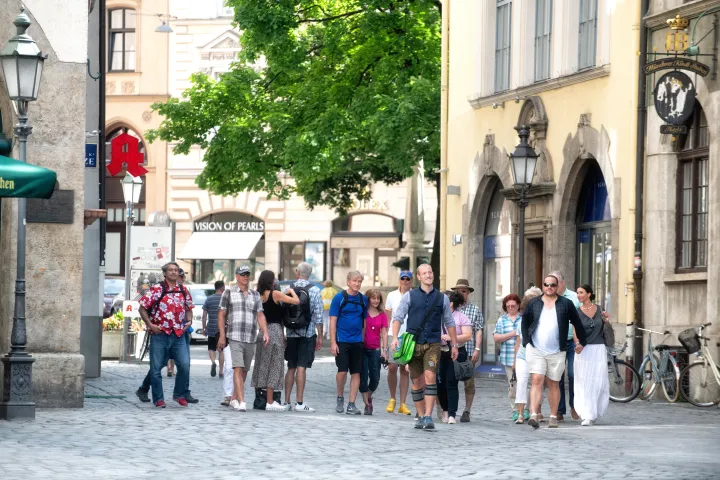
End your Munich walking day with an evening stroll through the illuminated streets of the Altstadt as shop lights come on and the city shifts into its evening rhythm. The pedestrian zone between Marienplatz and the Karlstor takes on a more local character in the evening hours as commuters move through and residents head to restaurants and bars. Dinner at one of the traditional Bavarian restaurants in the old city, followed by an evening beer at the Hofbräuhaus or at one of the many smaller traditional taverns that line the streets between Marienplatz and the Residenz, provides an appropriately atmospheric close to an unforgettable day in one of Europe’s finest walking cities.





Post Comment