Why Modern Boilers Are Essential for Eco-Friendly Homes
Creating an environmentally responsible home often starts with obvious changes. People install better insulation, switch to LED lighting, reduce water waste, and invest in energy-efficient appliances. Yet one of the largest energy consumers in most homes is often overlooked: the heating system.
For many households across the UK, heating accounts for a significant portion of annual energy use. As a result, the boiler plays a major role in both household carbon emissions and energy bills.
A modern boiler may not seem as exciting as solar panels or a heat pump, but upgrading an outdated heating system can be one of the most practical steps towards a greener home. The difference lies not only in how much fuel the system uses, but also in how efficiently it converts that fuel into usable heat.
If you’re trying to make your property more sustainable, understanding the role of modern heating technology is a sensible place to begin.
The Hidden Environmental Cost of Older Boilers
Many boilers continue operating long after their most efficient years have passed.
An older unit may still provide heating and hot water, yet that doesn’t necessarily mean it performs efficiently. As internal components age, the system often requires more fuel to achieve the same result.
Think of it like an older car. It may still get you from one place to another, but it usually consumes more fuel and produces more emissions than a newer model.
The same principle applies to domestic heating.
When a boiler wastes energy, homeowners pay for fuel that never fully contributes to warming the property. That inefficiency increases both household costs and environmental impact.
What Makes a Modern Boiler More Efficient?
The biggest improvement comes from how newer systems capture and use heat.
Traditional boilers allowed a significant amount of heat to escape through the flue. Modern condensing boilers recover much of this heat and reuse it within the heating process.
This creates a simple but important benefit.
Less fuel is required to generate the same amount of warmth.
The result can include:
- Lower fuel consumption
- Reduced carbon emissions
- Improved heating performance
- Lower running costs
- More consistent indoor temperatures
While savings vary between properties, efficiency improvements often become noticeable over the lifetime of the system.
Eco-Friendly Homes Need More Than Renewable Energy
Many people associate environmentally friendly homes exclusively with renewable technologies.
Solar panels, battery storage systems, and heat pumps often dominate discussions about sustainability. However, improving energy efficiency remains equally important.
Generating clean energy helps, but reducing waste matters just as much.
A poorly performing heating system can undermine other improvements throughout the property. Even a well-insulated home may consume unnecessary energy if the boiler operates inefficiently.
For this reason, heating upgrades often form part of broader energy-efficiency strategies recommended by housing and environmental experts.
Why Comfort and Sustainability Often Go Together
Some homeowners worry that reducing energy use means sacrificing comfort.
In reality, the opposite is frequently true.
A well-designed heating system can provide more stable indoor temperatures while consuming less fuel.
Modern boilers often offer:
- Better temperature control
- Faster heating response
- Improved hot water delivery
- Smarter heating schedules
- Enhanced reliability
When a system responds accurately to changing heating demands, less energy is wasted, and the home feels more comfortable throughout the day.
Efficiency and comfort are not competing goals. They often support each other.
How the Boiler Upgrade Scheme Fits Into the Picture
Home heating remains a major source of carbon emissions across the UK.
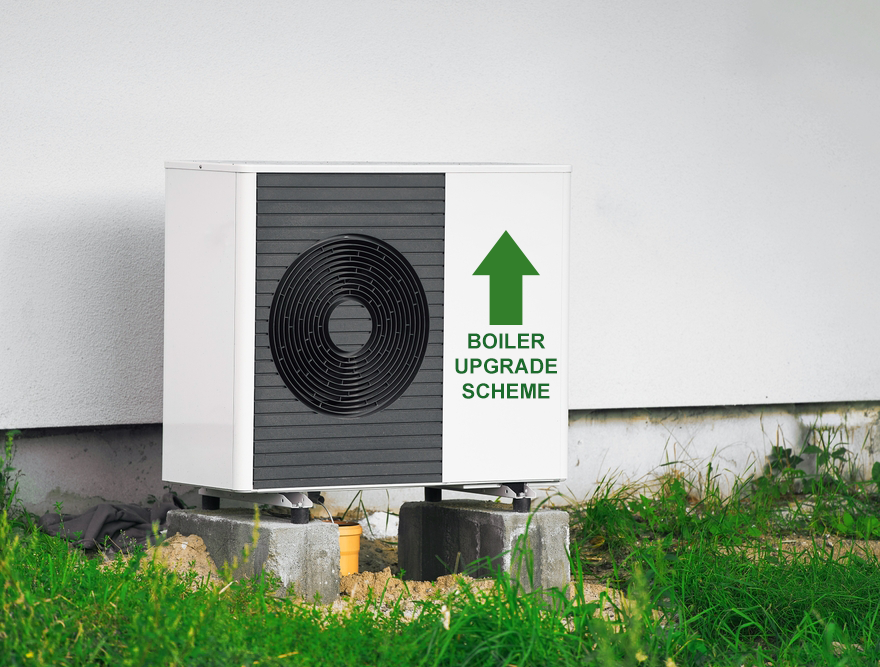
To support cleaner heating solutions, the government introduced the Boiler Upgrade Scheme. Despite the name, the programme does not fund replacement gas boilers.
Instead, it provides financial assistance towards eligible low-carbon heating technologies, including air source heat pumps and ground source heat pumps.
The reasoning behind the scheme is straightforward.
Although cleaner heating systems can reduce emissions, installation costs often discourage homeowners from making the switch. Government support helps reduce part of that financial barrier.
For households considering long-term environmental improvements, the scheme can make renewable heating technologies more accessible.
However, not every property is suitable for every solution. Professional assessment remains essential before deciding between a modern boiler, a heat pump, or another heating system.
When Replacing a Boiler Makes Environmental Sense
A common question is whether an existing boiler should be replaced immediately.
There is no universal answer.
If a relatively modern boiler operates efficiently and remains in good condition, replacing it solely for environmental reasons may not always provide immediate benefits.
On the other hand, replacement becomes easier to justify when a boiler:
- Frequently breaks down
- Requires expensive repairs
- Uses excessive fuel
- Struggles to heat the property
- Has reached the end of its expected lifespan
In these situations, upgrading can improve both performance and energy efficiency.
The environmental gains often accompany practical household benefits.
The Importance of Insulation Alongside Heating Upgrades
Even the most efficient boiler cannot overcome major heat loss.
A property that constantly loses heat through walls, roofs, windows, or draughts will continue wasting energy regardless of the heating system installed.
This is why energy specialists often recommend improving insulation before investing heavily in heating upgrades.
Common improvements include:
- Loft insulation
- Cavity wall insulation
- Draught-proofing
- Double or triple glazing
- Floor insulation where appropriate
When the building retains heat effectively, the heating system can operate more efficiently.
The combination usually delivers better results than focusing on either measure alone.
Questions Homeowners Often Ask
Before replacing a heating system, homeowners typically want practical answers rather than technical jargon.
Some useful questions include:
- How old is my current boiler?
- What efficiency improvements can I realistically expect?
- Would insulation upgrades provide greater savings first?
- How much maintenance will the new system require?
- Are there government support schemes available?
- Does an air source heat pump suit my property better than a boiler?
The answers depend on the individual home rather than broad assumptions.
That’s why professional assessments remain valuable.
Thinking Beyond the Next Winter
Heating systems are long-term investments.
Most homeowners will live with the consequences of their decision for many years. Looking only at installation costs can therefore be misleading.
Instead, consider:
- Future fuel consumption
- Reliability
- Maintenance requirements
- Environmental impact
- Household comfort
- Potential changes in energy policy
A slightly more expensive solution today may offer better value over the next decade.
Final Thoughts
An eco-friendly home is rarely the result of one dramatic upgrade. More often, it develops through a series of sensible improvements that work together to reduce waste and improve efficiency.
Modern boilers play an important role in that process. Compared with older systems, they generally use fuel more effectively, reduce unnecessary energy loss, and provide more reliable heating for everyday life.
At the same time, homeowners should understand the wider picture. Programmes such as the Boiler Upgrade Scheme encourage cleaner heating technologies, while insulation improvements and smart heating controls further reduce energy consumption.
The best choice depends on the property, budget, and long-term goals. By understanding how heating systems affect both energy use and comfort, homeowners can make decisions that benefit their household and the environment for years to come.



Post Comment