Medical Implant Machining for FDA-Compliant Medical Device Production
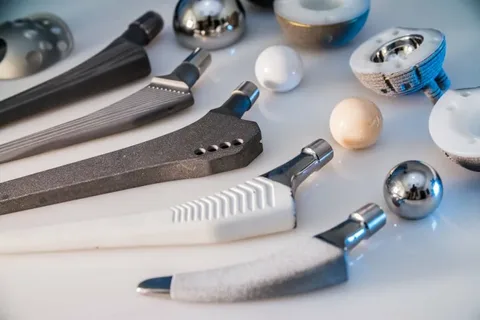
Medical device manufacturing demands extreme precision, consistency, and regulatory compliance. Among the most critical processes in this industry is medical implant machining, which involves producing implants such as orthopedic screws, dental implants, spinal cages, and joint replacements with highly controlled tolerances. These components must meet strict performance and safety standards because they are directly used inside the human body.
FDA compliance plays a major role in ensuring that every medical implant is safe, reliable, and traceable. Manufacturers must follow Good Manufacturing Practices (GMP), maintain validated processes, and ensure complete documentation for every production stage. Without compliance, even high-quality implants cannot be legally marketed in regulated regions like the United States.
Ensures implants meet strict safety and performance requirements
Requires precise CNC machining and advanced manufacturing systems
Involves full traceability and documentation of production processes
Supports compliance with FDA and international medical standards
Reduces risks of product recalls and patient safety issues
Precision Engineering in Medical Implant Machining
Precision is the foundation of successful medical implant machining, as even a microscopic deviation can affect implant performance inside the human body. Advanced CNC machines, including 5-axis systems, are commonly used to achieve complex geometries with ultra-tight tolerances. Materials like titanium, stainless steel, and cobalt-chrome alloys require specialized tooling and machining strategies to maintain structural integrity.
Engineers must also consider surface finish quality, as rough surfaces can impact osseointegration and healing. Smooth, biocompatible finishes are achieved through polishing, grinding, and advanced post-processing techniques. Every step must be controlled and verified to ensure the implant performs as intended under physiological conditions.
Achieves ultra-tight tolerances for critical medical applications
Uses CNC and multi-axis machining for complex implant shapes
Works with biocompatible materials like titanium and cobalt-chrome
Requires superior surface finishing for patient safety and healing
Includes strict quality inspection at every machining stage
Material Selection and Biocompatibility Requirements
In medical implant machining, material selection is one of the most important decisions affecting product safety and performance. Materials must be biocompatible, corrosion-resistant, and strong enough to withstand long-term use inside the human body. Titanium alloys are widely used due to their excellent strength-to-weight ratio and compatibility with human tissue.
Manufacturers must also ensure that materials comply with FDA-approved standards and international certifications. Any contamination or inconsistency in raw material composition can lead to serious medical risks. Therefore, strict supplier qualification and material traceability systems are essential in regulated production environments.
Uses biocompatible metals such as titanium and stainless steel
Ensures resistance to corrosion and bodily fluids
Requires FDA-approved and certified raw materials
Demands strict supplier quality control and verification
Maintains full traceability of all material batches
Quality Control and FDA Compliance in Manufacturing
Quality control is at the heart of FDA-compliant medical implant machining. Every implant must undergo rigorous inspection processes, including dimensional checks, surface analysis, and mechanical testing. Manufacturers use coordinate measuring machines (CMM), optical inspection systems, and advanced metrology tools to ensure consistency.
FDA compliance also requires documentation at every stage, including design validation, process validation, and final product verification. Any deviation must be recorded, investigated, and corrected through a formal corrective action system. This ensures that all implants meet strict safety and performance expectations before reaching patients.
Includes dimensional, mechanical, and visual inspections
Uses advanced metrology tools like CMM and laser scanning
Requires detailed documentation for FDA audits
Implements corrective and preventive action (CAPA) systems
Ensures consistent production quality across all batches
Advanced Technologies in Medical Implant Machining
Modern medical implant machining relies heavily on advanced technologies such as CAD/CAM software, automation, and AI-driven machining optimization. These technologies allow manufacturers to design and produce highly complex implant structures with improved speed and accuracy. Digital modeling ensures that implants are customized for patient-specific needs.
Automation also reduces human error and increases production efficiency. Robotic machining systems and smart CNC machines can operate continuously while maintaining consistent quality. This technological advancement has significantly improved the scalability and reliability of medical implant production.
Uses CAD/CAM software for precise digital design
Enables patient-specific customization of implants
Reduces errors through automation and robotics
Improves production speed and manufacturing efficiency
Enhances consistency in large-scale implant manufacturing
Conclusion
Medical implant machining is a highly specialized field that combines precision engineering, strict regulatory compliance, and advanced manufacturing technologies. To meet FDA standards, manufacturers must maintain rigorous quality control systems, use biocompatible materials, and ensure full traceability throughout the production process.
As medical technology continues to evolve, the demand for more accurate, durable, and customized implants will increase. Companies that invest in advanced machining systems and compliance-driven processes will be best positioned to deliver safe and reliable medical devices to the global healthcare industry.






Post Comment