How to Schedule Sales Meetings Through Effective Prospecting
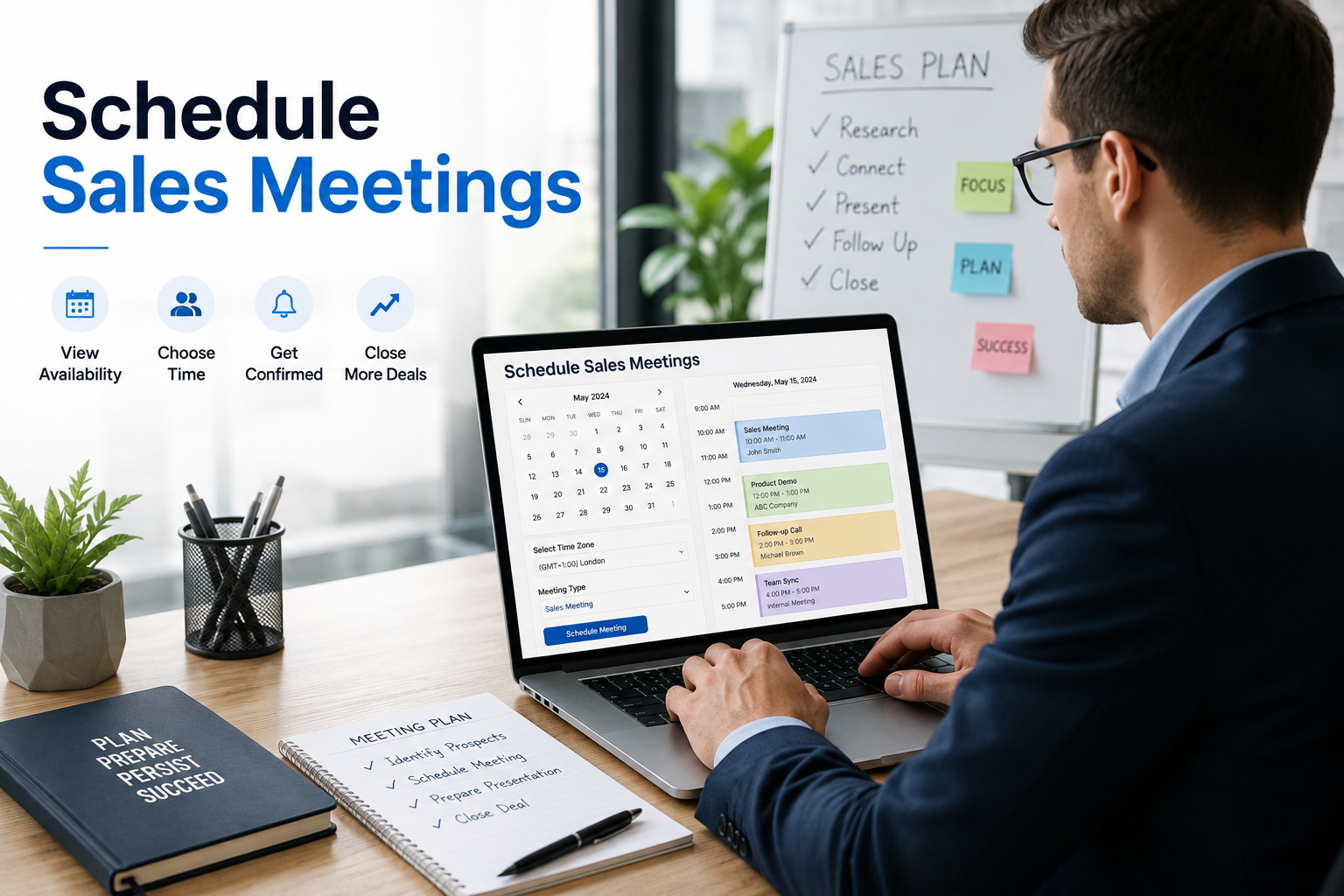
Effective prospecting is the foundation of a successful B2B sales process. Before a sales representative can deliver a strong presentation, qualify an opportunity, or close a deal, they first need to connect with the right prospects. That is why businesses looking to Schedule Sales Meetings need a prospecting strategy that is targeted, consistent, and focused on buyer needs.
Simply contacting a large number of prospects does not guarantee results. Modern buyers receive countless emails, phone calls, and LinkedIn messages every day. Sales teams need to identify the right prospects, understand their challenges, personalize their outreach, and create a compelling reason to have a conversation.
When prospecting is done effectively, it becomes much easier to Schedule Sales Meetings with prospects who are genuinely interested in solving a business problem.
What Is Sales Prospecting?
Sales prospecting is the process of identifying and contacting potential customers who may have a need for your product or service.
Prospecting can involve:
- Researching target companies
- Finding decision-makers
- Building prospect lists
- Sending personalized emails
- Making outbound calls
- Connecting through LinkedIn
- Following up with interested prospects
- Qualifying potential buyers
The purpose is not simply to generate a large contact list. Effective prospecting focuses on finding people and organizations that are likely to become valuable customers.
1. Define Your Ideal Customer Profile
Before beginning prospecting, determine exactly who your sales team should target.
An ideal customer profile (ICP) describes the type of company that is most likely to benefit from your solution. It may include industry, company size, revenue, location, business model, technology, and common business challenges.
A clearly defined ICP helps sales representatives avoid wasting time on poor-fit accounts.
For example, if your solution is designed for enterprise sales teams, targeting very small companies may produce activity but not meaningful opportunities.
The better your targeting, the easier it becomes to Schedule Sales Meetings with qualified prospects.
2. Build a High-Quality Prospect List
Once your ICP is established, build a list of relevant accounts and contacts.
Focus on quality rather than simply increasing the number of prospects.
For each account, identify:
- Company information
- Relevant decision-makers
- Job titles
- Business challenges
- Recent company developments
- Potential buying signals
A clean and well-researched prospect list gives representatives the information they need to create more relevant outreach.
It also makes the prospecting process easier to repeat and scale.
3. Research Prospects Before Contacting Them
Research is one of the most important parts of effective prospecting.
Before contacting a prospect, look for information that can help you understand their business situation.
Potential research areas include:
- Recent company announcements
- New leadership
- Expansion
- Hiring activity
- Product launches
- Funding
- Industry changes
- Technology adoption
The goal is not to become an expert on every company. Instead, identify one or two relevant details that can make your outreach more specific.
This gives your sales message a stronger reason for existing.
4. Create Personalized Outreach
Once you understand your prospect, use that information to personalize your message.
Avoid sending long messages that focus entirely on your company or product.
Instead, connect your outreach to a problem the prospect may be experiencing.
For example, a sales training provider might reach out to a growing B2B company experiencing inconsistent sales performance or long new-rep ramp times.
The message should explain why the issue may be relevant and offer a simple next step.
Personalization makes outreach feel more like a business conversation and less like mass marketing.
5. Use Multiple Prospecting Channels
Effective prospecting does not have to depend on one channel.
Sales teams can combine:
- Cold calling
- Personalized video
- Referrals
- Industry events
- Networking
- Account-based outreach
Using multiple channels gives representatives more opportunities to reach prospects.
However, multichannel prospecting should not mean repeatedly sending the same message everywhere.
Each interaction should provide context or value and move the conversation forward.
6. Follow Up Consistently
Many prospects will not respond to the first message.
That does not necessarily mean they are not interested. They may be busy, reviewing priorities, or simply missed the original message.
A structured follow-up process can help sales representatives remain visible without becoming intrusive.
Follow-ups can introduce additional information, share a useful resource, address a potential challenge, or simply provide another opportunity to respond.
Consistency is especially important when trying to Schedule Sales Meetings through outbound prospecting.
7. Qualify Before Booking
Effective prospecting should lead to qualified conversations rather than simply more appointments.
Before scheduling a meeting, determine whether the prospect has a legitimate reason to continue the discussion.
Qualification can explore:
- Business need
- Current challenges
- Company fit
- Potential impact
- Decision-making role
- Buying timeline
- Existing solutions
If the prospect has no relevant problem or realistic need, scheduling a meeting may not be the best use of your sales team’s time.
Qualification keeps the calendar focused on opportunities with genuine potential.
8. Create a Clear Call to Action
Your outreach should make it obvious what you want the prospect to do next.
Instead of using vague language such as “Let me know your thoughts,” provide a simple call to action.
For example, ask whether the prospect would be open to a short conversation about a specific business challenge.
You can also provide two potential meeting times or include a scheduling link.
A clear CTA removes uncertainty and makes it easier for interested prospects to take the next step.
9. Make Scheduling Simple
Once a prospect agrees to meet, avoid creating unnecessary friction.
A scheduling tool can allow the prospect to select a convenient time directly from the sales representative’s calendar.
Make sure the system accounts for:
- Time zones
- Working hours
- Calendar availability
- Meeting duration
- Buffer time
- Rescheduling
A simple booking experience helps maintain momentum between prospect interest and the actual sales conversation.
10. Prepare Before the Meeting
Prospecting does not end when the meeting is booked.
Sales representatives should prepare by reviewing the prospect’s company, role, previous communication, and potential challenges.
They should also establish a few discovery questions.
Preparation helps representatives create a more relevant conversation and prevents the meeting from becoming a generic sales pitch.
11. Focus on Discovery During the Meeting
The first meeting should focus on understanding the prospect.
Sales representatives can ask questions about:
- Current processes
- Business challenges
- Goals
- Desired outcomes
- Existing solutions
- Decision-making
- Timing
Strong discovery allows the salesperson to determine whether the solution is genuinely relevant.
It also helps the prospect feel heard rather than simply being presented with a product.
12. Use Sales Training to Improve Prospecting
Effective prospecting requires more than a good database or automation tool.
Sales representatives need the skills to research accounts, write relevant messages, handle objections, ask strong questions, and identify buying signals.
Ongoing sales training can help teams improve these skills and create a more consistent prospecting process.
Training should include practical role-playing and coaching so representatives can apply what they learn to real conversations.
13. Track Prospecting Performance
To improve the process, sales teams need to measure the right metrics.
Useful metrics include:
- Prospects contacted
- Response rate
- Positive response rate
- Meetings booked
- Meeting attendance
- Qualified meeting rate
- Opportunities created
- Pipeline generated
- Conversion rate
These metrics help sales leaders identify where improvements are needed.
For example, a low response rate may indicate a messaging or targeting problem. A high meeting rate but low opportunity rate may point to weak qualification.
Data makes it easier to improve the prospecting process over time.
Conclusion
Effective prospecting provides the foundation for a predictable sales pipeline. When sales teams understand their ideal customers, research prospects, personalize outreach, use multiple channels, and follow up consistently, they create more opportunities to Schedule Sales Meetings with qualified buyers.
The process should not stop once an appointment is booked. Qualification, preparation, discovery, and follow-up all play an important role in turning prospecting activity into real sales opportunities.
Sales teams that combine a structured prospecting process with effective sales training can improve both the quantity and quality of their conversations.
Ultimately, the goal is not simply to contact more prospects. It is to connect with the right people, create relevant conversations, and build a repeatable system that consistently turns prospecting efforts into qualified meetings and revenue.


Post Comment