How to Plan a Stress-Free Accessible Airport Transfer in Melbourne
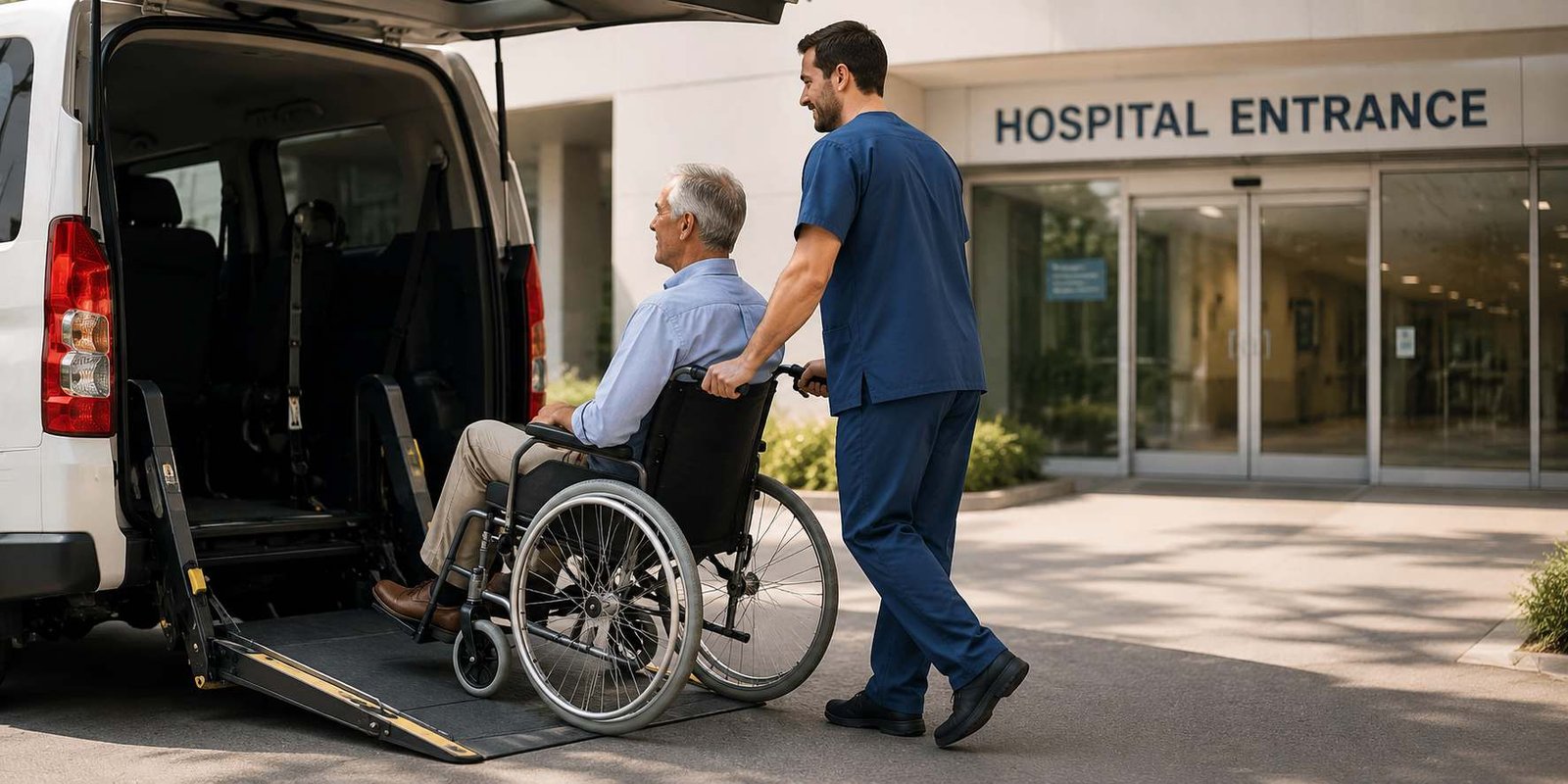
Catching a plane can be a fantastic and exciting thing to do, but for those who use a wheelchair or other form of mobility assistance (such as our older community members), Getting TO and FROM the airport often requires more thoughtful planning. From how you choose your vehicle to allow sufficient time to get your boarding assistance, a little prior preparation will go a long way to making travel less arduous.
Fortunately, Planning your accessible Melbourne travel has never been so easy. Melbourne airport does now offer specific Airport accessibility information to assist persons with a disability or mobility needs travel between specific areas. Nonetheless, you will still need to plan your transport ahead of you home as this still remains one of the most important components of comfortable transit.
Here is how to plan a smooth accessible airport transfer in Melbourne.
-
Book Your Accessible Transport Ahead of Time
One of the single greatest mistakes a traveller to Melbourne could possibly make would be the assumption of last minute transport will be there waiting for you.
For those with a mobility aid (e.g. Manual or electronic wheelchairs etc), standard taxi’s simply do not carry either disabled vehicle or maxi taxi’s large enough to safely transport the disabled person plus a travel aide. Arranging a booking with specialised disable accessible transport and maxi service ahead of time will give you ample opportunity to work through all of your particular transit needs together with our operations crew and secure you and your equipment a suitable and dedicated vehicle.
On arrival give one (1) day to seven (7) days notice by phone to the above disabled vehicle transport companies of: your personal mobility needs (eg: Manual or Electric Wheelchair or Walker), whether the disabled person can transfer from their wheelchair to an automotive vehicle; total number of passengers; luggage quantities; pickup address; and when your flight is due to arrive / depart the airport.
-
Build in a Little Extra Travel Time. There is no harm!
We rarely “want” to rush our transit time in airports – in fact for some passengers it may even pose them to difficulty in some areas.
Where possible, and for passengers that require additional physical transit from vehicle into terminal or from terminal into vehicle of transit… as well as assistance getting wheelchair into and secured at time of boarding; we strongly recommend that you schedule your transit to the Melbourne Airport many hours ahead of flight departure. Traffic patterns and conditions around the Melbourne Airport can change drastically during the course of the day and night. For an earlier flight, it makes sense that you plan to be picked up at least three (3) hours before your designated flight departure.
At the point of Arrival to the Melbourne airport similar logic applies. Once you clear customs and immigration you then need to be met and escorted from the Terminal to the car park and to meet up with your chauffeur.
The safest and surest approach is to build in buffer time into your schedule. This will allow all persons travelling as well as accompanying a disabled traveler to simply move at their leisure and without any concern.
-
Check Out the Airport’s Assistance Programs
The Melbourne Airport has designed the following accessibility tools for persons travelling who rely on any form of mobility device:
Airport Assist allows passengers to be guided through the airport between the parking garages, baggage areas, flight check ins and the passengers pick up / drop off points around the airport. The facility also operates a ‘Mobile Assist program’ which provides on-site support to any traveler that requires it. You can also find a “Mobility Hub” on the airport’s web-page offering handy details to help passengers plan your journey. It’s important to remember, although airport Staff provides assist to you within the airport vicinity, you’ll still need to arrange transportation into and / out of the airport to your intended destination such as; private home, Hotel or Hospital as needed.
-
Pick the Right Kind of Wheelchair Accessible vehicle.
Not all spacious vehicles transport disable passengers and cargo adequately and safely.
Prior to confirming your booking, clarify exactly what kind of wheelchair transport is available, and clarify whether or not the use of electric scooters and larger electronic chairs can stay within your travelling machine. A properly designated disabled accessible car/van will provide plenty of room as well as fitted restraints to immobilize the mobility aid when in transit. A wheelchair maxi taxi can also come in handy for families, group travel and or travellers that will require extra room for luggage but may not absolutely require disabled vehicle access (though they may still make available larger leg room etc.) .
-
Take the Whole Trip Into Consideration
An accessible airport transfer is not just a door-to-door exercise; it’s a holistic planning process.
Consider the total experience: home — airport check in — security — gate; your entire trip from start to finish. This holds true for arrival too, home — airport baggage collections — designated pickup point — vehicle — final destination. If the disabled travel person will need physical assistance when getting out of/into the car, or to transport luggage, ask your disabled transit company about how their chauffeurs cater to such physical help prior to booking. If the traveller/s will have Medical and /or Hospital transit commitments this could well be very useful if the disabled vehicle transport company are experienced in Medical Transit arrangements to and from hospitals.
-
Make Sure Information Is Within Easy Reach.
We always find it handy if your travellers carry their disabled transport company ‘s contact number on their person’ as well as copy of the travel booking and of course your flight details (important to change the booked flight on booking if your flight number is altered or cancelled for any reason). If someone else is travelling and organising transport on the disable travelers’ behalf, then a reminder to that somebody can usually do wonders.
-
Accommodate comfort in addition to disability accessibility.
The disabled traveler needs more than just the functionality of safe travel between two locations; but also requires a degree of comfort. After a few hours on planes, it’s reasonable that elderly travellers / Patients recovering after medical treatment, feel weary and are thus even more appreciative of a compassionate, competent and considerate transport provider who will care fully for them to and from the airport.





Post Comment