Purchasing a forklift is a significant investment for any business involved in warehousing, manufacturing, construction, logistics, or material handling. The right equipment can improve productivity, enhance workplace safety, and support long-term growth. However, finding the best value requires more than simply choosing the lowest price. Understanding how to evaluate fork truck sales can help businesses secure reliable equipment while maximizing their return on investment.
With numerous brands, models, and purchasing options available, buyers who take the time to research and compare options often save thousands of dollars while obtaining equipment that better meets their operational needs.
Why Smart Forklift Purchasing Matters
Forklifts play a critical role in daily operations. Choosing the wrong equipment can lead to increased maintenance costs, lower productivity, and unexpected downtime.
Industry reports indicate that material handling equipment directly impacts warehouse efficiency, with properly selected forklifts contributing to productivity improvements of more than 20%.
When evaluating fork truck sales, businesses should focus on overall value rather than price alone. A forklift that performs reliably for years may ultimately provide greater savings than a cheaper machine that requires frequent repairs.
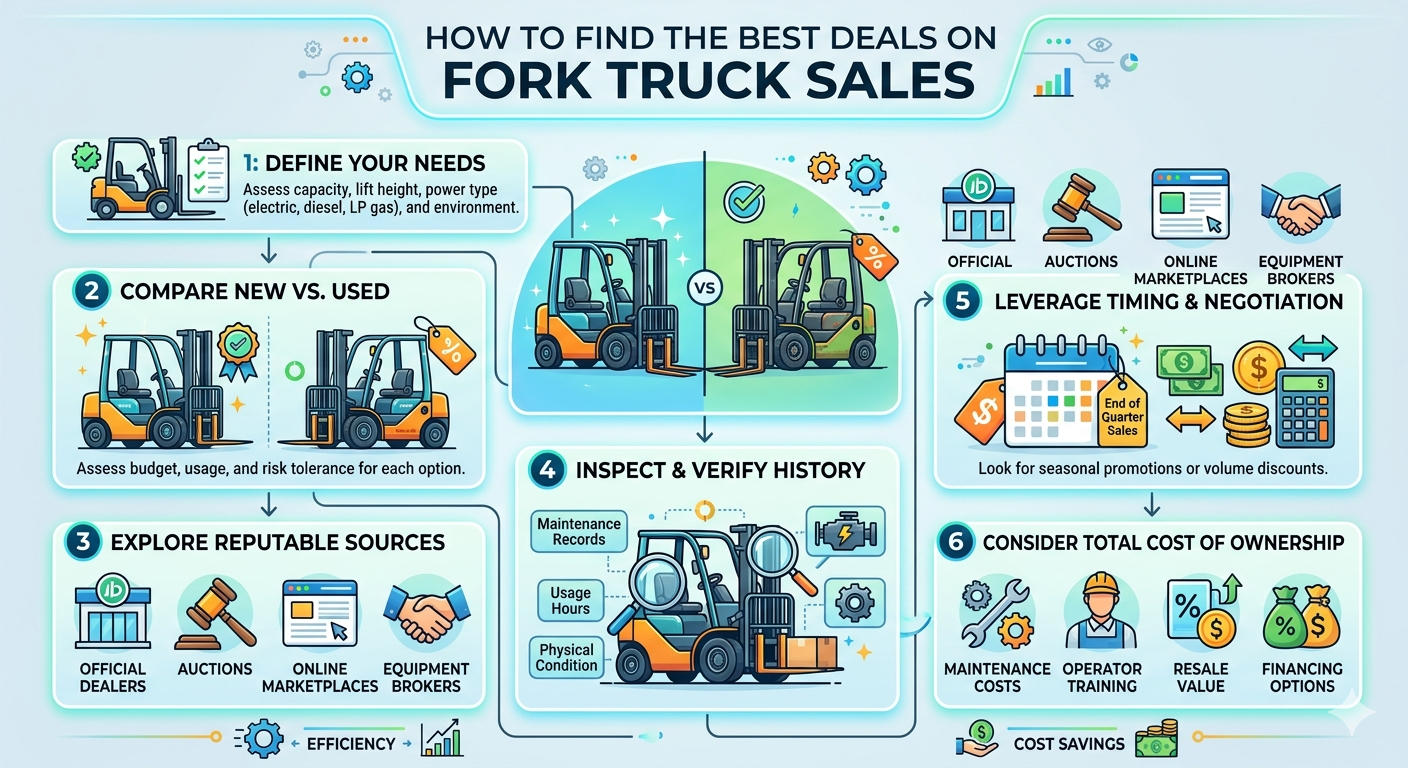
Start by Defining Your Operational Needs
Before comparing available equipment, businesses should clearly identify their requirements.
Determine Load Capacity
One of the first considerations is lifting capacity.
Questions to ask include:
What is the average load weight?
What is the heaviest load handled regularly?
Will future growth require greater lifting capacity?
Choosing the right capacity helps prevent overpaying for unnecessary power while ensuring safe operation.
Consider Your Work Environment
Different forklifts are designed for different conditions.
Common environments include:
Indoor warehouses
Outdoor storage yards
Construction sites
Manufacturing facilities
Distribution centers
Understanding where the forklift will operate helps narrow down the best options during fork truck sales research.
Evaluate Lift Height Requirements
Businesses should also consider storage configurations and lifting heights.
A forklift designed for ground-level work may not be suitable for facilities with high warehouse racks or vertical storage systems.
Compare Multiple Fork Truck Dealers
One of the most effective ways to find the best deal is to compare multiple suppliers.
Request Several Quotes
Obtaining quotes from different providers allows businesses to compare:
Equipment pricing
Warranty coverage
Service packages
Delivery costs
Financing options
Price differences between suppliers can sometimes be significant, especially for higher-capacity forklifts.
Evaluate Dealer Reputation
A low price is not always the best value.
Before purchasing, research:
Customer reviews
Industry reputation
Years in business
Service capabilities
Parts availability
Reliable dealers involved in fork truck sales often provide stronger support and better long-term value than suppliers focused solely on price.
Consider New vs. Used Forklifts
Both new and used equipment can offer advantages depending on business needs and budget.
Benefits of New Forklifts
New forklifts typically provide:
Manufacturer warranties
Advanced technology
Improved fuel efficiency
Lower early maintenance costs
Modern safety systems
For businesses planning long-term ownership, new equipment may offer greater reliability.
Benefits of Used Forklifts
Used forklifts can significantly reduce upfront costs.
Advantages include:
Lower purchase prices
Faster return on investment
Reduced capital expenditures
Many businesses find excellent value through used fork truck sales, provided the equipment has been properly maintained.
Always inspect service records and equipment condition before purchasing used machinery.
Look for Seasonal Promotions and Special Offers
Timing can have a significant impact on equipment pricing.
End-of-Year Sales
Many dealers offer discounts at the end of the year to reduce inventory and meet sales goals.
Fleet Upgrades
Businesses replacing large fleets often create opportunities to purchase quality used forklifts at competitive prices.
Manufacturer Incentives
Manufacturers occasionally provide:
Cash rebates
Extended warranties
Reduced financing rates
Service package discounts
Monitoring these promotions can help buyers secure better deals during fork truck sales events.
Don’t Overlook Financing Options
Financing can make high-quality equipment more affordable while preserving working capital.
Equipment Loans
Traditional equipment loans allow businesses to spread costs over manageable monthly payments.
Leasing Programs
Leasing offers flexibility and may be ideal for companies that prefer upgrading equipment regularly.
Benefits of leasing include:
Lower upfront costs
Predictable monthly payments
Access to newer equipment
Reduced ownership responsibilities
Comparing financing options can sometimes create greater savings than negotiating equipment price alone.
Inspect Equipment Thoroughly Before Purchase
Whether purchasing new or used equipment, careful inspection is essential.
Key Areas to Evaluate
Important components include:
Hydraulic systems
Tires
Mast assemblies
Brakes
Steering systems
Batteries or engines
Safety equipment
For used forklifts, maintenance records provide valuable insight into the machine’s condition and service history.
Professional inspections can help identify potential issues before finalizing a purchase.
Consider Total Cost of Ownership
The purchase price is only one part of the overall investment.
When reviewing fork truck sales, businesses should calculate long-term ownership costs.
Factors to Consider
These expenses may include:
Fuel or electricity costs
Routine maintenance
Tire replacement
Parts availability
Operator training
Insurance
A forklift with a slightly higher purchase price may ultimately cost less if it offers greater reliability and lower maintenance expenses.
Focusing on total ownership costs provides a more accurate picture of overall value.
Prioritize After-Sales Support
Reliable service support can significantly affect equipment performance and lifespan.
Before purchasing, ask suppliers about:
Maintenance Programs
Preventive maintenance programs help reduce downtime and extend equipment life.
Emergency Repair Services
Fast repair support minimizes disruptions when unexpected problems occur.
Parts Availability
Easy access to replacement parts helps reduce repair delays and improve fleet reliability.
Strong after-sales support is often one of the most important factors in successful fork truck sales transactions.
Use Technology to Compare Options
Many equipment suppliers now offer online inventories that make comparison shopping easier.
Businesses can review:
Equipment specifications
Pricing information
Available features
Financing options
Customer reviews
Using digital tools allows buyers to identify potential deals before visiting dealerships or requesting quotes.
Technology has made the purchasing process more transparent and efficient than ever before.
Final Thoughts
Finding the best deals on fork truck sales requires careful research, price comparisons, and a clear understanding of operational requirements. By evaluating load capacity needs, comparing multiple suppliers, considering both new and used equipment, and calculating total ownership costs, businesses can make smarter purchasing decisions.
The right forklift is more than just a piece of equipment it is a long-term investment in productivity, efficiency, and workplace safety. Taking the time to explore available options and negotiate effectively can help companies secure reliable equipment at a competitive price while maximizing value for years to come.





Post Comment