How Press Release Distribution Helps Businesses Grow
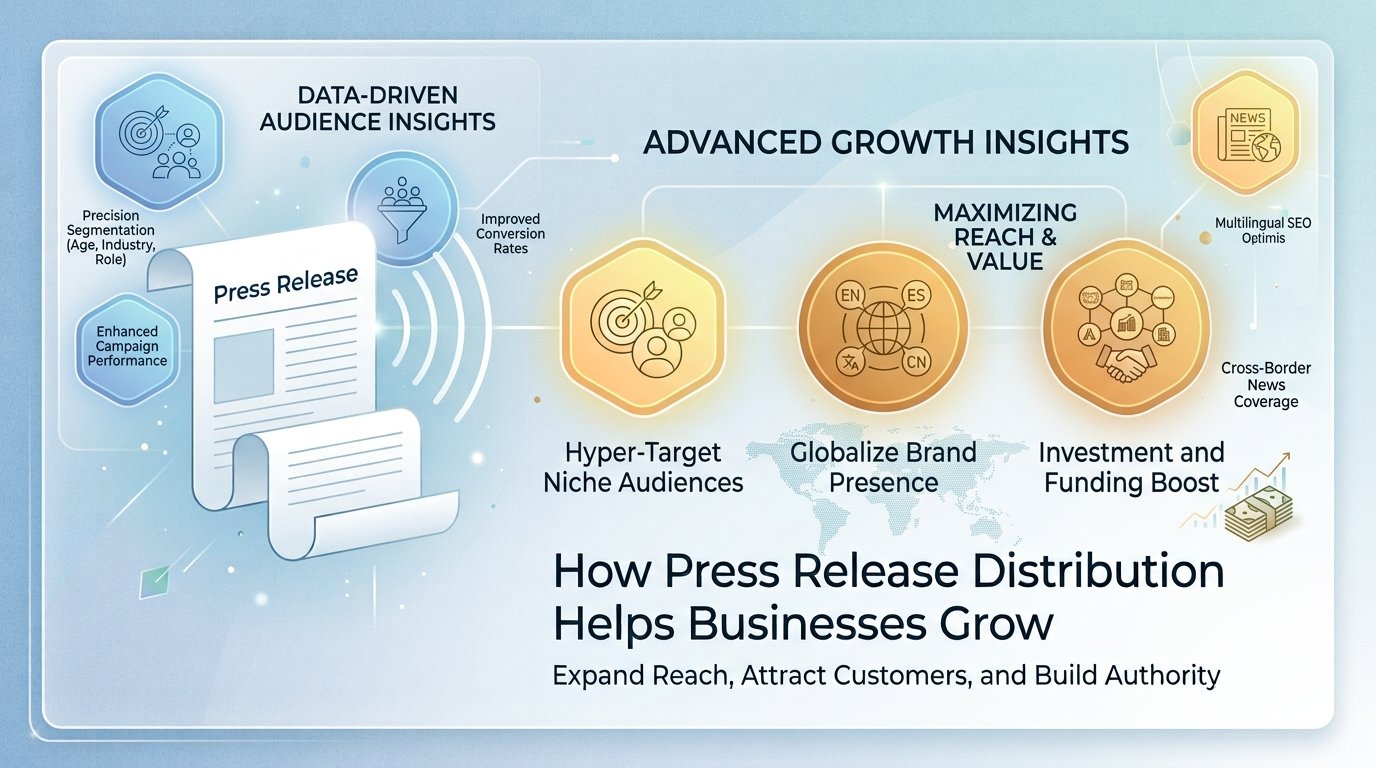
For businesses in the United States, growth often depends on more than having a strong product or service. Companies also need to communicate important developments clearly, build awareness, establish credibility, and reach the audiences that matter to them.
This is where press release distribution can play a useful role.
A press release gives a company a structured way to announce news such as a product launch, funding round, partnership, expansion, executive appointment, research finding, acquisition, award, or significant company milestone. Distribution takes that announcement beyond the company’s own website and social media channels, helping make it accessible to journalists, publications, industry audiences, and other interested readers.
However, press release distribution should not be viewed as a guaranteed shortcut to publicity. Its value depends heavily on the quality of the announcement, the relevance of the target audience, the distribution strategy, and the credibility of the information being shared.
What Is Press Release Distribution?
Press release distribution is the process of delivering a company’s news announcement to selected media channels, journalists, publications, newsrooms, and online platforms.
Traditionally, businesses relied heavily on public relations professionals to identify relevant journalists and send announcements directly to them. Modern distribution services can supplement that process by making releases available across broader networks.
A typical distribution process may involve:
- Preparing and reviewing the press release
- Selecting geographic or industry targets
- Submitting the announcement to a distribution service
- Editorial or formatting review
- Publishing the release
- Distributing it through selected channels
- Monitoring publication and media activity
- Reviewing performance reports
The purpose is not simply to publish words on the internet. Effective distribution is about making relevant company information available where appropriate audiences can discover it.
How Press Release Distribution Helps Businesses Grow
Press release distribution can support business growth in several ways, although results vary depending on the announcement and execution.
1. Increases Awareness of the Business
A company cannot build recognition if its target audience rarely encounters its name.
Press releases can provide another channel for communicating meaningful business developments. When a company announces something genuinely newsworthy, distribution can help place that information in front of people who may not regularly visit the company’s website.
For example, a growing technology company announcing a major partnership may use a press release to explain what the partnership means, who is involved, and how it affects customers or the broader market.
The release becomes an additional source of information that can support broader communications efforts.
2. Creates a Public Record of Company News
A well-published press release can serve as a permanent reference point for a company’s announcement.
This can be useful for customers, investors, journalists, business partners, and other stakeholders researching the company.
Instead of relying entirely on temporary social media posts, a business can maintain accessible records of significant milestones. These records can contribute to a broader corporate communications history.
For this reason, companies should make sure that important announcements contain accurate dates, names, facts, quotations, contact information, and supporting details.
3. Supports Brand Credibility
Credibility is built through consistent and verifiable communication.
A professionally written press release gives businesses an opportunity to explain developments in a formal news format. It can provide context that may be difficult to communicate through a short social media update.
That does not mean that every press release automatically makes a company more credible. The opposite can happen when announcements contain exaggerated claims, unsupported statistics, vague statements, or information that cannot be verified.
Businesses should therefore prioritize accuracy over promotional language.
An announcement should answer basic questions such as:
- What happened?
- Who is involved?
- When did it happen?
- Where is it relevant?
- Why does it matter?
- What evidence or supporting information is available?
4. Helps Businesses Reach New Audiences
One of the biggest limitations of owned media is that companies primarily reach people who already know about them.
Distribution can introduce company announcements to audiences outside an existing customer base.
This is particularly relevant for startups and small businesses that have limited brand recognition. Instead of relying solely on their existing email subscribers or social followers, they can use newsworthy announcements as opportunities to reach industry-specific audiences.
For example, a small healthcare technology company may have limited visibility among healthcare publications. An announcement about a meaningful partnership, research development, or expansion could provide a legitimate reason to communicate with that sector.
Press Release Distribution for Small Businesses
Press Release Distribution for Small Businesses can be especially useful when resources are limited.
Large corporations often have dedicated communications teams, established media relationships, and substantial public relations budgets. Smaller companies may not have those advantages.
A carefully prepared press release can give a small business a structured communication asset without requiring a large internal communications department.
However, small businesses should be selective about what they announce.
Not every update is newsworthy.
A minor website redesign or routine operational change may not justify a formal press release. On the other hand, events such as securing significant funding, entering a new market, forming an important partnership, launching an innovative product, opening a new location, or receiving a notable industry award may be more appropriate.
Focus on Relevance Instead of Volume
Small businesses should avoid distributing frequent releases simply to create activity.
Quality is generally more important than quantity.
A useful approach is to ask:
Would someone outside the company reasonably consider this development newsworthy?
If the answer is no, the information may be better suited to a blog post, newsletter, customer email, or social media update.
Make the Announcement Easy to Understand
Small businesses should avoid assuming that readers already understand their industry.
A good release explains the announcement in straightforward language and provides enough context for someone unfamiliar with the company to understand why the development matters.
Technical terminology should be used only when it helps communicate the information accurately.
The Role of SEO in Press Release Distribution
Press releases and SEO are often discussed together, but businesses should maintain realistic expectations.
A press release can create additional online content associated with a company and may help people discover the business through search. It can also provide a useful reference page that companies can share through their communications channels.
However, distributing a press release does not automatically guarantee higher search rankings.
Search engines evaluate many signals when determining search visibility. A business should therefore avoid treating press release distribution as a substitute for a comprehensive SEO strategy.
Instead, a release can complement other activities such as:
- Publishing useful website content
- Building authoritative backlinks naturally
- Improving technical SEO
- Maintaining accurate business information
- Developing industry expertise
- Creating valuable resources
- Earning independent media coverage
Businesses interested in understanding how distribution fits into a broader communications strategy can review this guide to choosing a press release distribution service.
National vs. Global Press Release Distribution
The appropriate geographic distribution depends on where the news is relevant.
A U.S.-based local business opening a new location may benefit more from regional distribution than from an international campaign.
A company entering multiple foreign markets, announcing an international partnership, or expanding its operations across countries may have a stronger reason to consider Global Press Release Distribution.
Global distribution can help companies communicate with audiences across different geographic markets. However, international announcements require additional consideration.
Companies should account for:
- Local market relevance
- Language differences
- Regulatory considerations
- Cultural context
- Regional media interests
- Time zones
- Country-specific terminology
A release intended for an international audience should not simply be translated word-for-word without considering whether the message makes sense within the target market.
Choosing the Right Distribution Strategy
There is no single distribution strategy that works for every company.
A business should first identify the purpose of the announcement.
For example:
| Announcement | Potential Distribution Focus |
|---|---|
| Local store opening | City or regional |
| U.S. product launch | National |
| Industry partnership | Industry-specific |
| Funding announcement | Business and financial audiences |
| International expansion | Global |
| Executive appointment | Business and industry publications |
| Research announcement | Relevant specialist media |
The goal should be relevance rather than chasing the largest possible number of outlets.
A distribution network that reaches the wrong audience may produce less value than a smaller network focused on publications and readers who are genuinely interested in the subject.
What Makes a Press Release Effective?
Distribution cannot compensate for a weak announcement.
A strong press release usually contains a clear headline, concise lead paragraph, supporting details, relevant quotations, company background, and media contact information.
The headline should communicate the main development rather than simply promoting the company.
For example:
Weak:
“Leading Company Announces Exciting New Opportunities”
Stronger:
“ABC Technologies Opens New Chicago Operations Center to Support Midwest Customers”
The second headline provides specific information that immediately tells readers what happened.
Use Evidence Where Possible
Businesses should support important claims with verifiable information.
Instead of saying that a product is “the best in the industry,” a company can provide measurable information such as independently verified research, customer adoption figures, certifications, awards, or other relevant evidence where appropriate.
This supports the principles of experience, expertise, authoritativeness, and trustworthiness that are important to high-quality business communication.
Measuring the Results
Businesses should establish realistic expectations before distributing a release.
Possible metrics include:
- Number of published placements
- Referral traffic
- Website visits
- Engagement with the announcement
- Brand mentions
- Media inquiries
- Backlink activity
- Qualified leads where appropriate
- Audience or geographic reach
It is important to distinguish between publication and editorial media coverage.
A release being published through a distribution network does not necessarily mean that an independent journalist has chosen to cover the story.
This distinction matters when evaluating results. Businesses should review reports carefully and determine which outcomes actually contributed to their communication objectives.
Common Mistakes to Avoid
Several mistakes can reduce the effectiveness of press release distribution.
Overly Promotional Language
A press release should communicate news rather than read like an advertisement.
Excessive superlatives and unsupported claims can reduce credibility.
Distributing Every Company Update
Routine announcements may not provide enough public value to justify distribution.
Ignoring the Audience
A release written for investors will differ from one intended for local consumers or technical professionals.
Using Unsupported Claims
Statistics and claims should be accurate and, where appropriate, supported by credible evidence.
Expecting Guaranteed Media Coverage
Distribution can increase access to an announcement, but independent journalists decide whether a story deserves additional coverage.
Focusing Only on Outlet Numbers
A large distribution number does not automatically mean a campaign was successful. Audience relevance, credibility, engagement, and meaningful outcomes are more useful considerations.
How Businesses Can Get More Value From Press Releases
A press release should be treated as one component of a broader communications strategy.
Before distribution, businesses can identify the primary objective, define the target audience, prepare supporting materials, verify all facts, and select the geographic and industry focus that matches the announcement.
After distribution, the company can continue communicating the news through appropriate channels.
For example, a business may:
- Add the announcement to its newsroom
- Share it with employees
- Reference it in investor communications
- Publish related educational content
- Share relevant information on social media
- Provide additional information to interested journalists
- Track traffic and audience response
This approach turns a single announcement into a broader communication asset without relying on the press release alone.
The Importance of Choosing a Responsible Distribution Provider
Businesses should evaluate distribution providers based on transparency, editorial processes, targeting options, reporting, geographic reach, and clearly defined services.
Vertex Newswire, for example, describes its distribution service as including editorial review, newsroom publication, distribution options, multimedia support, and reporting. The company also distinguishes between publication and independent third-party media pickup.
That distinction is important because businesses should understand exactly what a distribution service provides before measuring campaign performance.
A responsible provider should make it clear what is included in a package rather than implying that distribution guarantees independent editorial coverage.
Final Thoughts
Press release distribution can help businesses communicate important developments, increase awareness, create accessible records of company news, and reach audiences beyond their existing channels.
Its effectiveness, however, depends on the quality and relevance of the announcement.
For small businesses, the strongest approach is usually selective distribution based on genuinely newsworthy developments. For companies operating across multiple markets, Global Press Release Distribution may be appropriate when the announcement has meaningful international relevance.
Ultimately, press release distribution works best when it is treated as part of a broader public relations and communications strategy rather than as a standalone growth tactic.
Businesses that focus on accurate information, audience relevance, credible evidence, clear messaging, and measurable objectives are better positioned to get meaningful value from their announcements while maintaining the trust of readers and media professionals.


Post Comment