Dubai Healthcare City License: Guide to Faster Healthcare Licensing and Regulatory Compliance
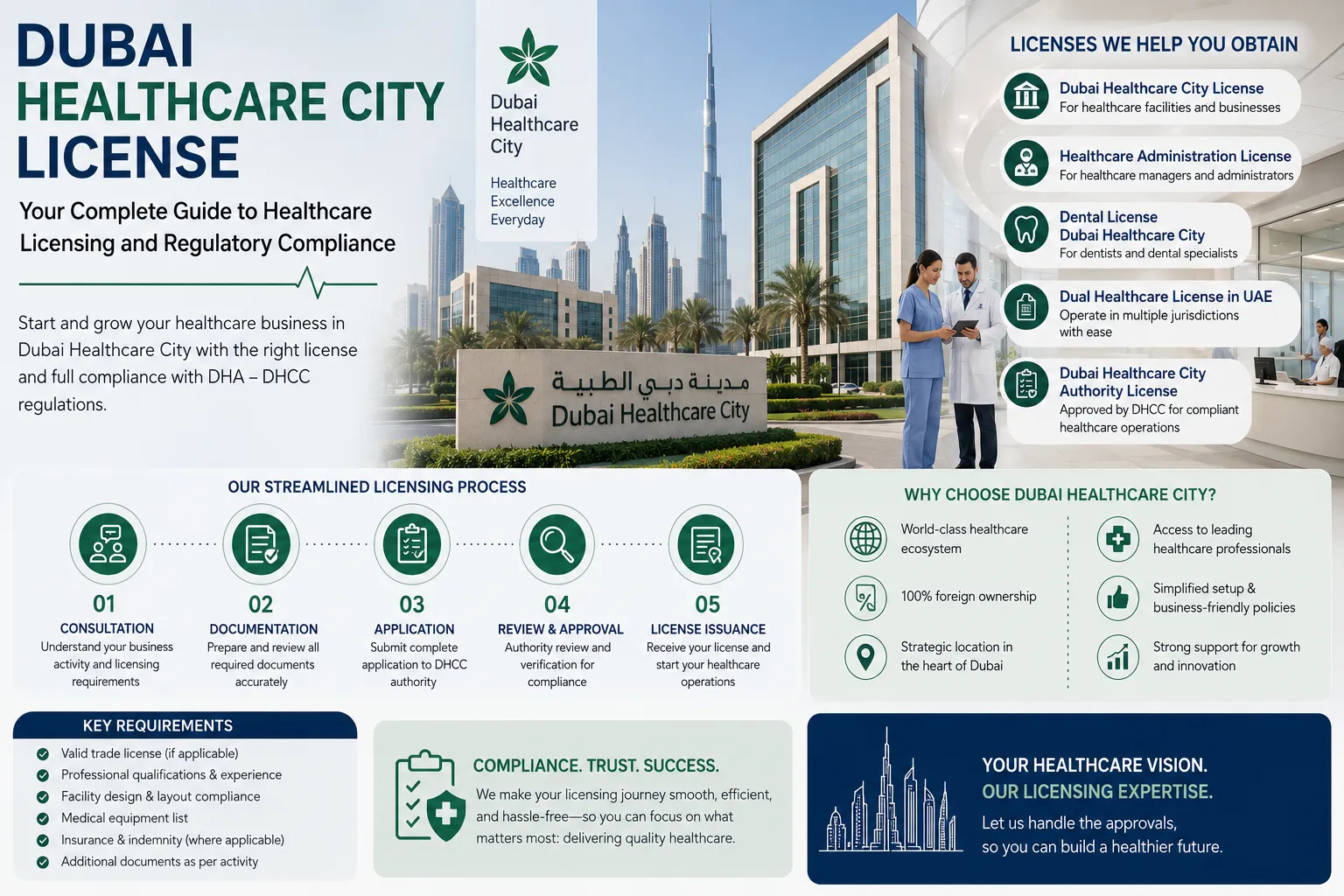
Launching a healthcare business in Dubai offers tremendous opportunities, but navigating the licensing process can often feel overwhelming. Whether you plan to establish a specialty clinic, dental practice, diagnostic center, rehabilitation facility, or healthcare consultancy, understanding the licensing requirements is essential for a successful start.
Obtaining a Dubai Healthcare City License involves more than submitting an application. Healthcare investors and professionals must comply with regulatory standards, facility requirements, professional qualifications, and operational guidelines before receiving approval.
This guide explains how healthcare licensing works, common challenges applicants face, and practical strategies to simplify the approval process while avoiding costly delays.
Why Healthcare Licensing Is So Important
Healthcare licensing protects patients, healthcare providers, and the overall quality of medical services. Regulatory authorities ensure that every licensed healthcare organization operates according to established safety, ethical, and professional standards.
A properly licensed healthcare facility demonstrates that it has met operational, clinical, and infrastructure requirements necessary for delivering healthcare services.
Licensing also builds confidence among patients, investors, insurance providers, and business partners.
Understanding the Dubai Healthcare City Licensing Framework
Dubai Healthcare City (DHCC) has become one of the region’s leading healthcare free zones, attracting hospitals, specialty clinics, wellness centers, laboratories, pharmacies, educational institutions, and healthcare investors from around the world.
A Dubai Healthcare City Authority License is typically required for organizations and professionals wishing to operate within the Dubai Healthcare City ecosystem. The licensing process ensures that facilities comply with healthcare regulations while maintaining internationally recognized standards of patient care.
Healthcare businesses operating within DHCC benefit from a specialized healthcare ecosystem designed to support innovation, medical excellence, and international collaboration.
Common Challenges During Healthcare Licensing
Although the licensing process is well-structured, applicants often experience delays due to incomplete planning or documentation.
Incomplete Documentation
One of the most common reasons for licensing delays is submitting incomplete or inaccurate documentation. Missing business records, professional qualifications, facility drawings, or compliance documents can significantly slow the approval process.
Facility Design Issues
Healthcare facilities must meet specific infrastructure standards before licensing approval. Improper room layouts, insufficient clinical spaces, or missing technical requirements may require costly revisions.
Regulatory Compliance
Healthcare regulations continue to evolve as medical standards improve. Applicants must remain updated on licensing requirements, healthcare policies, and operational standards throughout the project.
Delayed Equipment Planning
Medical equipment selection should be coordinated with facility design and licensing requirements. Poor planning may result in installation delays or additional compliance reviews.
What Is a Healthcare Administration License?
Healthcare facilities require effective leadership to maintain operational efficiency, patient safety, and regulatory compliance.
A Healthcare Administration License may apply to organizations or professionals responsible for healthcare management, operational oversight, compliance, and facility administration, depending on the specific healthcare activity and regulatory framework.
Healthcare administrators play an essential role by managing:
- Clinical operations
- Regulatory compliance
- Staff coordination
- Financial planning
- Quality improvement initiatives
- Risk management
- Patient experience strategies
Strong healthcare administration contributes directly to organizational success and long-term sustainability.
Understanding Dental Licensing in Dubai Healthcare City
Dental professionals planning to establish or join a dental practice within DHCC must meet professional licensing requirements before providing clinical services.
Obtaining a Dental License Dubai Healthcare City typically involves verification of qualifications, professional experience, licensing documentation, competency assessments where applicable, and compliance with healthcare regulations.
Dental clinics must also satisfy infrastructure, infection control, equipment, and operational standards before becoming fully operational.
Proper planning can help dental practitioners complete the licensing process more efficiently while avoiding unnecessary project delays.
What Is a Dual Healthcare License in UAE?
As healthcare organizations expand across different jurisdictions, some providers explore opportunities related to a Dual Healthcare License in UAE.
Dual licensing arrangements may benefit healthcare organizations or professionals seeking to operate under multiple regulatory environments, depending on applicable laws and approval requirements.
Potential advantages include:
- Expanded service coverage
- Increased business flexibility
- Access to broader patient populations
- Greater operational opportunities
- Improved investment potential
Because licensing regulations vary based on healthcare activity and location, obtaining expert guidance before pursuing dual licensing can simplify the process.
Key Documents Commonly Required
Although documentation requirements vary by project type, healthcare applicants generally prepare several important documents during the licensing process.
These often include:
- Business registration documents
- Professional qualifications
- Passport and identification records
- Healthcare experience certificates
- Facility layout plans
- Medical equipment lists
- Operational policies
- Infection control procedures
- Quality management documentation
- Insurance information where applicable
Preparing documentation early helps minimize approval delays.
Best Practices for Faster Licensing Approval
Healthcare investors can significantly improve licensing efficiency by following a structured planning approach.
Begin Regulatory Planning Early
Understanding licensing requirements before signing leases or beginning construction helps avoid expensive redesigns later.
Coordinate Facility Design with Licensing Requirements
Healthcare architects, engineers, and consultants should collaborate closely to ensure the facility meets operational and regulatory expectations.
Select Equipment Strategically
Medical equipment planning should align with both clinical services and licensing requirements.
Maintain Accurate Documentation
Keeping organized records throughout the project simplifies communication with licensing authorities and reduces administrative delays.
Work With Healthcare Licensing Specialists
Experienced healthcare consultants understand local regulations, approval procedures, documentation requirements, and compliance expectations. Their expertise can help identify issues before they become obstacles.
Benefits of Professional Healthcare Licensing Support
Many healthcare organizations choose specialized consultants to manage licensing activities because healthcare regulations are highly detailed and continually evolving.
Professional licensing support can provide:
- Faster project coordination
- Reduced approval delays
- Improved regulatory compliance
- Better documentation management
- Efficient communication with authorities
- Lower project risks
- Greater confidence throughout the licensing process
This allows healthcare providers to focus on preparing high-quality medical services while licensing professionals handle regulatory complexities.
Conclusion
Obtaining a Dubai Healthcare City License is an essential step for healthcare organizations seeking to establish a successful presence within one of the region’s leading healthcare destinations. Whether you are opening a specialty clinic, applying for a Healthcare Administration License, obtaining a Dental License Dubai Healthcare City, or exploring a Dual Healthcare License in UAE, proper planning and regulatory compliance are key to long-term success.
By understanding licensing requirements, preparing documentation carefully, and working with experienced healthcare consultants, healthcare providers can reduce delays, improve compliance, and confidently move from concept to operation. A well-managed licensing process not only accelerates project timelines but also lays the foundation for delivering safe, high-quality healthcare services.





Post Comment