Why Automated Recurring Billing Is the Key to Predictable Revenue and Fewer Payment Delays
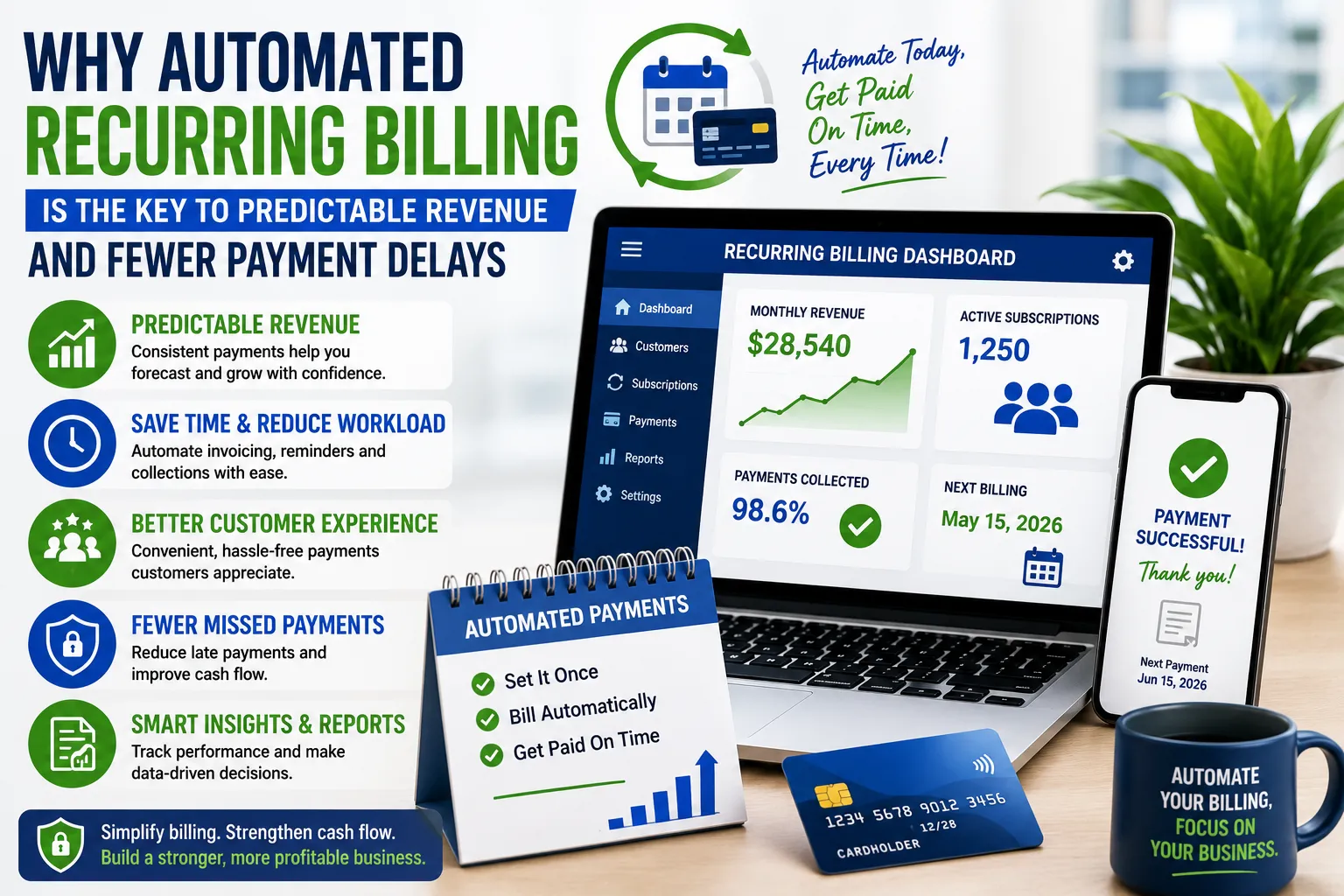
One of the biggest challenges businesses face is maintaining consistent cash flow. Whether you operate a subscription-based company, a service business, a membership organization, or a professional practice, delayed payments can create financial uncertainty and administrative headaches. Chasing invoices, sending payment reminders, and managing overdue accounts often consumes valuable time that could be spent growing the business.
Automated recurring billing has become a reliable solution for businesses looking to streamline payment collection and create a more predictable revenue stream. By automating scheduled payments, companies can reduce manual work, improve customer convenience, and minimize the risk of missed payments.
In today’s competitive business environment, implementing an efficient recurring billing system is no longer just a convenience—it is a strategic advantage that supports long-term growth and operational efficiency.
What Is Automated Recurring Billing?
Automated recurring billing is a payment process that automatically charges customers on a pre-approved schedule. After customers authorize future payments, the system securely processes transactions according to the agreed billing cycle.
Common recurring billing schedules include:
- Monthly subscriptions
- Annual memberships
- Weekly service plans
- Quarterly contracts
- Maintenance agreements
- Installment payment arrangements
Instead of manually generating invoices and collecting payments every cycle, the billing platform handles the process automatically.
Why Businesses Are Moving Away From Manual Billing
Manual billing processes may work for small operations initially, but they often become inefficient as a business grows.
Common problems associated with manual billing include:
Frequent Late Payments
Customers may forget due dates or overlook invoices, resulting in delayed revenue.
Administrative Overload
Employees spend countless hours preparing invoices, tracking payments, and following up with customers.
Increased Human Error
Manual processes can lead to incorrect invoices, duplicate charges, and missed billing opportunities.
Unpredictable Cash Flow
Without reliable payment collection, businesses may struggle to forecast revenue accurately.
Automated recurring billing helps eliminate many of these challenges by creating a structured and consistent payment process.
How Automated Recurring Billing Works
The process is designed to be simple and secure.
Customer Enrollment
Customers agree to recurring charges and provide payment information through a secure payment platform.
Billing Schedule Setup
The business establishes a recurring payment schedule based on its products or services.
Automated Processing
The billing system automatically processes payments according to the established schedule.
Payment Notifications
Customers receive payment confirmations, receipts, and billing reminders when applicable.
Account Management
Business owners can monitor transactions, update customer records, and access reporting tools from a centralized dashboard.
This streamlined approach significantly reduces manual intervention while improving payment consistency.
Benefits of Automated Recurring Billing
Businesses that adopt automated billing systems often experience improvements across multiple areas of operation.
More Predictable Revenue
One of the most significant advantages is revenue consistency.
When payments are collected automatically, businesses can better forecast income and make informed financial decisions regarding:
- Hiring
- Inventory purchases
- Marketing investments
- Expansion plans
Predictable revenue creates greater financial stability and reduces uncertainty.
Improved Cash Flow Management
Late payments can disrupt day-to-day operations.
Automated recurring billing helps ensure funds are collected on time, supporting healthier cash flow and reducing the need for collection efforts.
Increased Operational Efficiency
Automating repetitive billing tasks allows staff to focus on more strategic activities.
Businesses can reduce time spent on:
- Invoice creation
- Payment reminders
- Collection calls
- Manual payment tracking
- Administrative paperwork
Efficiency gains often result in lower operational costs.
Enhanced Customer Experience
Customers value convenience.
Automated billing eliminates the need for customers to remember due dates or manually submit payments every month.
This simplified experience often leads to higher satisfaction and stronger customer relationships.
Industries That Benefit Most From Automated Recurring Billing
Recurring payment systems are valuable across many industries.
Subscription Services
Software providers, content platforms, and membership programs rely heavily on recurring billing to maintain steady revenue.
Healthcare Practices
Medical offices and wellness providers often use recurring payments for treatment plans and membership programs.
Fitness Centers
Gyms and fitness facilities commonly automate monthly membership fees.
Professional Service Providers
Consultants, accountants, marketing agencies, and legal firms frequently use recurring billing for ongoing client agreements.
Home Service Businesses
Maintenance plans, monitoring services, and service contracts are ideal candidates for recurring payment automation.
Regardless of industry, businesses that collect payments regularly can benefit from automated systems.
Key Features to Look for in a Recurring Billing Platform
Choosing the right solution is essential for long-term success.
Important features include:
Secure Payment Processing
Protecting customer payment information should be a top priority.
Look for systems that offer:
- Data encryption
- PCI compliance
- Tokenization
- Fraud prevention tools
Flexible Billing Options
Businesses should be able to customize billing schedules based on customer needs.
Automated Payment Reminders
Notifications help customers stay informed while reducing support inquiries.
Reporting and Analytics
Comprehensive reporting provides visibility into:
- Revenue trends
- Customer retention
- Failed payments
- Transaction history
These insights help businesses make better decisions.
Reducing Failed Payments and Revenue Loss
Failed transactions are inevitable, but modern recurring billing systems include tools to minimize their impact.
Features such as:
- Automatic payment retries
- Card expiration updates
- Customer notifications
- Account management portals
help recover revenue that might otherwise be lost.
These capabilities improve collection rates while maintaining a positive customer experience.
How Recurring Billing Supports Business Growth
As businesses grow, billing complexity increases.
Automated recurring billing supports scalability by:
- Handling larger customer volumes
- Reducing administrative workload
- Improving financial visibility
- Supporting customer retention
- Enhancing operational efficiency
Rather than adding staff to manage billing processes, businesses can rely on automation to handle increasing transaction demands.
Final Thoughts
Automated recurring billing is more than a payment convenience—it is a powerful business tool that improves cash flow, reduces administrative work, and creates predictable revenue streams. By eliminating many of the challenges associated with manual invoicing and payment collection, businesses can focus on delivering value to customers and pursuing growth opportunities.
Whether you manage memberships, subscriptions, service agreements, or installment plans, recurring billing automation can help simplify operations while improving customer satisfaction. Businesses that invest in modern billing technology are often better positioned to scale efficiently and maintain strong financial performance.






Post Comment