Are Phentermine and Diethylpropion Legal in the UK? What You Need to Know
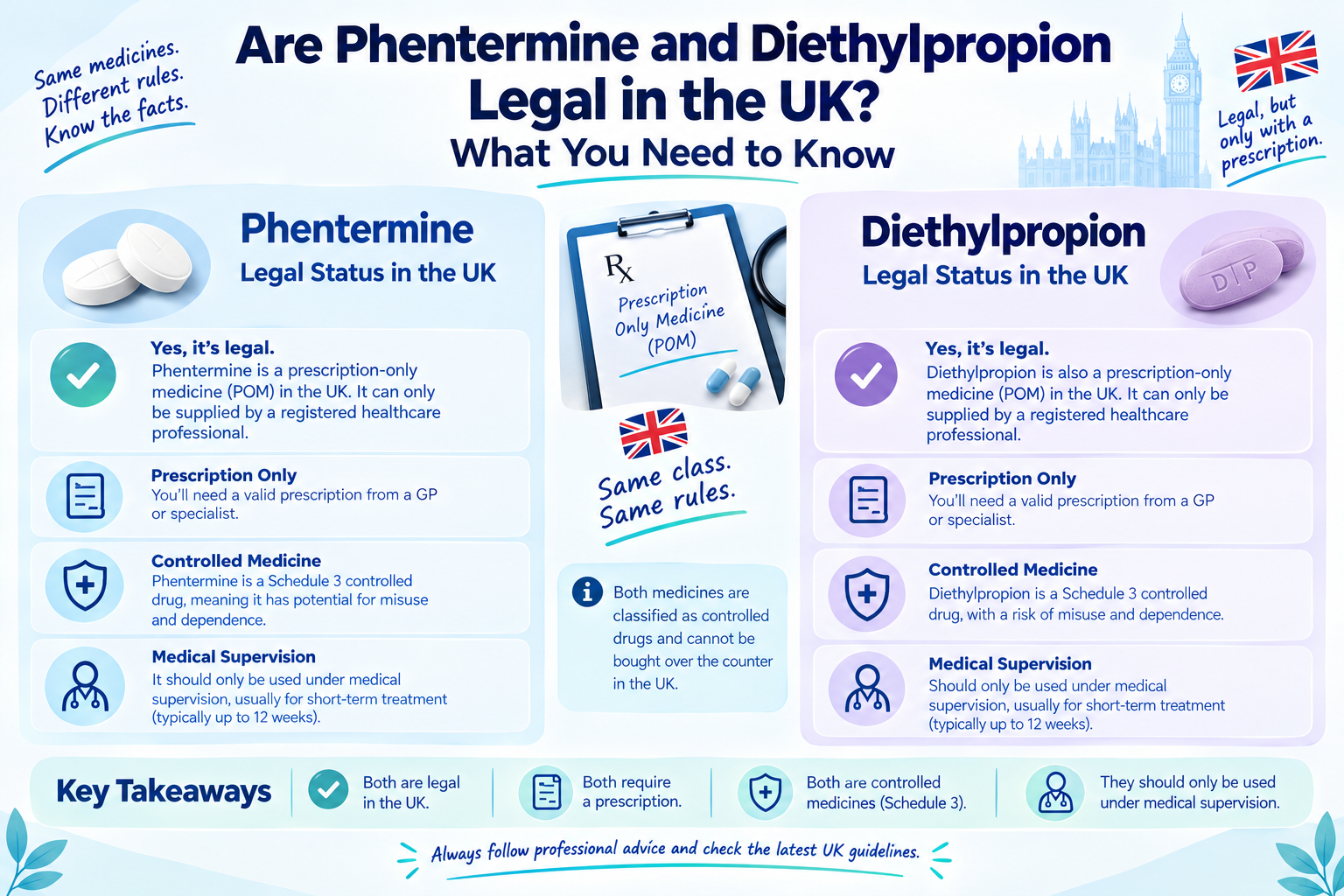
Quick answer: Yes, phentermine and diethylpropion are legal in the UK, but only when prescribed. Both are controlled drugs and neither currently holds a UK marketing licence, which means a registered clinician can prescribe them off-label after a proper medical assessment. Buying them without a prescription, from unregulated websites or from overseas sellers is illegal and carries real health and legal risks.
Few weight loss medicines cause as much confusion as phentermine and diethylpropion. Some people have heard they were “banned” in the UK. Others see them advertised online and assume they’re freely available. The truth sits somewhere in between, and understanding it can protect both your health and your wallet.
This guide explains the legal position clearly: what the law says, why these medicines lost their licence, how they can still be prescribed, and how to spot the difference between a safe provider and a risky one.
The Short Legal Picture
In the UK, phentermine and diethylpropion are:
- Prescription-only medicines, meaning they can only be supplied against a valid prescription
- Controlled drugs under the Misuse of Drugs Act 1971, placed in Class C
- Schedule 3 drugs under the Misuse of Drugs Regulations 2001, which brings stricter rules on prescribing, storage and record-keeping
- Unlicensed for weight loss, meaning there is no current UK marketing authorisation for them
That combination is what makes the topic confusing. “Unlicensed” does not mean “illegal.” It means the medicine is not officially approved for a specific use in the UK, so any clinician who prescribes it takes personal responsibility for that decision.
Why Did They Lose Their UK Licence?
Both medicines were once licensed in the UK under brand names and prescribed fairly routinely for obesity. Around 2000, following a European review of centrally acting appetite suppressants, their marketing authorisations were withdrawn.
The review raised concerns about the balance of benefits and risks, particularly for long-term use, and about the potential for dependence given their stimulant nature. This came during a period when other weight loss drugs, such as fenfluramine, had been linked to serious heart and lung problems, and regulators were taking a much more cautious view of the whole drug class.
Since then, no licensed version of either medicine has been reintroduced for routine UK use. However, the law does allow doctors and independent prescribers to prescribe unlicensed medicines when they judge it clinically appropriate and the patient has been properly informed.
How Can They Still Be Prescribed?
UK prescribing rules allow a clinician to prescribe an unlicensed medicine if:
- They have assessed the patient and judged it to be in their best interest
- There is no suitable licensed alternative, or the licensed alternatives are unsuitable for that patient
- The patient understands the medicine is unlicensed and consents to treatment
- The clinician takes responsibility for monitoring and follow-up
Because they are controlled drugs, extra safeguards apply. Prescriptions usually cover a limited supply, typically no more than 30 days at a time, and the prescriber is expected to check the patient’s health regularly.
Regulated online clinics offering Phentermine & Diethylpropion Tablets UK work within this framework. You’ll typically complete a detailed health questionnaire, provide information such as your weight, height and blood pressure, and be reviewed by a prescriber before anything is dispensed.
Is It Illegal to Buy Them Online?
Buying online is legal only if you use a properly regulated service that issues a genuine prescription. What’s illegal is supplying, and in many cases possessing, these medicines without one.
Websites that sell phentermine or diethylpropion with no consultation, or with a tick-box form that no clinician appears to review, are breaking the law. The Medicines and Healthcare products Regulatory Agency (MHRA) regularly seizes illegal weight loss medicines and has warned that products from these sources may be:
- Counterfeit or mislabelled
- The wrong strength
- Contaminated or made in unsanitary conditions
- Mixed with undeclared ingredients, including other stimulants
Beyond the health risks, ordering controlled drugs from abroad can lead to parcels being seized at the border and, in some cases, legal consequences.
How to Tell If a Provider Is Legitimate
A lawful UK provider should be able to show that:
- The prescribing service is registered with the Care Quality Commission (CQC) in England, or the equivalent body in Scotland, Wales or Northern Ireland
- The pharmacy dispensing the medicine is registered with the General Pharmaceutical Council (GPhC), and you can look up its registration number
- A real clinician reviews your consultation, and may contact you with follow-up questions
- They ask about your medical history, including heart health, blood pressure, mental health and current medications
- They may refuse treatment if the medicine isn’t safe for you
That last point is important. A provider that approves everyone is a red flag. Legitimate clinics turn patients down when the risks outweigh the benefits.
Travelling With Phentermine or Diethylpropion
If you’re prescribed either medicine and plan to travel, it’s worth checking the rules carefully. Because they are controlled drugs, the UK and many other countries have specific requirements. When bringing controlled drugs into or out of the UK, carrying a letter from your prescriber is strongly recommended, and larger supplies may require a personal licence from the Home Office. Some countries restrict or ban these medicines entirely, so check the destination country’s rules before you go.
Are There Legal Alternatives?
Yes, and for many patients they are the first option clinicians consider. Unlike phentermine and diethylpropion, several newer treatments are fully licensed in the UK for weight management.
Mounjaro and Wegovy injections are GLP-1 based medicines that work by mimicking gut hormones involved in appetite and digestion. They are licensed for weight management in eligible adults, designed for longer-term use, and backed by large clinical trials.
For those who would rather avoid injections, Daily Weight Loss Tablets using GLP-1 technology offer an oral route with a similar hormonal approach.
Because these medicines are licensed, the regulatory pathway is more straightforward, although they still require a prescription and a medical assessment. A provider such as Weight Medics can talk you through which options are suitable based on your health and goals.
Key Takeaways
Phentermine and diethylpropion occupy an unusual legal space in the UK. They are not banned, but they are not licensed either. They are controlled drugs that can be prescribed by a qualified clinician after a thorough assessment, and only for short-term use.
If you’re considering either medicine, the safest route is always a regulated provider that assesses you properly, explains the risks, and monitors your progress. Avoid any seller that offers these tablets without a consultation, however convenient it may seem.
Frequently Asked Questions
Is phentermine banned in the UK?
No. Phentermine is not banned, but it is unlicensed and a controlled drug. It can legally be prescribed by a registered clinician after a medical assessment.
Is diethylpropion legal in the UK?
Yes, when prescribed. Like phentermine, it is a controlled, prescription-only medicine without a current UK licence for weight loss.
Can I buy phentermine over the counter in the UK?
No. It is not available over the counter anywhere in the UK. Any seller offering it without a prescription is acting illegally.
Is it illegal to have phentermine without a prescription?
Phentermine is a Class C controlled drug, so possessing it without a valid prescription may be an offence, and supplying it without one is illegal.
Why are phentermine and diethylpropion unlicensed in the UK?
Their licences were withdrawn around 2000 following a European review of appetite suppressants, which raised concerns about long-term safety and dependence. No licensed version has been reintroduced since.
How can I check if an online clinic is legitimate?
Look for CQC registration for the prescribing service and GPhC registration for the pharmacy. You can verify both on the regulators’ official websites.
What licensed alternatives are available?
GLP-1 medicines such as Mounjaro and Wegovy are licensed in the UK for weight management and are often considered before unlicensed options.






Post Comment