Munich Walking Tour: Top Historic Attractions to See
Munich’s Historic Attractions Ranked and Reviewed
Munich’s extraordinary concentration of historic attractions can make prioritization challenging for visitors with limited time. This ranked review of the city’s top historic sites helps visitors allocate their time intelligently, ensuring that the landmarks most deserving of extended attention receive it and that the full historical context of each site is understood before arrival. Each historic attraction is evaluated for its historical significance, architectural quality, visitor experience, and the time investment required for a meaningful visit.
Tier One: Absolute Must-See Historic Attractions
The first tier of Munich’s historic attractions comprises the sites whose historical significance, architectural quality, and visitor experience combine to make them genuinely unmissable. The Munich Residenz complex — encompassing the palace museum, treasury, and exterior courtyards — represents the first tier’s primary landmark, a site of such historical depth and artistic richness that no amount of time spent there is truly excessive. Marienplatz and the New Town Hall represent the civic heart of Munich’s historic identity and deserve more than a brief photographic stop. The Frauenkirche, as the cathedral of Munich’s archdiocese and the defining element of its historic skyline, belongs in the first tier for both architectural and symbolic reasons.
Tier Two: Highly Significant Historic Attractions
The second tier of Munich’s historic attractions comprises sites of outstanding significance that are sometimes overlooked by visitors who run out of time after the first-tier landmarks. The Asamkirche, despite its modest exterior and compact dimensions, provides one of the finest baroque interior experiences in Germany and deserves thirty to forty-five minutes of unhurried exploration. Odeonsplatz and the Feldherrnhalle represent a historically layered space of architectural excellence that rewards careful attention to both the magnificent baroque ensemble and the darker twentieth-century history embedded in the square’s memory. The Bürgersaalkirche on Neuhauser Strasse is a first-rate hidden gem in the second tier.
Tier Three: Rewarding Historic Attractions for Deeper Exploration
The third tier comprises Munich historic attractions that are less universally known but deeply rewarding for visitors who seek the fuller historical picture beyond the standard highlights. The Alte Hof, Munich’s oldest royal residence complex, preserves the city’s earliest period of courtly development in a remarkably intact urban setting. The surviving medieval city gates — Sendlinger Tor, Isartor, and Karlstor — provide direct physical connection to Munich’s medieval urban infrastructure. The Heilig-Geist-Kirche adjacent to the Viktualienmarkt is one of Munich’s most beautiful baroque church interiors and one of its least visited.
The Historic Context of Munich’s Twentieth-Century Landmarks
A complete engagement with Munich’s historic attractions must include the city’s difficult twentieth-century history, which is represented by several significant sites. The NS-Dokumentationszentrum on Königsplatz, opened in 2015, provides the most thorough and contextually sophisticated engagement with the history of National Socialism in Munich and is essential visiting for any serious student of twentieth-century history. The Dachau Concentration Camp Memorial Site, eleven kilometers northwest of central Munich and accessible by suburban train, represents a more demanding but morally essential historical experience for visitors prepared to engage with the darkest chapter of Munich’s twentieth-century history.
Combining Historic Attractions Into a Coherent Walking Route
The most efficient approach to Munich’s top historic attractions is to plan a walking route that connects related sites in a logical geographic sequence, minimizing backtracking and maximizing the thematic coherence of the day’s historical exploration. The natural historic route connects Marienplatz through the southern old town to the Asamkirche and Sendlinger Tor, then north through the pedestrian zone to the Frauenkirche and Bürgersaalkirche, east to the Alter Hof, and north to Odeonsplatz, the Feldherrnhalle, the Residenz, and the Hofgarten before concluding in the Englischer Garten. This circuit encompasses virtually all of the top historic attractions within comfortable walking distance and can be covered thoroughly in six to eight hours with appropriate stops for food and rest.
Book Your Munich Historic Attractions Tour Today
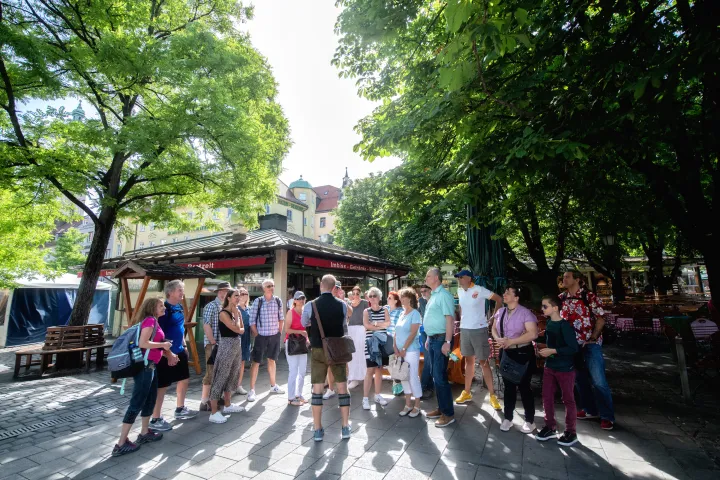
The richest possible engagement with Munich’s top historic attractions is provided by an expert-guided walking tour that brings historical context, architectural detail, and the kind of local knowledge that reading cannot fully replicate. Radius Tours offers English-speaking guided walking tours of Munich that cover the city’s most significant historic attractions with the depth and passion they deserve. Reserve your place on the next available Munich Walking Tour and experience Munich’s extraordinary historic heritage with expert local guidance.





Post Comment