How Does the Rice Purity Test Work?
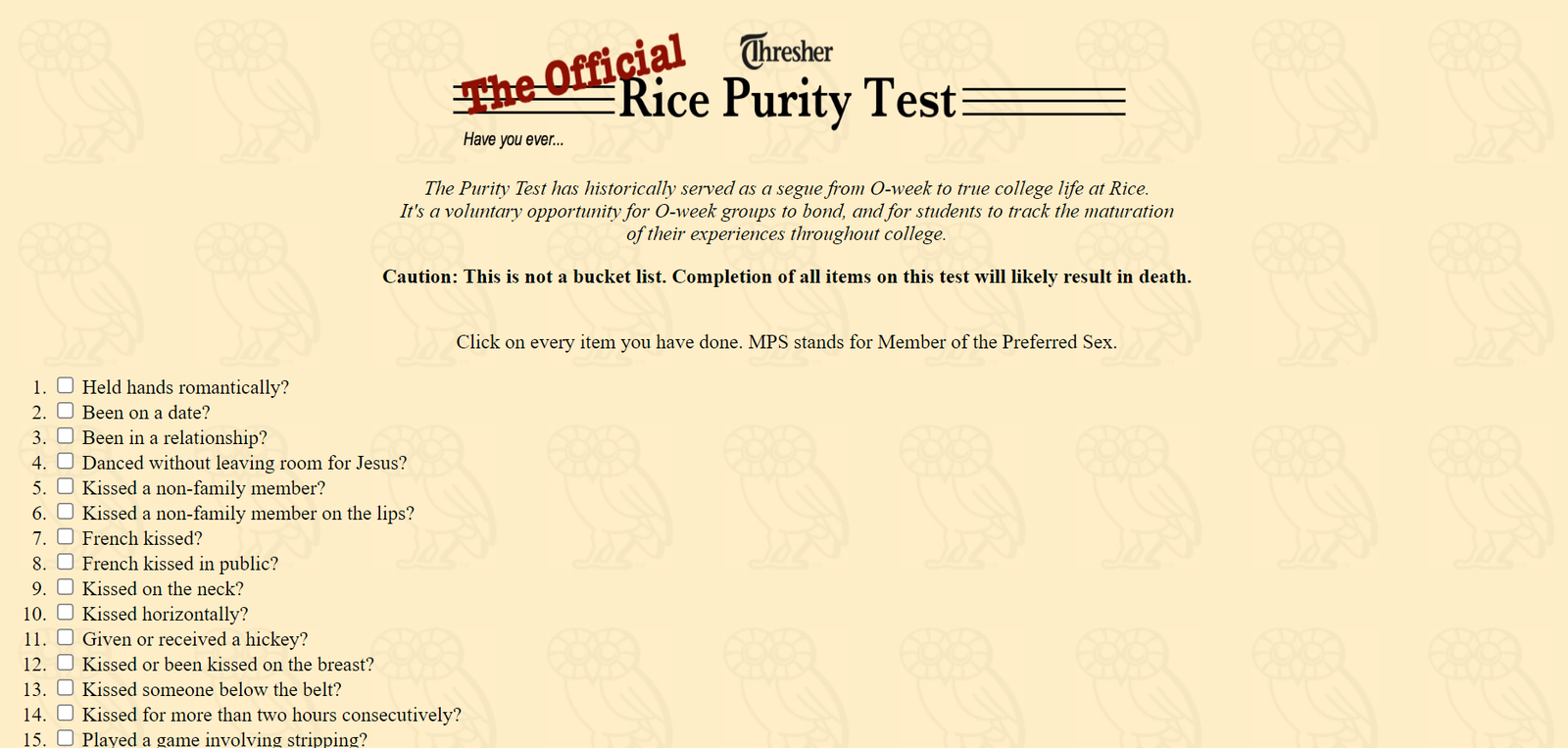
The Rice Purity Test has become one of the most popular online quizzes among teenagers, college students, and young adults. Originally created by students at Rice University, the test is designed to measure a person’s life experiences using a simple scoring system. But many people still wonder, how does the Rice Purity Test work and what do the scores actually mean?
In this guide, we’ll explain everything you need to know about the Rice Purity Test, including how it is scored, what different score ranges mean, and why it has become so popular.
What Is the Rice Purity Test?
The Rice Purity Test is a self-assessment quiz consisting of 100 yes-or-no questions. These questions cover various aspects of life, including:
- Relationships
- Social experiences
- Dating
- School activities
- Personal habits
- Adventures and risky behavior
Participants check the boxes corresponding to experiences they have had. The final score is then calculated based on the number of questions left unchecked.
How Does the Rice Purity Test Work?
Understanding how does the Rice Purity Test work is fairly simple. The test begins with a perfect score of 100, which represents complete innocence. Every time you mark a question for an experience you’ve had, one point is deducted from your score.
For example:
- Start with 100 points.
- Mark 15 experiences you’ve had.
- Your final score becomes 85.
The more experiences you have, the lower your score will be.
What Do Rice Purity Scores Mean?
90–100: Very Innocent
People in this range have had relatively few life experiences. This score is common among younger individuals or those who prefer a more reserved lifestyle.
70–89: Average Experience
Most people fall into this category. It reflects a balanced mix of experiences without being overly adventurous.
50–69: Moderately Experienced
Scores in this range suggest that a person has explored many aspects of social life and relationships.
30–49: Highly Experienced
Individuals with these scores have had numerous life experiences and are generally more adventurous.
Below 30: Very Experienced
A score below 30 indicates a broad range of experiences. However, there is no “good” or “bad” score, as everyone has different lifestyles and values.
Why Was the Rice Purity Test Created?
The Rice Purity Test was originally developed by Rice University students as a fun orientation activity for freshmen. Its purpose was to help new students bond and learn more about one another in a lighthearted way.
Over time, the quiz spread across the internet and became a popular trend on social media platforms.
Is the Rice Purity Test Accurate?
The Rice Purity Test is intended for entertainment purposes only. It is not a scientific or psychological assessment. Your score does not define your personality, maturity, or character.
The test simply reflects the experiences you choose to share and should be viewed as a fun way to compare experiences with friends.
Why Has the Rice Purity Test Become So Popular?
Several factors have contributed to its popularity:
- Easy-to-understand scoring system.
- Fun to take with friends.
- Viral trends on TikTok and social media.
- Curiosity about personal experiences.
- A simple way to compare scores.
Its nostalgic history and humorous questions have made it a favorite among students and young adults.
Should You Be Concerned About Your Score?
Not at all. There is no perfect Rice Purity Test score. A higher score doesn’t make someone better, and a lower score doesn’t mean anything negative. Everyone’s life journey is unique, and the quiz is designed primarily for fun.
Final Thoughts
If you’ve ever wondered how does the Rice Purity Test work, the answer is straightforward. The quiz starts with a score of 100, and points are deducted based on the experiences you’ve had. The final score provides a general idea of your life experiences, but it should never be taken too seriously.
Whether your score is 95 or 25, the Rice Purity Test remains a lighthearted way to reflect on your experiences and enjoy a fun comparison with friends. Remember, the score is just a number—the real value lies in the memories and experiences that shape who you are.






Post Comment