Mastering Muriatic Acid Pool Treatment: Safe Handling and Accurate Dosage Calculations
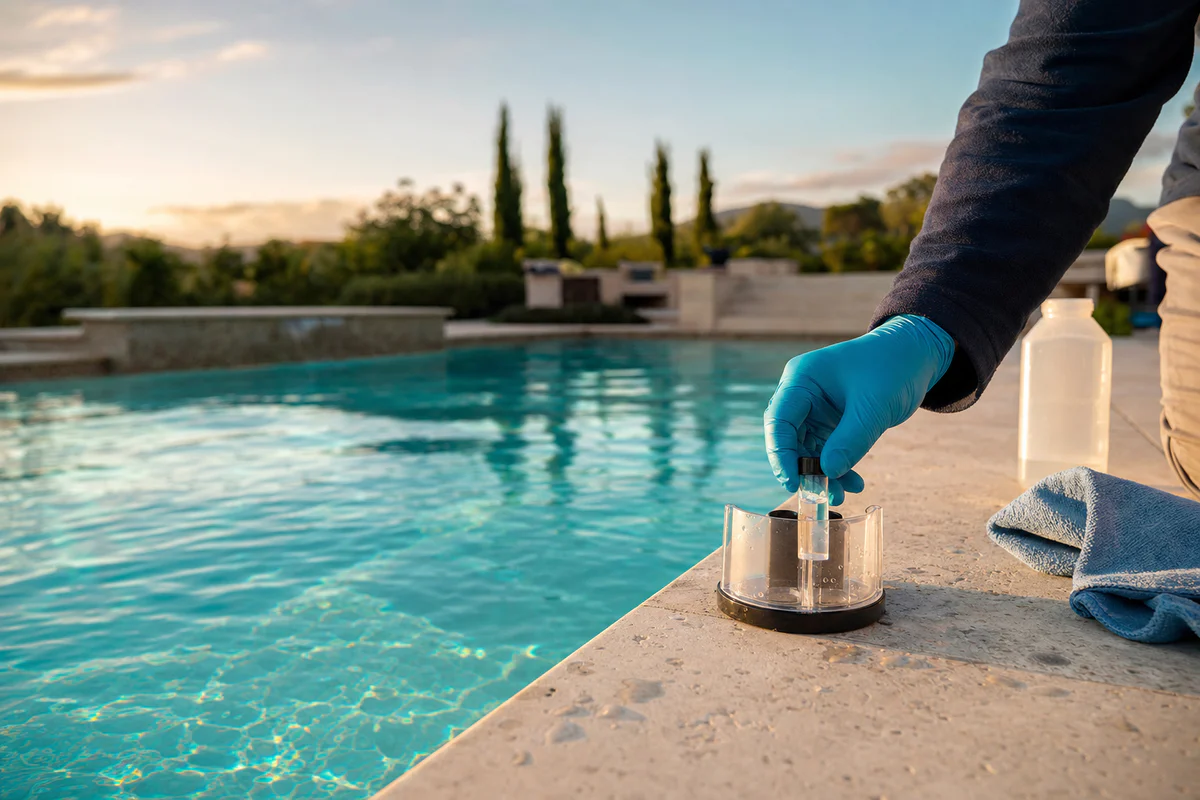
Maintaining balanced pool water requires more than simply adding chemicals whenever the water looks unusual. Muriatic acid is commonly used in pool care to lower high pH and, when appropriate, help reduce excessive total alkalinity. Because it is a strong acid, accurate measurement and careful handling are essential for protecting swimmers, pool surfaces, equipment, and the person applying it. The correct amount depends on the pool’s water volume, current test results, acid concentration, and the target range recommended for the pool system. Understanding how the treatment works makes chemical maintenance more controlled and predictable.
What Muriatic Acid Does in Pool Water
Muriatic acid is a form of hydrochloric acid used for several pool-maintenance applications, most commonly lowering pH. When muriatic acid pool become too alkaline, the high pH can reduce sanitizer effectiveness, encourage scale formation, and affect swimmer comfort. Adding an appropriate amount of acid allows the pH to move back toward the recommended range. The acid also reacts with alkaline substances in the water, which can gradually reduce total alkalinity when managed correctly. These effects make it an important tool for routine water balancing.
However, muriatic acid is not a general-purpose pool cleaner or a solution for every water-quality problem. It should not be added simply because the water appears cloudy, green, or dirty without first testing the chemistry. High pH, low sanitizer levels, excessive calcium hardness, and poor filtration require different corrective approaches. Using acid when it is not needed can push pH too low and create additional problems. Water testing should therefore guide every treatment decision rather than relying on appearance alone.
Test Pool Chemistry Before Calculating a Dose
Accurate testing is the foundation of safe muriatic acid pool treatment. Begin by checking the current pH and total alkalinity using a reliable pool test method, while also considering sanitizer levels and other relevant water parameters. The target pH and alkalinity ranges can vary depending on the pool’s sanitation system, equipment, surface materials, and manufacturer recommendations. Do not estimate the required acid dose from the pool’s appearance. A measured reading provides the information needed to determine whether acid is appropriate.
Pool volume is another important part of the calculation. An inaccurate estimate can lead to either under-treatment or excessive acid being added to the water. For a rectangular pool, volume can generally be estimated from length, width, and average depth, while irregular pools require a more careful calculation or manufacturer information. Once the approximate volume and current chemistry are known, consult the acid product label for its dosage guidance. Product concentration can vary, so one bottle should not automatically be treated as equivalent to another.
How to Calculate the Right Muriatic Acid Amount
There is no single universal dose of muriatic acid that is safe for every pool. The appropriate quantity depends on the pool’s volume, current pH, total alkalinity, acid strength, and desired correction. Manufacturer dosage tables are therefore more reliable than generic internet formulas because they account for the concentration of the specific product. If a label recommends a particular quantity for a certain water volume and pH reduction, scale that recommendation carefully to the actual pool volume. When the required adjustment is uncertain, smaller measured additions followed by retesting are safer than making one large correction.
For example, suppose a product label provides a recommended amount for a specific pool volume and pH adjustment. A homeowner with a pool of a different volume can use the proportional relationship between the two volumes to estimate the corresponding amount, provided the same acid concentration and target conditions apply. This is an estimate, not a replacement for testing or manufacturer instructions. After adding the recommended quantity, allow the pool water to circulate for the period specified by the product guidance before testing again. The goal is controlled adjustment, not achieving a dramatic chemistry change in a single step.
Safe Handling and Addition Practices
Muriatic acid deserves the same level of caution as any strong chemical used around the home. Wear the protective equipment recommended on the product label, including appropriate eye and skin protection, and work in a well-ventilated outdoor area. Keep children and pets away from the treatment area, and avoid leaning over the container while opening or handling it. Store the product securely in its original, clearly labeled container and follow the manufacturer’s storage instructions. Never transfer pool acid into an unlabeled container.
Never mix muriatic acid with chlorine products or other pool chemicals. Combining incompatible chemicals can produce dangerous reactions or hazardous fumes. Follow the product label for the correct addition procedure and never improvise a mixing method. If the label provides specific instructions about where or how the acid should be introduced, follow those directions exactly. If there is any uncertainty about chemical compatibility, stop and consult the product manufacturer or a qualified pool professional before proceeding.
Avoid Overcorrecting pH and Alkalinity
One of the most common pool-care mistakes is adding more acid because the first treatment does not appear to have produced an immediate visual change. pH correction is not something that should be judged by water appearance. The water may look exactly the same even though its chemistry has already changed significantly. Give the product adequate circulation time before testing again, following the label’s directions. Repeated additions without retesting can drive pH too low and create unnecessary water-balance problems.
If total alkalinity is high, repeated controlled acid additions combined with appropriate aeration and retesting may be part of a longer-term adjustment process. The exact procedure depends on the pool’s chemistry and equipment, so it should be approached methodically. Extremely low pH can contribute to corrosion, surface damage, and uncomfortable swimming conditions. Keeping written records of test results and chemical additions can help prevent accidental over-treatment. Good pool maintenance is based on measured changes rather than guessing how much chemical the water needs.
How Often to Add Salt to a Pool
Salt is different from muriatic acid because it generally does not disappear from pool water through normal evaporation. When water evaporates, the salt remains behind, so routine evaporation alone does not usually create a need for salt replacement. Salt may need to be added after water is lost and replaced through splash-out, leaks, backwashing, draining, or other forms of water removal. The appropriate salt level also depends on the specifications of the salt chlorine generator installed on the pool. For this reason, there is no universal answer to how often to add salt to pool water.
The best approach is to test the salt concentration when the system indicates a low level or when significant water has been added or removed. Follow the generator manufacturer’s recommended salt range rather than adding salt according to a fixed weekly or monthly schedule. If the salt reading seems inconsistent with the generator’s display, verify it using an appropriate independent test method before making a large adjustment. Adding too much salt can require dilution through partial water replacement, which is why measured additions are preferable. Regular testing provides a much more reliable maintenance routine than guessing based on time.
Build a Safer Long-Term Pool Chemical Routine
Effective pool care is ultimately about consistency rather than making large corrections when problems become obvious. Test pH, sanitizer, alkalinity, and other relevant parameters at an appropriate frequency for your pool’s usage and environmental conditions. Keep track of chemical additions, major water replacements, storms, and periods of unusually heavy swimming activity. This information can reveal patterns that make future balancing easier. Regular maintenance also helps prevent small chemistry changes from developing into larger water-quality problems.
If pH repeatedly rises or falls despite careful maintenance, investigate the underlying cause rather than continuously adding acid. Factors such as high total alkalinity, aeration, source water, sanitizer type, pool usage, and environmental conditions can influence pH behavior. Persistent problems may justify professional water testing or a pool-service evaluation. An experienced technician can review the pool’s equipment and chemistry together instead of treating individual readings in isolation. With accurate testing, careful calculations, safe chemical handling, and manufacturer-guided treatment, muriatic acid can be used as an effective part of a responsible pool-maintenance program.




Post Comment