A Complete Guide to Custom Silicone Molds Manufacturing Process
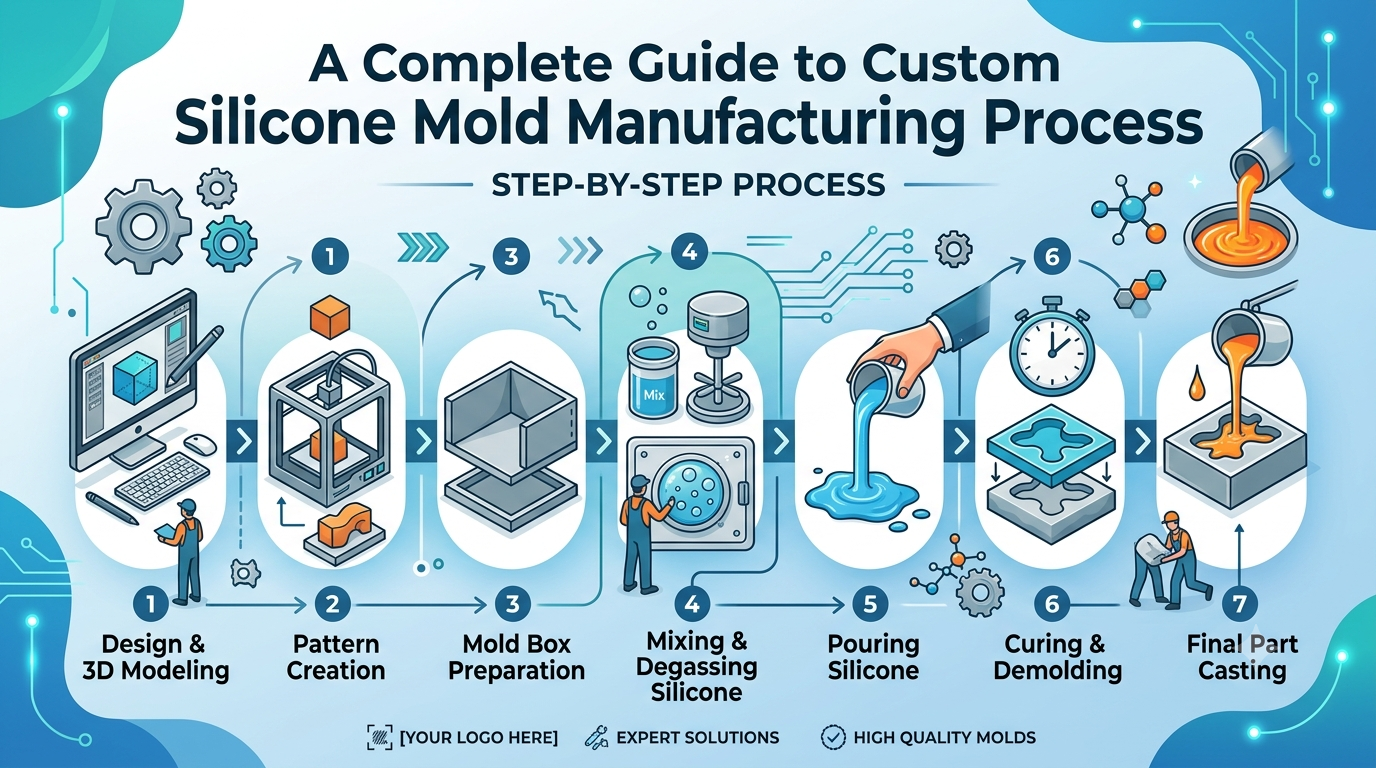
Silicone molds form the backbone of modern global manufacturing. These tools support medical, automotive, food, electronics and consumer goods. The full production process combines design, material, tooling, molding and checks.
A custom silicone molds manufacturer delivers precision. No stock mold matches the performance of purpose built custom units. Every production sector relies on these molds for consistent output.
What Is a Custom Silicone Mold?
This mold gets built exactly to a client’s specific product design. No stock base gets reused, every unit starts new per specification. It captures fine surface details, exact dimensions and tight tolerances.
Molds are reusable, durable and deliver consistent outputs. They work for both small runs and high volume mass production. Mold lifespan ranges from hundreds to tens of thousands of cycles.
Why Is Silicone The Best Material For Custom Molds?
Silicone offers high flexibility, bends without cracking or tearing over use. It carries extreme heat resistance, withstands high temps without deforming. The material stays non reactive and non toxic for all safe use cases.
It resists oils, solvents, moisture and most common industrial chemicals. Silicone molds deliver longer service life than most other mold materials. It comes in food grade, medical grade and industrial grade formulated forms.
Silicone retains physical properties across wide temperature ranges. It does not stick to most materials which simplifies demolding steps. The custom silicone rubber molds use these properties for reliable long term use. A custom silicone molds manufacturers tests material before production runs.
What Are The Main Types Of Silicone Used In Mold Making?
Each silicone type serves specific production and final part use cases. No single silicone formulation works well for every mold application. Teams select material based only on final part requirements.
- LSR: Low viscosity, ideal for injection molding complex parts
- RTV: Two part mix, great for prototypes and small production runs
- HTV: Used for compression molding, delivers very high durability
- Millable Silicone: Sheet form, used for flat or extruded products
Step 1: Design & DFM Analysis
The client shares product concept, sketch or existing CAD file with teams. DFM review gets completed before any tooling. Checks cover wall thickness, draft angles, undercuts and stated tolerances.
The engineers flag design issues that could cause production failure later. All suggested changes get shared with the client for approval before proceeding. The industrial silicone molds require extra DFM checks for heavy use conditions.
Step 2: Mold Design & Tooling Engineering
The tooling is the steel or aluminum structure that shapes silicone parts. Common tooling steels include 55# steel, 718 steel and standard P20. Mold type selected as one part, two part or multi cavity format.
Cavity count gets set based on expected production volume for the order. Surface finish, parting lines, venting and gate placement all get designed. CNC machining cuts mold cavities with extremely high consistent precision.
Venting prevents air bubbles from forming inside mold during injection. The silicone mold manufacturer Dallas follows strict tooling tolerance standards.
Step 3: Prototype & Master Model Preparation
The master model gets made via 3D printing, CNC or precise hand carving. The model surface gets cleaned, sealed and coated with a proper release agent.
T1 trial run happens after tooling to produce the first physical mold sample. The client reviews the prototype and provides feedback before production. The silicone mold making services have this prototype validation step.
Step 4: Silicone Mixing & Preparation
Silicone compound is selected based on final part performance requirements. Two part silicone mixes at the correct ratio usually 1:1 weight or volume. Mixing proceeds slow and steady, fast mixing traps unwanted air bubbles.
The degassing step uses a vacuum chamber to remove air for clean finished molds. The engineers add the pigments or colorants if required for the part. Mixing time follows exact specifications for each silicone formulation type.
Every mixed batch gets tested for consistency before moving to molding. No under mixed batch enters the production line at any point in the process. custom silicone molding Jacksonville teams verify mix ratio for every batch.
Step 5: Molding Methods
Three primary molding methods exist for custom silicone part production. The teams evaluate all three options for every incoming client project.
Compression Molding
Silicone gets placed in open mold, pressed under controlled heat and pressure. This method remains most common for standard custom silicone part production. It is for medium to high volume order requirements.
Transfer Molding
Pre-measured silicone gets forced through runners into a closed mold cavity. This method works better for complex parts, inserts and over molded components. It produces more consistent part dimensions than basic compression molding.
Injection Molding
Liquid silicone gets injected at high pressure into fully closed mold units. It offers fastest cycle time, best for high volume precision part needs. Tightest tolerances are achieved consistently with this production method.
Method selection depends on part design, volume and stated tolerance needs. Engineers recommend the best method for each individual client project. The custom silicone rubber molds use all three methods for different project types.
Overmolding
Overmolding molds silicone directly over an existing rigid base substrate. This process also gets called two shot molding for combined material parts. It works for rubber grip handles, encapsulated electronics and soft touch goods.
The process improves part function by adding grip, sealing or extra protection. It sees common use across consumer goods, medical and automotive parts sectors. Base substrate can be plastic, metal or another rigid suitable material.
Bond strength gets tested to ensure silicone adheres properly to base. No separation occurs between materials during normal part use conditions. The industrial silicone molds often use overmolding for heavy duty component needs.
Step 6: Curing Process
The curing refers to the vulcanization process. Controlled heat, time and pressure trigger molecular crosslinking within material. Cure time varies from one hour to 24 hours based on silicone type.
Undercuring produces soft weak parts, overcuring makes brittle discolored units. Temperature controlled ovens or heated mold platens deliver consistent cure. The post-cure process sometimes gets required for medical or food grade parts.
Cure parameters get logged for every single production batch that runs. Temperature stays monitored continuously throughout the entire curing process. The silicone mold manufacturer Dallas monitors cure parameters.
Step 7: Demolding Trimming Finishing
Mold is opened after full cure, parts get removed with careful handling. Silicone flexibility makes demolding far easier compared to rigid mold materials.
Flash excess material gets trimmed off via manual or die cut trim process. The engineers do surface inspection with visual checks per each part. Secondary finishing includes painting, coating or bonding if required for order.
All parts get measured against original CAD file tolerance specifications. The silicone mold making services include full finishing for every production batch.
Quality Control
Quality checks happen at every stage of the entire production process. No step proceeds until the prior stage passes all required quality parameters. Many teams conduct checks separate from production staff.
There is random sample testing for every production batch of finished parts. Test results get documented and stored for future reference if required. A custom silicone molds Manufacturing runs these checks at every production stage.
| QC Test | What It Checks | Tool Used | Pass Criteria |
| Dimensional Inspection | Size, fit, tolerances | CMM, Calipers, Optical Scanner | Matches CAD specs |
| Visual Check | Surface defects, flash, sink | Human Eye / Camera | Zero visible defects |
| Shore A Hardness Test | Silicone firmness | Durometer | Within spec range |
| Tear Strength Test | Material integrity | Tensile Tester | Meets grade standard |
| Compliance Check | Food/medical safety | Lab Testing | Certified grade pass |
| Batch Sampling | Consistency across lot | Random Pull | Uniform across batch |
Third party audits happen regularly to maintain process standards. The custom silicone molding Jacksonville maintains third party certified quality standards.
Project Inquiries
Contact us at +1 (213)-426-1030. Send detailed project specifications through email to info@customrubbersiliconemolds.com. Our team responds to all new inquiries within one full business working day. You can take initial consultations for free. We also provide technical support for existing clients. All project details remain fully confidential for every client order.


Post Comment