482 Visa Australia 2026: New Fees & Salary Rules Explained
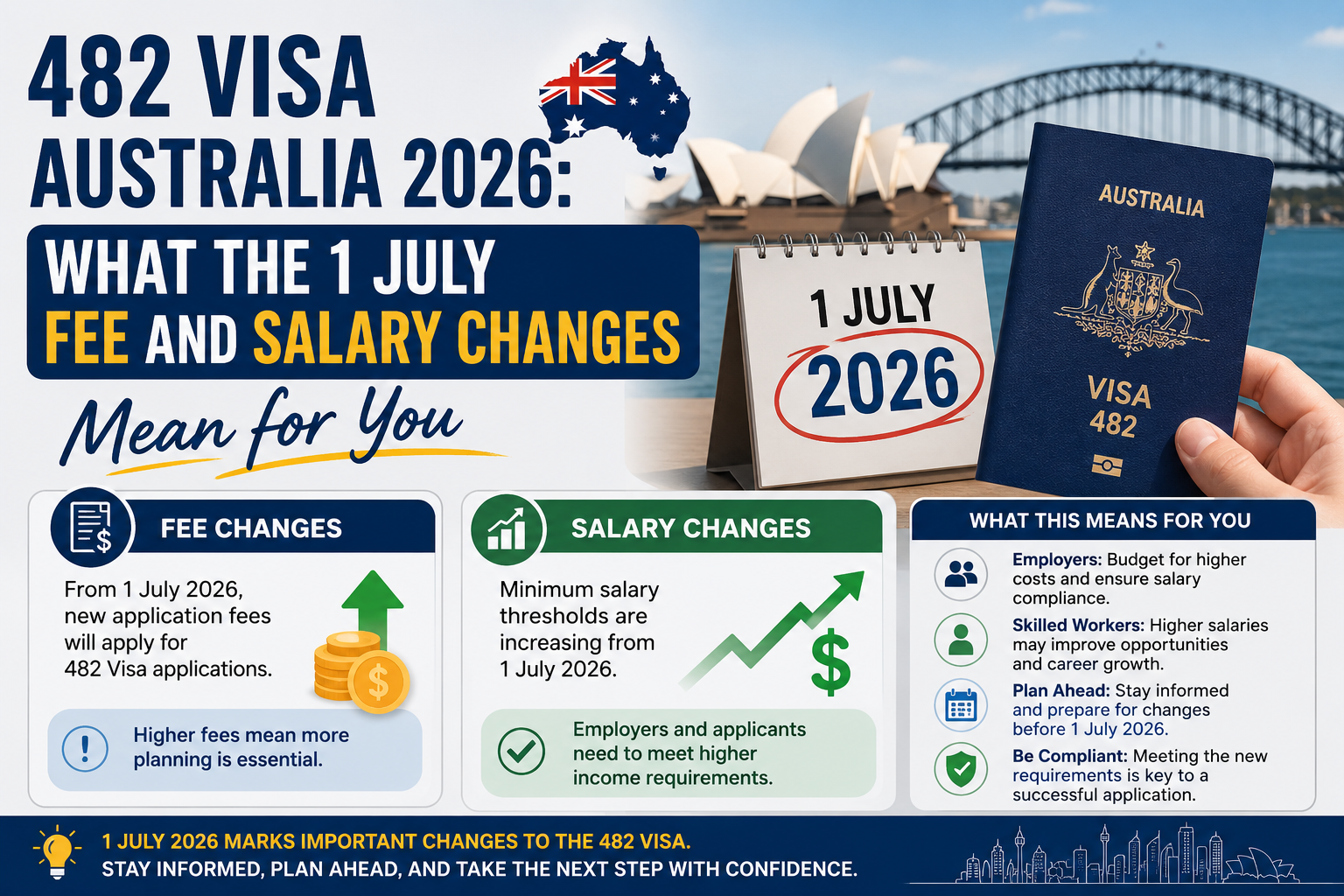
If you’re planning to apply for a 482 visa Australia employers use to sponsor skilled overseas workers, the rules just changed. From 1 July 2026, the Department of Home Affairs increased visa application charges and lifted the minimum salary threshold for the Subclass 482 Skills in Demand visa. Whether you’re an employer preparing a nomination or a skilled worker hoping to be sponsored, these updates directly affect your budget and your eligibility.
This guide breaks down exactly what changed, why it matters, and how to move forward with confidence.
What Is the 482 Visa Australia Pathway?
The Subclass 482 Skills in Demand visa lets Australian employers sponsor skilled overseas workers when they can’t find a suitably qualified local candidate. It replaced the old Temporary Skill Shortage (TSS) visa in late 2024, and visa holders can live and work in Australia for up to 4 years in most cases, with many later transitioning to permanent residency.
The visa runs across a few different streams, but the Core Skills stream is the one most applicants use, since it covers occupations on the Core Skills Occupation List (CSOL). Getting the salary and occupation requirements right is the first step to a successful nomination.
How Much Does the SID Visa Cost From 1 July 2026?
This is where the biggest change lands. The Subclass 482 visa application charge rose to $4,015, an increase of $805 from the previous fee. That’s on top of employer-side costs like the Standard Business Sponsorship application, nomination fee, and the Skilling Australians Fund (SAF) levy.
To put the full picture together:
- Applicant visa fee: $4,015 for the primary applicant (from 1 July 2026)
- Sponsorship and nomination fees: paid by the employer, separate from the applicant charge
- SAF levy: ongoing employer cost tied to business turnover and visa duration
- Additional costs: health checks, English tests, police clearances, and possible translation fees
If you lodged your application before 1 July 2026, the old fee structure still applies — but any application lodged from that date onward is charged at the new rate.
The Salary Threshold Just Went Up Too
Fees aren’t the only thing that changed. The Core Skills Income Threshold (CSIT), also referred to as TSMIT in some contexts, is now higher. The Core Skills Income Threshold rose to $79,423, up from $76,515, and employers must ensure any new Subclass 482 or 186 applicants from 1 July 2026 are paid at least this new threshold.
For the Specialist Skills stream, the income threshold increased to $146,576, up from $141,210.
This means employers need to check two things before nominating a role:
- Does the salary meet the new CSIT of $79,423 (Core Skills) or $146,576 (Specialist Skills)?
- Does the salary also meet the Annual Market Salary Rate (AMSR) for that role and location — whichever figure is higher applies?
Job ads and employment contracts that were drafted before 1 July should be reviewed and updated to reflect the new figures before any nomination is lodged.
Why This Matters for Employers and Applicants
For employers, underestimating the CSIT or lodging with outdated salary figures can lead to a refused nomination — and government fees are non-refundable in most cases. For applicants, a nomination that doesn’t meet the new threshold simply won’t be approved, no matter how strong the rest of the application is.
The safest approach right now is to treat every part of the 482 process — salary benchmarking, occupation eligibility, sponsorship documentation, and fee calculation — as something to verify fresh against current figures, not assumptions carried over from last year.
FAQS
Does the new fee apply if I already lodged my application? No. If your application was lodged before 1 July 2026, the previous fee structure applies regardless of when a decision is made.
Is the CSIT the same for every occupation? No. The CSIT is the minimum floor, but you must also meet the Annual Market Salary Rate for the specific role and location, whichever is higher.
Can the SAF levy be passed on to the employee? No. Australian law prohibits employers from recovering SAF levy costs from the sponsored worker.
How long can I stay in Australia on a 482 visa? Most Core Skills stream visas allow a stay of up to 4 years, with a pathway to permanent residency through Subclass 186 for many occupations.
Will fees increase again next year? Visa fees and income thresholds are typically reviewed annually, usually from 1 July each financial year, so budgeting for future indexation is a good idea if you’re planning ahead.
How Edvise Hub Can Help
Rules like these change fast, and getting a single figure wrong — an outdated salary threshold, an incorrect fee, or a missed occupation update — can cost time, money, and in some cases the outcome of your application. Edvise Hub, a MARA-registered migration and education consultancy based in Melbourne, helps both employers and skilled workers navigate the Subclass 482 process from start to finish. That includes checking your role against the current CSIT and AMSR, preparing accurate nomination documentation, and keeping your application aligned with the latest Home Affairs requirements — so you’re not left guessing which rules actually apply on the day you lodge.
If you’re an employer considering sponsorship, or a skilled worker exploring your options under the new 2026 fee structure, getting personalised guidance early can save you from costly mistakes later.
This article reflects visa application charges and income thresholds effective from 1 July 2026. Figures are based on publicly available Department of Home Affairs information and are subject to change. Always confirm current fees using the official Home Affairs Visa Pricing Estimator before lodging an application.
Also Read : Top Benefits of Visiting a Professional Nail Salon Fresno





Post Comment