How Glue Down LVP Flooring Creates a Smooth and Stable Floor
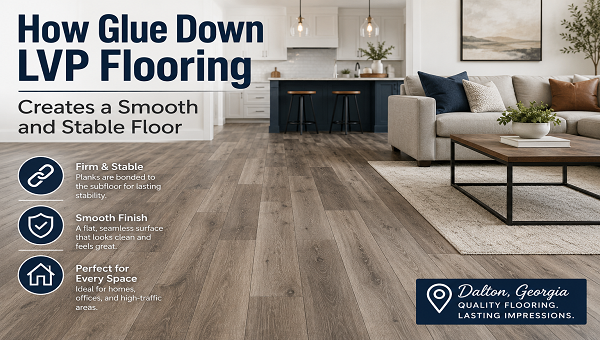
When I think about flooring that feels firm, clean, and comfortable underfoot, glue down LVP flooring often comes to mind. It gives a room a neat appearance without making the surface feel loose, hollow, or uneven. Also, it can support busy households, rental properties, offices, and everyday family life.
For homeowners and property owners in Dalton, Georgia, glue down luxury vinyl plank flooring can offer a practical mix of stability, style, and simple maintenance. Options available from Sam’s Flooring can suit many flooring projects, from a small bedroom update to a large commercial-style space.
The main idea behind glue down LVP flooring is simple. Each plank attaches directly to the subfloor with adhesive. Therefore, the planks do not move as much when people walk across them.
Many homeowners prefer glue down flooring when they want a surface that feels smooth, steady, and dependable. The floor does not only look polished. It also feels solid underfoot, which can make the entire room feel stronger and more complete.
Key Takeaways
- Glue down LVP flooring creates a smoother floor because each plank remains fixed to the subfloor.
- Stable vinyl plank flooring works well in kitchens, hallways, living rooms, offices, and other high-traffic spaces.
- Proper subfloor preparation, suitable adhesive, and careful plank placement help create a longer-lasting result.
What Glue Down LVP Flooring Means
Glue down LVP flooring is a type of luxury vinyl plank flooring that attaches directly to the surface underneath it. An approved flooring adhesive holds each plank in place.
I like this installation method because it gives the flooring a firm base. Instead of resting above the subfloor like a floating floor, glue down vinyl planks stay in direct contact with it.
This direct connection can reduce movement across the floor. Floating flooring may shift slightly because it sits over underlayment and connects through a locking system. However, glue down LVP flooring usually stays more fixed when the installation is completed correctly.
That does not mean floating flooring is a poor choice. In fact, floating LVP can work well in many homes. Still, glue down LVP flooring often makes more sense when I want a smoother, firmer, and more permanent feeling.
Glue down LVP flooring can also create a clean finish in larger rooms. Since the planks remain attached, the surface may feel more even from one side of the room to the other.
Why a Stable Floor Matters in Daily Life
A stable floor matters more than many people realize. When flooring shifts, clicks, dips, or feels soft in certain places, the entire room can feel unfinished.
However, when the floor feels firm underfoot, the space immediately feels more comfortable and dependable.
I notice this difference most in high-traffic areas. Kitchens, hallways, entryways, family rooms, and living rooms receive constant use. Therefore, these spaces need flooring that can handle regular movement and pressure.
A stable floor also helps furniture sit more securely. Tables, chairs, shelves, beds, sofas, and cabinets feel better on a firm surface. As a result, the room can become easier and safer to use.
In addition, stable flooring can make cleaning easier. When planks move or lift, dust and dirt may collect inside small gaps. However, a flat floor allows me to sweep, vacuum, or mop with less trouble.
How Glue Down LVP Flooring Creates a Smooth Surface
Glue down LVP flooring creates a smooth surface because the planks sit closely against the subfloor. When the base is clean, dry, and level, the vinyl planks can rest flat across the room.
The adhesive also plays an important role. It holds each plank firmly in position and helps reduce movement caused by foot traffic.
However, the floor underneath must be prepared carefully. If the subfloor contains bumps, cracks, dust, moisture, or old adhesive, the LVP may not sit properly.
For this reason, I consider subfloor preparation the first major step toward creating a smooth result.
The flooring layout also matters. Straight starter rows, accurate cuts, and tight seams help the surface look more polished. When each plank lines up properly, glue down LVP flooring can give the room a clean and professional appearance.
Why Glue Down LVP Flooring Feels Firm Underfoot
One of the main reasons I like glue down LVP flooring is its solid feeling underfoot. Because the planks attach to the subfloor, there is less empty space underneath them.
Therefore, each step can feel direct, firm, and steady.
This stable feeling can be especially helpful in homes with children, pets, or frequent visitors. People may walk, run, play, or move furniture across the same surface every day.
When installed correctly, glue down vinyl plank flooring can handle this regular activity without feeling loose.
Glue down LVP flooring can also work well in rooms with heavy furniture. Dining tables, sofas, beds, cabinets, bookshelves, and office desks need a dependable base.
Since the flooring remains attached, it can support normal household furniture without creating the shifting feeling that sometimes appears with loose materials.
Additionally, glue down flooring may produce less clicking or movement noise than some floating surfaces. Less movement can help the room feel quieter and more comfortable.
Best Rooms for Glue Down LVP Flooring
Glue down LVP flooring can work in many areas of a home or business. However, I particularly like it in rooms that receive regular foot traffic.
Kitchens
Kitchens are a strong choice for glue down LVP flooring because people stand, walk, cook, and clean there every day. Spills and dropped food are also common, so an easy-to-clean flooring surface can be helpful.
Wood-look glue down LVP flooring can bring warmth to the kitchen without requiring the same level of care as natural hardwood.
Hallways
Hallways receive repeated traffic throughout the day. Family members, guests, children, and pets often use the same walking path again and again.
Therefore, a fixed flooring system can create a more stable and dependable surface.
Entryways
Entryways handle shoes, bags, pets, moisture, and outdoor dirt. Because of this, the floor needs to stay strong and remain easy to maintain.
Glue down LVP flooring can provide a clean look while supporting regular use.
Living Rooms
Living rooms usually contain sofas, tables, television stands, shelves, and other heavy items. A stable floor can help the furniture sit more securely.
In addition, wood-look glue down LVP flooring can make a living room feel warm and welcoming without the higher price of some natural flooring materials.
Offices and Small Shops
Glue down LVP flooring can also make sense in offices, small retail spaces, rental units, and other active environments.
Since the planks remain attached to the subfloor, the flooring can support frequent walking, rolling chairs, and everyday business activity.
How Subfloor Preparation Affects the Final Result
Subfloor preparation can strongly affect how the finished floor looks and feels. I always pay attention to the base before focusing on the visible flooring material.
If the subfloor has problems, the finished LVP may eventually show them.
The Subfloor Must Be Clean
Dust, dirt, grease, loose material, and old adhesive can prevent the new flooring adhesive from bonding correctly.
Therefore, the entire surface should be cleaned thoroughly. Even small pieces of debris can create bumps under thin vinyl planks.
The Surface Must Be Level
Small raised areas can create uneven spots. Meanwhile, dips or low areas can make sections of the floor feel weak.
Leveling the base helps each plank sit flat and creates a more consistent surface across the room.
Cracks Need Attention
Cracks in concrete or other subfloor materials should not be ignored. Depending on their size and condition, they may affect how the flooring sits or how the adhesive performs.
Addressing these issues early can reduce the risk of visible problems later.
Moisture Conditions Matter
Moisture can also affect adhesive performance. A damp concrete slab or ongoing moisture problem may lead to loose planks, damaged adhesive, or trapped moisture.
For that reason, the condition of the subfloor should be reviewed carefully before the flooring goes down.
The hidden preparation work matters just as much as the finished design. A smooth and attractive glue down LVP floor starts with a strong and properly prepared base.
Why the Right Adhesive Matters
The adhesive connects each LVP plank to the subfloor and supports long-term stability. Therefore, I do not treat it as a minor installation detail.
Different flooring products may require different adhesives. The right choice can depend on the LVP brand, subfloor material, room conditions, moisture level, and expected traffic.
When the adhesive matches the flooring product, the planks can stay flatter and the seams can remain cleaner.
However, unsuitable adhesive may cause several problems. Planks may lift, slide, shift, or develop weak areas. In some cases, adhesive can also spread between seams or fail to bond properly.
For the best result, I see the adhesive as part of the full flooring system. The planks, subfloor, adhesive, room conditions, and installation method must all work together.
How Glue Down LVP Flooring Handles Heavy Traffic
High-traffic areas need flooring that can handle repeated use. People may walk across the same section of a room dozens of times each day.
Glue down LVP flooring can perform well in these areas because the planks remain attached to the subfloor. They are less likely to move under pressure than loose flooring materials.
This makes glue down LVP flooring useful for busy homes in Dalton, Georgia. It may also suit offices, rental properties, small shops, waiting areas, and other active spaces.
When I compare flooring products, I always consider how the room will be used. A quiet bedroom has different needs from a hallway, kitchen, office, or retail space.
For rooms that stay busy, I prefer flooring that feels fixed and dependable. Glue down LVP flooring can provide that support when the floor preparation and adhesive selection are handled correctly.
Style Benefits of Glue Down LVP Flooring
Glue down LVP flooring is not only a practical flooring choice. It also comes in many attractive styles.
Depending on the room, I can choose:
- Light oak patterns
- Warm brown wood tones
- Gray wood finishes
- Dark walnut looks
- Stone-inspired designs
- Neutral modern shades
- Wide or narrow plank styles
For a clean and open appearance, I often like lighter wood tones. They can make small rooms feel brighter and may pair well with white, cream, gray, or natural wood furniture.
For a warmer look, medium brown vinyl planks can work well. They can make bedrooms, living rooms, and family spaces feel more comfortable.
Gray and neutral styles can suit modern interiors. However, I usually prefer simple grain patterns when the rest of the room already includes several textures or colors.
Glue down LVP flooring can also help connect open areas. For example, the same flooring may run through a kitchen, dining space, hallway, and living room.
Because the planks remain firmly positioned, the surface can look smooth and consistent across a wider area.
Glue Down LVP Flooring Compared With Floating LVP
Both glue down LVP flooring and floating LVP can be useful. However, they provide different flooring experiences.
Glue down LVP flooring attaches directly to the subfloor with adhesive. As a result, it usually feels firmer and more fixed.
Floating LVP connects through a click-lock system and rests over the surface underneath. It may be easier to remove or replace, depending on the product and installation.
I usually consider glue down LVP flooring when:
- The room receives heavy foot traffic.
- A firm underfoot feeling is important.
- The flooring will cover a wide area.
- Rolling furniture or office chairs will be used.
- A permanent installation is preferred.
Meanwhile, floating LVP may suit rooms where faster installation or easier future removal is more important.
The better choice depends on the subfloor, room conditions, flooring product, traffic level, and project goals.
Common Glue Down LVP Flooring Mistakes to Avoid
I try not to rush a glue down LVP flooring project. A fast installation may appear acceptable at first, but small errors can become more noticeable over time.
Skipping Subfloor Preparation
If the base is not clean or level, the finished surface may not look smooth. Bumps, dust, cracks, and old adhesive can affect the final result.
Using the Wrong Adhesive
Not every adhesive works with every LVP product. Using an unsuitable option may lead to lifting, sliding, or weak areas.
Starting With an Uneven First Row
If the first row is not straight, each following row may also look uneven. Careful measurements and layout lines help keep the entire floor aligned.
Ignoring Room Conditions
Temperature, moisture, and subfloor type can affect the flooring system. These conditions should be considered when choosing materials.
Failing to Follow Product Instructions
Each flooring product may have specific requirements. Instructions may explain adhesive application, working time, rolling, spacing, and cleaning.
Following those directions helps the flooring perform as intended.
Walking on the Floor Too Soon
The adhesive may need time to set. Heavy traffic or furniture movement too soon after installation can disturb the planks.
The required waiting time should always match the adhesive and flooring instructions.
How to Keep Glue Down LVP Flooring Looking Good
Once the flooring is installed, simple care can help it stay clean and attractive.
I like to sweep or vacuum regularly because dust, sand, and small pieces of grit can dull the finish over time.
Spills should also be wiped up quickly. Although many LVP products resist everyday moisture, standing liquid should not remain on the surface longer than necessary.
I avoid harsh chemicals and abrasive cleaning tools. Instead, I use gentle cleaning products that suit vinyl plank flooring.
Furniture pads can protect the floor from scratches. I place them under chairs, tables, sofas, beds, and other furniture that may shift.
Door mats can also help. They catch dirt and moisture before it spreads across the room. However, mats should have a backing that is safe for vinyl flooring.
When moving heavy furniture, I avoid dragging it directly across the planks. Lifting the item or using proper furniture sliders can reduce the risk of scratches.
These small habits can make a noticeable difference, especially in active homes.
When Glue Down LVP Flooring Makes the Most Sense
Glue down LVP flooring makes sense when I want flooring that feels smooth, firm, and directly connected to the subfloor.
It can be a strong choice for busy spaces, larger rooms, rental properties, offices, and areas that receive frequent foot traffic.
This flooring method may also suit people who dislike the slightly hollow feeling that some floating floors can produce.
When comparing products, I consider the available styles, wear layer, plank size, maintenance needs, room conditions, and flooring supplier.
Reliable flooring suppliers in Dalton, Georgia, can help customers review different materials and choose an option that suits the room.
However, the product itself is only one part of the project. The subfloor, adhesive, room conditions, plank layout, and installation process all affect the final result.
When every part is handled carefully, glue down LVP flooring can create a floor that looks clean and feels steady.
Final Thoughts
When I want flooring that feels smooth, firm, and easy to live with, glue down LVP flooring is a strong option.
Because the planks attach directly to the subfloor, the flooring can reduce movement and create a more stable surface.
Glue down LVP flooring can also bring an attractive wood-look, stone-look, or neutral finish to many rooms. It can support practical needs without giving up style.
For homes, rental properties, offices, and other spaces in Dalton, Georgia, this flooring can work well in kitchens, hallways, entryways, living rooms, and other active areas.
In the end, a smooth and stable glue down the LVP floor begins with the right flooring product. However, careful subfloor preparation, suitable adhesive, accurate layout, and proper installation are just as important.
Frequently Asked Questions
What Does Glue Down LVP Flooring Mean?
Glue down LVP flooring is luxury vinyl plank flooring that attaches directly to the subfloor with adhesive. This installation method helps the planks remain fixed and feel more stable underfoot.
Why Does Glue Down LVP Flooring Feel Smooth?
Glue down LVP flooring feels smooth when the subfloor is clean, dry, level, and properly prepared. The adhesive helps each plank stay flat and steady across the room.
Is Glue Down LVP Flooring Suitable for Busy Rooms?
Yes, glue down LVP flooring can work well in busy rooms because the planks do not shift as much under regular foot traffic. It can suit kitchens, hallways, entryways, offices, and living rooms.
Does Subfloor Preparation Matter for Glue Down LVP Flooring?
Yes, subfloor preparation is one of the most important parts of the project. A clean and level base helps the vinyl planks sit flat, attach correctly, and look better after installation.
Can Glue Down LVP Flooring Support Heavy Furniture?
Glue down LVP flooring can support normal household and office furniture when the flooring and subfloor are suitable. Furniture pads should still be used to reduce scratches and surface damage.
Is Glue Down LVP Flooring Easy to Clean?
Yes, glue down LVP flooring is generally easy to maintain. Regular sweeping, quick spill cleanup, gentle cleaning products, and furniture pads can help protect the floor.
Where Can I Find Glue Down LVP Flooring in Dalton, Georgia?
Customers can review glue down LVP flooring styles and other flooring materials through Sam’s Flooring in Dalton, Georgia. Comparing plank designs, wea





Post Comment