How Does Custom ERP Software Help Create a More Agile Organization?
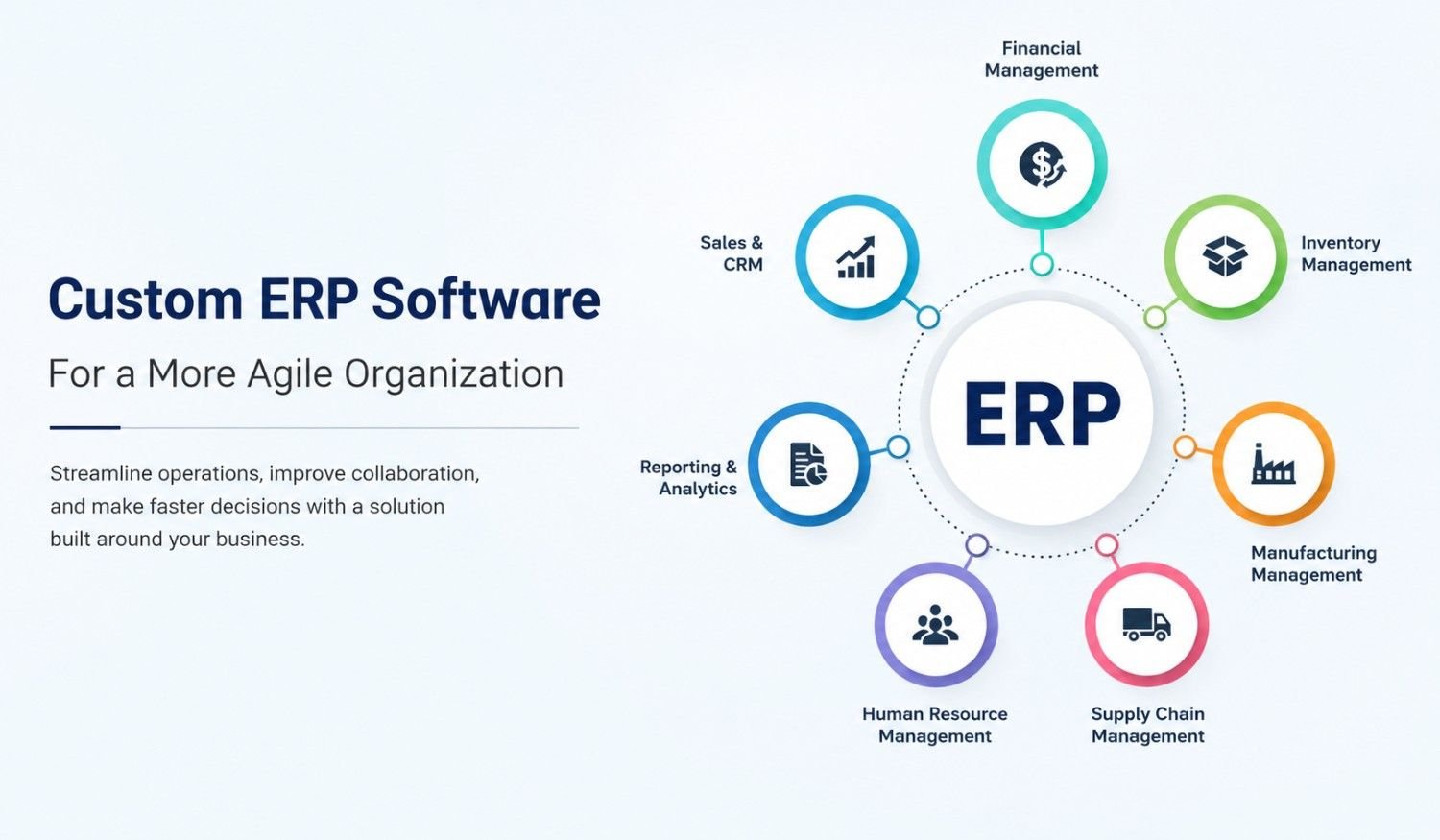
How Does Custom ERP Software Help Create a More Agile Organization

Business agility has become more than a competitive advantage—it is now a requirement for organizations that want to grow with confidence. Markets evolve, customer expectations shift, and internal operations become increasingly complex as companies expand. Keeping pace with these changes requires systems that are designed to adapt instead of resist. Custom ERP software development services provide businesses with the flexibility to streamline operations, improve collaboration, and make faster decisions. We have seen organizations replace outdated processes with tailored solutions, and the transformation is often less about technology and more about removing everyday obstacles that quietly slow progress.

Table of Contents

What Does Organizational Agility Really Mean?

Characteristics of an Agile Business

Organizational agility is the ability to respond quickly to changing circumstances without disrupting daily operations. Agile businesses adjust workflows, introduce new services, and meet customer demands while maintaining efficiency across departments. Rather than relying on rigid systems, they embrace technology that supports continuous improvement. Flexibility also allows teams to experiment, learn, and improve processes without creating unnecessary complexity. Think of it as replacing a maze of paperwork with clearly marked roads—everyone reaches the destination faster, and fewer people wonder where that missing spreadsheet disappeared.

Why Traditional Systems Often Slow Companies Down

Many businesses continue relying on disconnected software and manual processes simply because those systems have existed for years. Unfortunately, familiarity does not always equal efficiency. Traditional platforms often require duplicate data entry, create reporting delays, and make collaboration difficult between departments. Small problems gradually become operational bottlenecks as organizations grow. Employees spend valuable time switching between applications instead of completing meaningful work. Eventually, even simple business decisions require unnecessary effort, making it difficult to react quickly when opportunities or challenges appear.

Why Generic ERP Solutions Can Limit Business Growth

One-Size-Fits-All Processes

Off-the-shelf ERP platforms are designed to serve a broad audience, which means they rarely align perfectly with unique business operations. Organizations often find themselves adjusting their workflows to match the software instead of the software supporting their workflows. This compromise can reduce efficiency and create unnecessary steps across departments. Every company has different approval chains, reporting requirements, and operational priorities. A standardized solution may address basic needs, but long-term growth often demands greater flexibility than generic systems can realistically provide.

Integration Challenges

Modern businesses rely on multiple digital platforms to manage sales, finance, customer relationships, inventory, and operations. Generic ERP software may struggle to communicate effectively with these existing tools, leading to fragmented information and repetitive manual work. Data inconsistencies become more common when systems cannot exchange information seamlessly. Employees may spend hours transferring records between applications instead of focusing on strategic activities. Better integration reduces these interruptions and creates a more connected business environment where information flows naturally across departments.

Limited Flexibility During Expansion

Growth brings exciting opportunities, but it also introduces new operational demands. Expanding into new markets, opening additional locations, or launching new services often requires changes to existing business processes. Generic ERP platforms may offer limited customization, forcing businesses to work around software restrictions rather than business goals. What worked for fifty employees may no longer support five hundred. Organizations benefit from technology that evolves alongside their ambitions instead of becoming another obstacle that requires constant workarounds.

How Custom ERP Software Improves Operational Flexibility

Automating Unique Business Processes

Every business develops its own way of managing approvals, inventory, purchasing, and customer service over time. Instead of forcing employees to follow generic workflows, a tailored ERP solution automates processes that already make sense for the organization. This reduces unnecessary steps while maintaining consistency across departments. Teams spend less time handling repetitive administrative work and more time focusing on valuable tasks. Efficient automation also minimizes delays, allowing businesses to react quickly when priorities change or new opportunities emerge.

Adapting Workflows Without Disruption

Business requirements rarely stay the same for long. New regulations, customer expectations, and operational goals can require immediate adjustments. A customized ERP platform makes modifying workflows significantly easier because it is built around the organization’s needs rather than predefined limitations. Departments can introduce new approval paths, reporting methods, or operational procedures without replacing the entire system. That flexibility keeps daily operations running smoothly while supporting continuous improvement. Small adjustments become manageable projects instead of costly system-wide overhauls.

Faster Response to Market Changes

Companies that identify market trends early often gain a meaningful competitive advantage. An adaptable ERP system provides real-time visibility into inventory, sales, finances, and operations, helping decision-makers respond with confidence. Whether demand suddenly increases or supply chain conditions shift, businesses can adjust resources without unnecessary delays. Rather than relying on outdated reports, managers receive timely information that supports proactive planning. Responding quickly becomes part of everyday operations instead of an emergency exercise requiring multiple meetings and endless spreadsheets.

Centralized Data Enables Faster Decision-Making

Real-Time Business Insights

Reliable decisions depend on accurate information. When business data is stored across disconnected applications, reporting becomes slower and less dependable. A centralized ERP system brings operational information into one platform, allowing leaders to monitor performance in real time. Sales trends, inventory levels, financial updates, and project progress become available through unified dashboards. Instead of waiting for weekly reports, managers gain immediate visibility into business performance, making it easier to identify opportunities and resolve issues before they grow into larger problems.

Better Department Collaboration

Departments often work toward the same business goals while using different systems to manage daily responsibilities. This disconnect can create misunderstandings, duplicated work, and communication gaps. A unified ERP platform improves collaboration by giving every team access to consistent and up-to-date information. Finance, sales, operations, procurement, and customer service all work from the same data source. Shared visibility reduces confusion and encourages faster decision-making, helping employees coordinate activities more efficiently across the organization.

Reduced Information Silos

Information silos develop when departments store critical data separately, making collaboration difficult and slowing business operations. Employees may spend valuable time requesting updates instead of accessing information directly. An integrated ERP solution removes these barriers by connecting business functions through a single platform. Everyone works with consistent information, reducing duplicate records and improving overall accuracy. As communication improves, projects move faster, reporting becomes more reliable, and teams gain greater confidence when making operational decisions.

Custom ERP Makes Scaling Easier

Supporting Business Expansion

Growth should create opportunities, not operational headaches. As organizations expand into new regions, hire additional employees, or introduce new services, their software must evolve accordingly. Customized ERP solutions are designed with scalability in mind, allowing businesses to add users, departments, and features without disrupting existing operations. Instead of replacing software every few years, companies continue building upon a strong foundation. This approach supports sustainable growth while protecting previous technology investments and reducing long-term operational costs.

Adding New Departments and Features

Successful organizations rarely remain unchanged. New product lines, service offerings, or business units often require additional workflows and reporting capabilities. A flexible ERP system allows these new requirements to be incorporated without rebuilding the entire platform. Features can be introduced gradually as business needs evolve, reducing implementation risks and minimizing downtime. That adaptability keeps technology aligned with organizational goals while ensuring employees continue working efficiently during periods of change.

Preparing for Future Growth

Future growth depends on more than increasing revenue—it requires systems capable of supporting larger operations. Businesses that invest in flexible technology today are better prepared for tomorrow’s challenges. Scalable ERP solutions simplify expansion by accommodating higher transaction volumes, additional locations, and evolving operational requirements. Planning ahead reduces the need for expensive software replacements later. Growth becomes a structured process supported by technology rather than a constant struggle to overcome outdated systems.

Improving Productivity Through Workflow Automation

Eliminating Repetitive Tasks

Manual processes consume valuable time that employees could spend on higher-value activities. Entering the same information into multiple systems, processing paper approvals, and generating repetitive reports often create unnecessary delays. A custom ERP platform automates these routine tasks, improving consistency while reducing administrative effort. Teams complete work faster because the system handles repetitive actions behind the scenes. The result is not only greater productivity but also happier employees who spend less time clicking through endless forms and more time solving meaningful business challenges.

Increasing Employee Efficiency

Employees perform better when they have the right tools at the right time. A customized ERP solution places relevant information, workflows, and approvals within a single platform, reducing the need to switch between multiple applications. Less searching means more doing. Staff members can process orders, review inventory, update financial records, and collaborate with colleagues more efficiently. Over time, these seemingly small improvements add up, creating smoother operations and helping every department contribute more effectively to organizational goals.

Reducing Manual Errors

Even experienced employees occasionally make mistakes when entering data manually. Duplicate records, incorrect calculations, and missed approvals can affect reporting accuracy and customer satisfaction. Automated ERP workflows reduce these risks by standardizing business processes and validating information before it moves through the system. Accurate data supports better planning, stronger compliance, and more reliable reporting. Instead of spending hours correcting avoidable errors, teams can focus their attention on improving performance and delivering greater value across the organization.

Better Customer Experiences Through Connected Operations

Faster Order Processing

Customers appreciate speed, especially when placing orders or requesting services. A connected ERP platform links inventory, purchasing, finance, and sales information, allowing orders to move through the business with fewer delays. Employees no longer need to verify details across multiple systems before taking action. Faster processing improves delivery timelines while reducing the chance of missed information. When operations run smoothly behind the scenes, customers notice the difference—even if they never see the technology making everything possible.

Accurate Inventory Visibility

Running out of stock unexpectedly—or discovering excess inventory after purchasing more—is rarely good for business. Real-time inventory tracking provides employees with accurate information about product availability across locations. Sales teams can confidently promise delivery dates, purchasing departments can replenish stock at the right time, and managers can forecast demand more effectively. Better visibility minimizes unnecessary costs while improving customer satisfaction. After all, explaining why an item “should have been available” rarely creates a memorable customer experience.

Improved Customer Support

Customer service teams perform best when they have complete information at their fingertips. A customized ERP system provides access to order history, invoices, shipment status, and customer interactions through a centralized platform. Representatives spend less time searching for answers and more time resolving issues quickly. Faster responses build trust while improving the overall customer experience. Connected operations also enable proactive communication, allowing businesses to address potential concerns before customers even need to ask.

Stronger Collaboration Across Teams

Shared Information Across Departments

Collaboration becomes easier when every department works with the same reliable information. Sales, finance, operations, procurement, and customer support all depend on accurate business data to perform effectively. A centralized ERP platform ensures everyone accesses current information instead of maintaining separate spreadsheets or isolated databases. Shared visibility reduces misunderstandings while encouraging departments to coordinate more efficiently. Better communication supports smoother operations and helps projects move forward without unnecessary delays caused by conflicting information.

Improved Communication

Communication often slows when employees rely on emails, phone calls, or manual updates to share important information. A modern ERP platform keeps everyone informed by automatically updating records as business activities occur. Notifications, workflow approvals, and shared dashboards allow teams to stay aligned without constant follow-up. This transparency reduces confusion and helps employees make faster decisions based on current information. Strong communication creates stronger collaboration, which ultimately improves organizational agility.

Faster Project Execution

Projects frequently involve multiple departments working toward common objectives. Delays occur when information arrives late or responsibilities become unclear. A customized ERP system improves project execution by organizing tasks, timelines, approvals, and documentation within one platform. Teams gain visibility into progress while managers identify potential bottlenecks before they affect delivery schedules. Coordinated workflows help projects stay on track, reducing unnecessary delays and enabling businesses to respond more quickly to changing priorities or customer requests.

Custom ERP Supports Data-Driven Leadership

Real-Time Reporting

Successful leaders need more than historical reports—they need accurate information while business activities are happening. A customized ERP platform generates real-time reports that reflect current sales, financial performance, inventory levels, and operational metrics. Instead of waiting until the end of the week or month, decision-makers can monitor trends as they develop. This visibility supports faster responses to opportunities and potential risks. Better reporting transforms business conversations from guessing what happened yesterday to confidently planning what comes next.

KPI Dashboards

Key performance indicators become far more valuable when they are presented clearly and updated automatically. ERP dashboards bring together essential business metrics in one location, helping managers monitor productivity, revenue, expenses, customer satisfaction, and operational efficiency without sorting through multiple reports. Visual dashboards also make complex information easier to understand, allowing leaders to identify patterns quickly. When performance is visible across departments, improvement becomes an ongoing process rather than an occasional review meeting.

Better Strategic Planning

Long-term planning requires accurate information and reliable forecasting. An ERP platform collects business data from every department, creating a solid foundation for strategic decisions. Leaders can evaluate historical trends, compare operational performance, and allocate resources with greater confidence. Instead of reacting to problems after they occur, organizations can anticipate future needs and prepare accordingly. Planning becomes more practical because decisions are based on measurable business insights rather than assumptions or incomplete information.

Security and Compliance Become Easier to Manage

Role-Based Access

Not every employee requires access to every piece of business information. Role-based permissions ensure individuals only view or modify the data relevant to their responsibilities. This approach strengthens security while reducing the risk of accidental changes or unauthorized access. Managers maintain greater control over sensitive information without slowing daily operations. As businesses grow, structured access controls become increasingly important for protecting financial records, customer information, and confidential operational data.

Regulatory Compliance

Meeting industry regulations can become challenging when information is scattered across multiple systems. A customized ERP solution helps businesses maintain organized records, standardized workflows, and consistent documentation that support compliance requirements. Automated tracking reduces the likelihood of missing important updates while simplifying internal reviews. Whether businesses operate in manufacturing, healthcare, retail, or professional services, structured processes make regulatory obligations easier to manage without creating unnecessary administrative burdens.

Audit Readiness

Preparing for audits often involves collecting documents from multiple departments, verifying records, and resolving inconsistencies. An integrated ERP system simplifies this process by maintaining centralized records and detailed activity logs. Financial transactions, approvals, inventory movements, and operational updates remain easily accessible whenever needed. Instead of rushing to gather information before an audit, organizations can remain prepared throughout the year. Consistent recordkeeping reduces stress while improving transparency across the entire business.

Why Choosing the Right ERP Software Developer Matters

Technology alone does not determine project success—the expertise behind its implementation plays an equally important role. An experienced ERP software developer understands how to translate business requirements into practical solutions that support daily operations and future growth. Every organization has unique workflows, reporting needs, and integration challenges that deserve thoughtful planning rather than generic templates. We believe successful ERP projects begin with listening carefully, designing strategically, and building solutions that genuinely solve business problems instead of simply adding more software to manage.

Signs Your Business Is Ready for a Custom ERP Solution

Too Many Manual Processes

Manual work often grows gradually until it becomes part of everyday operations. Employees copy information between spreadsheets, approve documents through lengthy email chains, and spend hours preparing reports that should take minutes. These repetitive activities reduce productivity and increase the likelihood of costly mistakes. When manual tasks begin consuming more time than meaningful work, it may indicate that existing systems have reached their limits. Automating these processes creates a more efficient and adaptable business environment.

Disconnected Software Systems

Using separate applications for accounting, inventory, customer management, purchasing, and reporting may appear manageable initially. Over time, however, disconnected systems create duplicate data, communication gaps, and inconsistent reporting. Employees waste valuable time searching for information across multiple platforms instead of focusing on customer service or operational improvements. Integrating these business functions into one centralized ERP solution improves visibility, enhances collaboration, and eliminates many of the inefficiencies caused by fragmented software.

Reporting Takes Too Long

Business decisions lose value when reports arrive too late. If managers wait days—or even weeks—for operational updates, opportunities may already have passed. Delayed reporting also makes identifying problems more difficult because issues continue growing while teams gather information. A customized ERP platform delivers accurate reports in real time, helping leaders respond faster and make informed decisions with confidence. Timely information allows organizations to remain proactive instead of constantly reacting to yesterday’s challenges.

Rapid Business Growth

Growth is exciting, but it also places greater demands on technology and internal processes. Increasing customer volumes, expanding product lines, and hiring additional employees require systems capable of handling greater complexity. Businesses experiencing rapid expansion often discover that older software struggles to keep pace with new operational requirements. Investing in scalable ERP software allows organizations to build a flexible technology foundation that continues supporting growth without requiring constant replacement or expensive workarounds.

Author

  • 4931bcbe28b8d5eeaf3f9b303b119263?s=80&d=mm&r=g How Does Custom ERP Software Help Create a More Agile Organization?

    Manoj Bhuva is the CEO and Tech Lead at Kanhasoft, specializing in custom web applications, SaaS platforms, CRM, ERP, mobile app development, data automation, and AI-powered business solutions. He focuses on helping businesses transform complex workflows into scalable, efficient, and user-friendly software systems.

Manoj Bhuva is the CEO and Tech Lead at Kanhasoft, specializing in custom web applications, SaaS platforms, CRM, ERP, mobile app development, data automation, and AI-powered business solutions. He focuses on helping businesses transform complex workflows into scalable, efficient, and user-friendly software systems.

Post Comment

https://www.effectivecpmnetwork.com/iwg7up7k2?key=ad1f6ef0c9c1a73f495c01680a07636b