How to Use Debt to Equity Ratio to Make Better Business Decisions
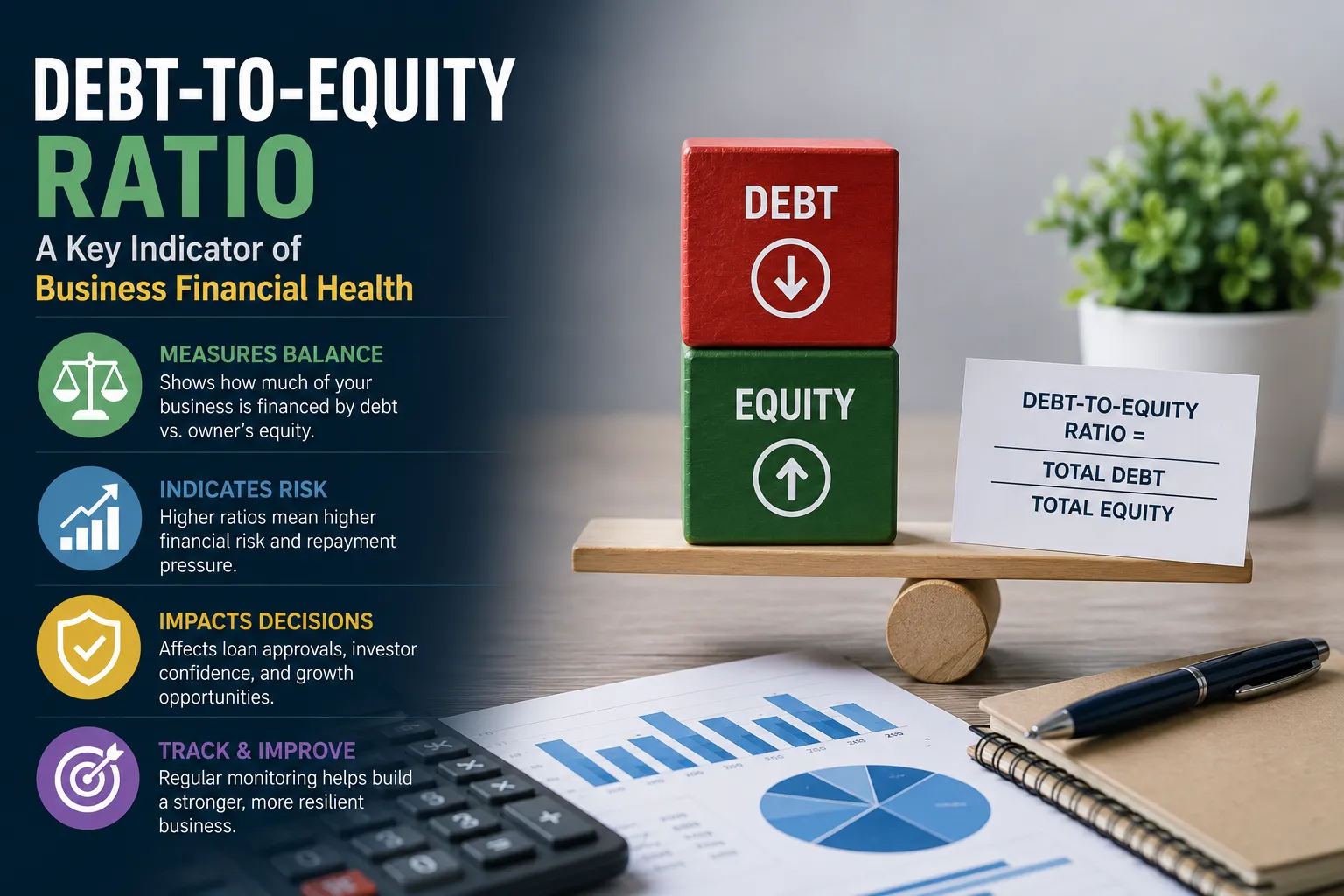
Every business owner wants to build a financially stable company, but making smart financial decisions requires more than tracking sales and profits. One of the most valuable financial metrics for evaluating your company’s financial structure is the debt to equity ratio. It helps you understand whether your business is relying too heavily on borrowed funds or maintaining a healthy balance between debt and owner investment.
Whether you’re applying for a business loan, seeking investors, planning expansion, or reviewing your company’s financial performance, understanding this ratio can help you reduce financial risk and make more informed decisions.
Instead of waiting until financial problems arise, monitoring your debt to equity ratio allows you to identify potential concerns early and take corrective action before they affect your business growth.
Understanding the Debt to Equity Ratio
The debt to equity ratio compares a company’s total liabilities with its shareholders’ equity. In simple terms, it shows how much of the business is financed through debt versus the owner’s investment.
The calculation is straightforward:
Debt to Equity Ratio = Total Liabilities ÷ Shareholders’ Equity
For example, if your company has $400,000 in liabilities and $250,000 in owner’s equity, your debt to equity ratio is 1.6. This indicates that the business has $1.60 of debt for every $1 invested by its owners.
This financial ratio is commonly used by lenders, investors, accountants, and financial advisors to evaluate business stability.
Why This Financial Ratio Matters
Many businesses borrow money to purchase equipment, expand operations, or improve cash flow. Borrowing itself isn’t a problem. The concern arises when debt grows faster than the company’s ability to manage it.
Monitoring the debt to equity ratio helps businesses:
- Measure financial leverage
- Evaluate borrowing capacity
- Build investor confidence
- Improve financial planning
- Support loan applications
- Reduce long-term financial risk
- Maintain healthier balance sheets
A balanced financial structure makes businesses more resilient during economic uncertainty.
What Can Your Ratio Tell You?
A debt to equity ratio provides insight into your company’s financial strategy.
A lower ratio often suggests that the business relies more on owner investment than borrowed money. This generally indicates lower financial risk.
A moderate ratio may reflect healthy use of financing to support business growth.
A higher ratio may indicate aggressive borrowing. While this isn’t always negative, it increases financial obligations and requires careful cash flow management.
The ideal ratio depends on your industry, business model, and stage of growth.
Factors That Influence the Debt to Equity Ratio
Several business activities can cause this ratio to increase or decrease over time.
Business Loans
Taking out new loans increases liabilities, which can raise the ratio.
Owner Investments
When business owners contribute additional capital, shareholders’ equity increases, improving the ratio.
Retained Earnings
Profitable businesses that reinvest earnings strengthen equity over time.
Business Losses
Ongoing losses reduce equity, making the debt to equity ratio less favorable.
Understanding these factors helps business owners make more strategic financial decisions.
Practical Ways to Improve Your Debt to Equity Ratio
If your ratio is higher than expected, there are several effective ways to improve it.
Focus on Paying Down High-Interest Debt
Reducing outstanding loans decreases liabilities and improves your overall financial position.
Increase Business Profitability
Higher profits contribute to retained earnings, strengthening shareholders’ equity over time.
Avoid Excessive Borrowing
Evaluate whether future purchases require financing or can be funded through available cash reserves.
Improve Working Capital Management
Collect customer payments faster, reduce unnecessary expenses, and optimize inventory levels to improve cash flow.
Reinvest Profits Into the Business
Rather than distributing all profits, retaining earnings increases owner equity and supports long-term financial health.
Common Mistakes Business Owners Make
Many businesses misunderstand how to interpret financial ratios.
Some common mistakes include:
Comparing Different Industries
Debt levels vary significantly across industries. Construction companies, manufacturers, and transportation businesses often operate with more debt than consulting firms or software companies.
Ignoring Financial Trends
A single ratio only provides a snapshot. Reviewing several years of financial data offers a more accurate understanding of business performance.
Looking Only at Debt
The ratio should be evaluated alongside other financial metrics, including cash flow, profitability, current ratio, operating margin, and interest coverage.
Delaying Financial Reviews
Waiting until year-end may allow financial problems to grow unnoticed. Regular financial analysis leads to better decision-making.
How Financial Planning Supports Better Ratios
Strong financial planning helps businesses maintain healthy debt levels while supporting sustainable growth.
Preparing budgets, forecasting cash flow, monitoring expenses, and reviewing financial statements regularly all contribute to better financial management.
Businesses that actively monitor their financial performance are often better prepared for expansion opportunities and unexpected market changes.
When Professional Financial Guidance Makes Sense
As businesses become more established, financial decisions often become more complex. Managing financing options, evaluating investment opportunities, and improving financial performance require careful planning.
Working with experienced financial professionals can help you interpret important financial ratios, optimize capital structure, improve cash flow, and create long-term growth strategies based on reliable financial data.
Professional guidance also helps businesses prepare for lender reviews, investor presentations, and strategic expansion plans.
Final Thoughts
The debt to equity ratio is one of the most practical financial metrics available for evaluating business stability and financial leverage. By regularly monitoring this ratio, business owners gain valuable insight into how their company is financed and whether current debt levels support long-term success.
Rather than viewing the ratio as simply an accounting calculation, use it as a strategic planning tool. Combined with accurate bookkeeping, financial forecasting, cash flow management, and professional financial advice, it can help your business reduce risk, improve profitability, and build a stronger financial future.






Post Comment