Importing from Canada to US: The Complete 2026 Guide for Businesses and Entrepreneurs
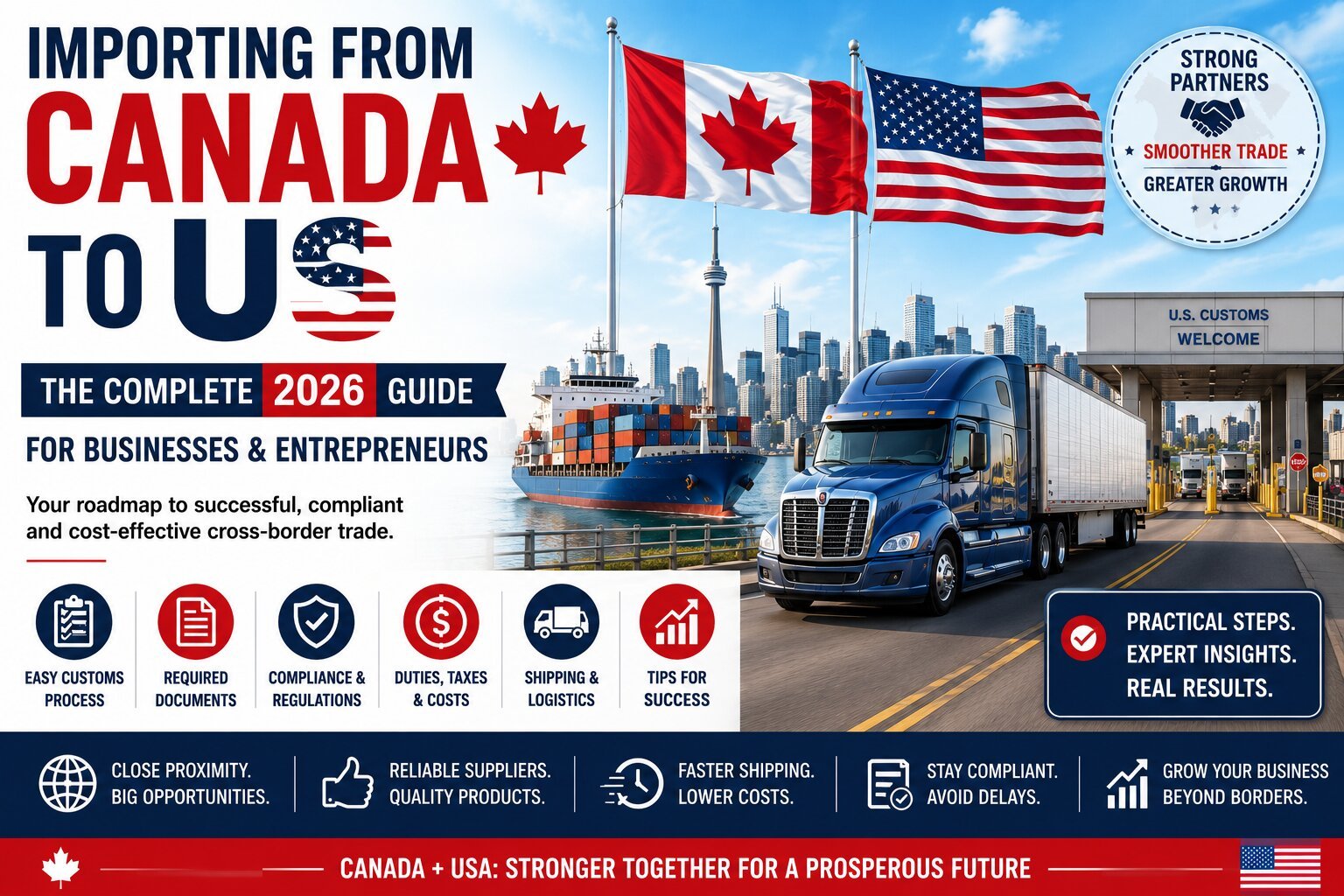
For decades, Canada and the United States have shared one of the largest and most active trading relationships in the world. Every day, thousands of shipments cross the border carrying raw materials, manufactured goods, agricultural products, consumer items, and industrial equipment. This close economic partnership creates significant opportunities for businesses looking to expand their supply chains or source high-quality products.
For many entrepreneurs, importing from Canada to US is an attractive option because of geographic proximity, well-developed transportation networks, and strong commercial ties. Canadian manufacturers and suppliers serve businesses across numerous industries, making cross-border trade an important part of North American commerce.
However, successful importing from Canada involves much more than purchasing products and arranging transportation. Businesses must understand customs procedures, product classification, documentation requirements, duties, taxes, regulatory compliance, and logistics planning.
The good news is that these challenges become manageable with preparation and knowledge. A structured approach helps businesses reduce delays, avoid unnecessary expenses, and create efficient import operations.
This guide explains the essential steps involved in importing goods from Canada into the United States while highlighting practical strategies for long-term success.
Understanding Cross-Border Trade
Importing Is Part of a Larger Business Strategy
Many first-time importers believe international trade begins when they place an order with a supplier. In reality, importing starts much earlier with planning and research.
Businesses should consider:
- Product demand
- Supplier reliability
- Transportation methods
- Regulatory requirements
- Total landed cost
- Inventory management
- Customer expectations
Careful preparation reduces uncertainty throughout the importing process.
Why Businesses Choose Importing from Canada
Geographic Advantages
Canada shares one of the world’s longest international borders with the United States. This proximity often creates faster transportation options compared with overseas suppliers.
Benefits may include:
- Shorter delivery times
- Flexible transportation choices
- Easier communication
- Similar business practices
- Well-established trade infrastructure
These advantages make importing from Canada to US an attractive option for many industries.
Popular Products Imported from Canada
Canada Exports a Wide Variety of Goods
Businesses engage in importing from Canada across numerous sectors.
Common categories include:
- Industrial equipment
- Automotive components
- Wood products
- Paper products
- Food ingredients
- Agricultural products
- Chemicals
- Consumer goods
- Technology components
- Construction materials
Each product category may have different regulatory requirements.
Research Before You Import
Know Your Market
Before purchasing products internationally, businesses should evaluate:
- Customer demand
- Competitor pricing
- Market trends
- Seasonal fluctuations
- Inventory requirements
Importing products without understanding market conditions can increase financial risk.
Finding Reliable Canadian Suppliers
Supplier Selection Matters
Choosing the right supplier influences product quality and delivery reliability.
Businesses should evaluate:
- Manufacturing capability
- Quality standards
- Production capacity
- Communication practices
- Delivery history
Strong supplier relationships support long-term success.
Understanding Product Classification
Every Product Has a Classification
Products entering the United States are assigned classification codes used for customs purposes.
Correct classification helps determine:
- Applicable duties
- Regulatory requirements
- Documentation needs
- Compliance obligations
Incorrect classification can create delays and additional costs.
Customs Documentation
Accurate Paperwork Supports Smooth Clearance
International shipments typically require documentation such as:
- Commercial invoice
- Packing list
- Transportation documents
- Certificates when applicable
- Customs declarations
Accurate documentation reduces processing delays and administrative complications.
Regulatory Compliance
Different Products Have Different Rules
Many products entering the United States must comply with specific standards regarding:
- Safety
- Labeling
- Packaging
- Health requirements
- Environmental regulations
Businesses should understand applicable requirements before shipping products.
Transportation Options
Selecting the Right Method
Several transportation methods support importing from Canada to US, including:
Truck Transportation
Often preferred for flexibility and speed across land borders.
Rail Transportation
Suitable for bulk shipments and industrial goods.
Air Freight
Useful for time-sensitive products but generally more expensive.
Ocean Freight
Applicable for certain routes involving ports and international logistics networks.
The appropriate option depends on product characteristics, budget, and delivery timelines.
Understanding Total Landed Cost
Product Price Is Only One Expense
Businesses should calculate total landed cost, including:
- Product purchase price
- Transportation
- Insurance
- Customs duties
- Brokerage fees
- Warehousing
- Domestic delivery
Comprehensive cost analysis improves pricing decisions and profitability.
Supply Chain Planning
Efficient Operations Create Competitive Advantages
Strong supply chains help businesses:
- Maintain inventory
- Reduce delays
- Improve customer satisfaction
- Lower operational costs
Planning should include contingency strategies for unexpected disruptions.
Managing Risk
Every Import Transaction Involves Risk
Potential challenges include:
- Supplier delays
- Transportation disruptions
- Documentation errors
- Regulatory changes
- Currency fluctuations
Businesses should identify potential risks and develop mitigation plans before importing.
Technology Supports Better Import Management
Digital Tools Improve Visibility
Modern businesses increasingly rely on technology for:
- Shipment tracking
- Inventory management
- Supplier communication
- Documentation storage
- Data analysis
Technology improves operational efficiency while supporting informed decision-making.
Common Mistakes First-Time Importers Make
Focusing Only on Purchase Price
Lower prices do not always translate into lower total costs.
Ignoring Documentation
Even minor paperwork errors can delay shipments.
Underestimating Compliance
Businesses should understand all applicable regulations before importing products.
Poor Supplier Evaluation
Reliable suppliers contribute significantly to long-term success.
Building Strong Supplier Relationships
Communication Creates Stability
Successful international trade depends on cooperation and trust.
Businesses should establish:
- Clear expectations
- Realistic delivery schedules
- Quality standards
- Open communication channels
Strong relationships reduce misunderstandings and improve reliability.
Sustainability and Responsible Sourcing
Modern Businesses Consider More Than Cost
Many organizations evaluate:
- Environmental practices
- Responsible sourcing
- Product quality
- Long-term supplier relationships
Sustainable business practices increasingly influence purchasing decisions.
Future Trends in Cross-Border Trade
International commerce continues evolving through:
- Digital documentation
- Supply chain modernization
- Advanced logistics technology
- Data-driven decision-making
- Increased trade transparency
Businesses that remain adaptable will be better positioned for future growth.
FAQs
1. What is the process for importing from Canada to US?
The process of importing from Canada to US typically involves selecting a supplier, classifying the product correctly, preparing customs documentation, complying with U.S. regulations, arranging transportation, and completing customs clearance before delivery.
2. Do I have to pay duties when importing from Canada?
Whether duties apply depends on the product classification, country of origin, and applicable trade rules. Businesses should review the relevant customs requirements before importing from Canada to understand potential costs.
3. What documents are required for importing from Canada to US?
Common documents include a commercial invoice, packing list, bill of lading or transportation document, and any certificates or permits required for the specific product category. Accurate documentation helps prevent customs delays.
4. What are the biggest challenges when importing from Canada?
Some common challenges include customs compliance, incorrect product classification, incomplete documentation, shipping delays, and unexpected logistics costs. Proper planning helps minimize these risks.
5. Why do many businesses choose importing from Canada?
Many businesses prefer importing from Canada because of the close geographic location, reliable transportation infrastructure, strong trade relationship with the United States, and access to a wide range of quality products across multiple industries.
Conclusion
Importing from Canada to US offers significant opportunities for businesses seeking reliable suppliers, efficient logistics, and expanded product options. However, successful importing requires careful planning, accurate documentation, regulatory awareness, and effective supply chain management.
Understanding the fundamentals of importing from Canada allows businesses to reduce operational risks while improving efficiency and customer satisfaction.
Rather than viewing importing as a single transaction, companies should approach it as a long-term business strategy built on research, compliance, strong supplier relationships, and continuous improvement. Organizations that invest in these fundamentals will be better equipped to compete and grow in an increasingly interconnected global marketplace.






Post Comment