What Business Trends Are Making Custom CRM Software More Relevant Than Ever?
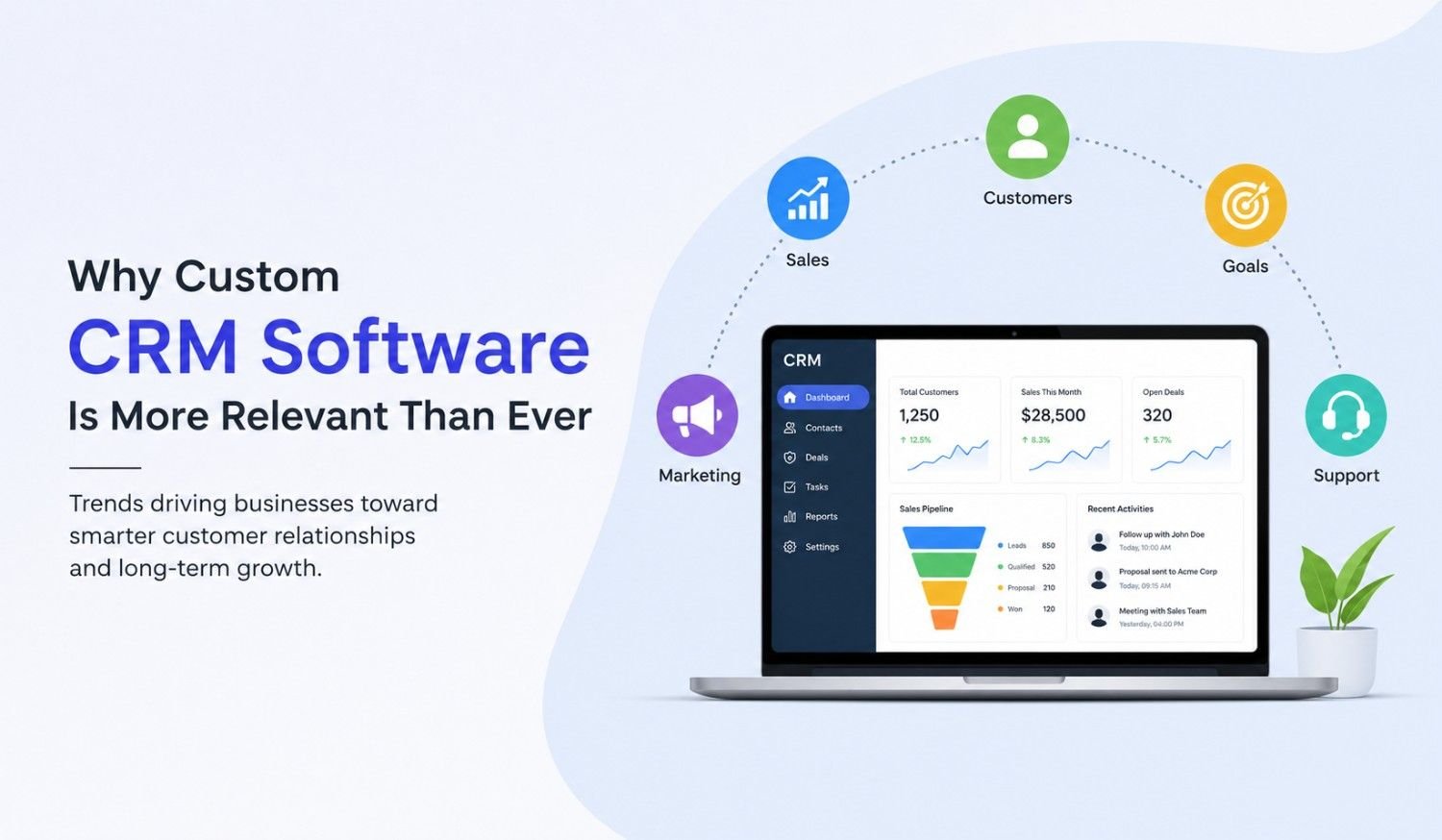
Customer expectations have changed dramatically over the past few years, and businesses are feeling the pressure from every direction. Buyers want faster responses, personalized experiences, and seamless communication regardless of where they interact with a company. Meanwhile, internal teams are expected to work smarter, not harder. That’s where custom CRM software is gaining momentum. Generic platforms may check basic boxes, but many organizations are discovering that their processes do not fit neatly into prebuilt templates. As business demands evolve, tailored CRM solutions are becoming less of a luxury and more of a strategic necessity.
The Shift Toward Hyper-Personalized Customer Experiences
Modern customers have become remarkably skilled at spotting generic interactions. A mass email, an irrelevant offer, or a delayed response can quickly push them toward a competitor. Businesses are responding by prioritizing personalization at every stage of the customer journey. We have observed that companies investing in customized engagement strategies often build stronger customer loyalty and higher retention rates. The challenge, however, is managing all that data effectively. Standard systems frequently struggle with unique customer requirements, making customized CRM environments increasingly valuable in delivering meaningful and timely interactions.
Customers Expect More Than Generic Interactions
Today’s buyers expect businesses to remember their preferences, understand their history, and anticipate their needs. Those expectations continue to rise regardless of industry. Customers compare every experience to the best digital interactions they encounter elsewhere, whether that is online shopping, banking, or customer support. Businesses can no longer rely on one-size-fits-all communication strategies. Instead, they need detailed customer profiles and deeper insights. A well-structured CRM allows organizations to capture the information that matters most, transforming customer relationships from transactional exchanges into ongoing conversations built on relevance and trust.
Why Custom CRM Supports Personalization Better
Every business collects different types of customer information. A software company may track product usage, while a healthcare provider may focus on appointment history. Custom CRM solutions allow organizations to create data structures that reflect their actual customer relationships. Rather than forcing teams to adapt to predefined fields, the platform adapts to the business. This flexibility improves segmentation, automates personalized communication, and enhances customer journey tracking. The result is a more relevant customer experience—and fewer awkward moments when software behaves like it knows the customer less than the customer expects.
Remote and Hybrid Work Models Are Here to Stay
Remote and hybrid work arrangements have transformed how teams collaborate. Sales representatives, account managers, and support specialists may now operate from different cities—or even different continents. While flexibility has benefits, it also creates challenges in maintaining consistent customer experiences. Information scattered across spreadsheets, emails, and messaging platforms often leads to confusion and delays. Businesses increasingly require centralized systems that keep everyone aligned. CRM platforms designed around actual operational workflows help remote teams stay connected, informed, and productive regardless of where work happens on any given day.
Managing Distributed Teams Effectively
Coordinating a distributed workforce requires more than video calls and shared documents. Teams need immediate access to customer records, communication histories, and sales updates. Without a central source of truth, duplicate work and missed opportunities become common problems. Many organizations discover that information gaps grow as teams become more geographically dispersed. A CRM tailored to specific business processes helps reduce these challenges by ensuring employees access the same accurate information. Consistency becomes easier to maintain, and customer interactions remain smooth even when teams operate across multiple locations.
Custom CRM Creates a Unified Workspace
A customized CRM can serve as the operational headquarters for customer-facing teams. Sales, marketing, and customer support departments often have different objectives, yet they all rely on customer information. By creating role-specific dashboards and workflows, businesses can ensure each team sees exactly what they need. Real-time updates keep information current, while mobile accessibility supports employees working from anywhere. We often see organizations gain significant efficiency simply by eliminating the endless search for information. After all, customers prefer answers quickly—not after a company completes an internal treasure hunt.
Businesses Are Prioritizing Process Automation
Efficiency has become a competitive advantage. Organizations are under constant pressure to accomplish more without dramatically increasing headcount. As a result, process automation is moving from a desirable feature to a business necessity. Manual tasks that once seemed manageable now consume valuable time and resources. From lead assignment to follow-up scheduling, repetitive activities can quickly slow growth. Businesses increasingly seek CRM systems capable of automating routine work while maintaining flexibility. Custom-built solutions allow organizations to automate processes that reflect their unique operations instead of settling for generic workflows.
Manual Tasks Continue to Drain Productivity
Many teams still spend hours performing activities that software could complete in seconds. Data entry, task assignments, report generation, and customer follow-ups often consume valuable working hours. While these responsibilities are necessary, they rarely represent the best use of employee expertise. Productivity suffers when talented professionals become administrators instead of strategic contributors. Businesses are recognizing that operational efficiency depends on reducing repetitive work wherever possible. CRM platforms designed around actual business workflows help eliminate bottlenecks and free teams to focus on customer relationships, revenue growth, and innovation.
Tailored Automation Delivers Greater Value
Automation is most effective when it aligns closely with business operations. Generic automation tools often require organizations to adjust their processes to match software limitations. A custom CRM reverses that relationship. Workflows can be configured according to specific business rules, approval processes, and customer engagement strategies. Leads can be assigned automatically, notifications can be triggered based on customer behavior, and reports can be generated without manual intervention. Businesses gain efficiency without sacrificing flexibility, creating an environment where technology actively supports growth instead of creating additional complexity.
Data-Driven Decision-Making Is Becoming Non-Negotiable
Data has become one of the most valuable business assets, but only when it is accessible and actionable. Organizations generate enormous amounts of information every day through sales activities, customer interactions, marketing campaigns, and support requests. The challenge lies in turning that information into decisions that drive growth. Business leaders increasingly require real-time visibility into performance metrics and customer behavior. Custom CRM platforms help organize and present data in meaningful ways, allowing companies to make informed decisions quickly instead of relying on assumptions or outdated reports.
Companies Need Actionable Insights
Collecting data is relatively easy. Understanding what that data actually means is where the real challenge begins. Businesses need visibility into customer preferences, sales trends, service performance, and market opportunities. Standard reports often provide broad information that may not align with specific organizational goals. Custom CRM solutions allow businesses to track the metrics that matter most to them. Whether measuring lead conversion rates or customer retention trends, organizations gain deeper insights that support strategic planning and help leaders respond confidently to changing business conditions.
Custom CRM Enables Better Reporting
Every organization measures success differently. Some prioritize sales growth, while others focus on customer satisfaction or operational efficiency. A customized CRM platform enables businesses to create reports and dashboards tailored to their objectives. Teams gain instant access to key performance indicators without sorting through irrelevant data. Decision-makers can identify trends, uncover opportunities, and address issues before they escalate. Better visibility often leads to better outcomes. After all, navigating a business without meaningful data is a bit like driving with a fogged windshield—possible, but certainly not ideal.
Industry-Specific Requirements Are Increasing
Businesses across industries are becoming more specialized, and their software needs are evolving accordingly. Healthcare providers, manufacturers, logistics companies, and professional service firms all operate with unique processes and compliance requirements. Generic CRM systems often struggle to accommodate these specialized workflows. As organizations seek greater efficiency and accuracy, the demand for customized solutions continues to rise. CRM software that aligns with industry-specific operations enables businesses to streamline processes, reduce manual work, and create systems that support how they actually function on a daily basis.
One Size Rarely Fits All
The phrase “one size fits all” sounds convenient until a business attempts to fit unique operations into a generic software framework. Different industries have distinct requirements regarding compliance, reporting, communication, and workflow management. Businesses frequently encounter limitations when using standard CRM platforms that were designed for broad audiences. These limitations often result in workarounds, duplicate processes, and employee frustration. Customized CRM solutions eliminate many of these obstacles by adapting to operational realities rather than forcing businesses to modify successful processes simply to accommodate software restrictions.
Custom CRM Adapts to Business Processes
Successful technology should complement existing business operations rather than disrupt them unnecessarily. A custom CRM can be configured around established workflows, approval structures, customer engagement models, and reporting requirements. This flexibility enables organizations to maintain efficiency while supporting future growth. Industry-specific modules, specialized integrations, and customized dashboards provide greater operational control. Businesses gain software that reflects their unique needs rather than a generic platform attempting to satisfy everyone simultaneously. The result is often higher adoption rates, improved productivity, and fewer complaints from teams trying to get work done.
Integration Demands Are Expanding Rapidly
Modern businesses rarely operate with a single software platform. Customer data may reside in marketing tools, accounting systems, ERP platforms, support software, and communication applications. Managing disconnected systems creates inefficiencies and increases the likelihood of errors. Organizations increasingly require seamless data flow across departments and platforms. CRM software is becoming the central hub that connects these technologies. Custom-built solutions provide the flexibility necessary to support complex integration requirements, ensuring information moves smoothly between systems and helping businesses maintain a consistent view of customers and operations.
Businesses Depend on Multiple Platforms
Technology ecosystems continue to expand as organizations adopt specialized tools for different functions. Sales teams may use one platform, finance another, and customer support yet another. While each tool serves a valuable purpose, disconnected systems create information silos that hinder collaboration. Employees often spend unnecessary time transferring data between applications or searching for missing information. Businesses are recognizing that fragmented systems reduce efficiency and impact customer experiences. Integrating critical platforms through a tailored CRM environment helps create a unified operational framework that supports collaboration and accuracy.
Custom CRM Becomes the Operational Hub
A well-designed CRM serves as more than a customer database. It becomes the central platform connecting departments, processes, and technologies. Data synchronization eliminates duplication, while automated information sharing improves visibility across the organization. Employees gain access to consistent information regardless of department or role. This connected approach helps businesses respond more quickly to customer needs and internal demands. Organizations often discover that integration improvements generate benefits beyond efficiency alone. Fewer information gaps typically result in better decisions, smoother operations, and significantly fewer “Who has the latest version?” conversations.
AI Adoption Is Accelerating Across Organizations
Artificial intelligence is no longer limited to large enterprises with extensive technology budgets. Businesses of all sizes are exploring ways to use AI for customer engagement, forecasting, and operational improvements. However, successful AI implementation depends heavily on data quality and workflow structure. Organizations are discovering that AI performs best when supported by organized and accessible information. CRM systems play a critical role in this foundation. Custom solutions help businesses prepare for AI adoption by creating environments where customer data is structured, accurate, and ready for intelligent analysis.
Businesses Want Smarter Customer Management
Companies increasingly seek tools that can identify opportunities before they become obvious. Predictive analytics, lead scoring, customer behavior analysis, and automated recommendations are becoming valuable competitive advantages. AI-powered capabilities help businesses improve efficiency while delivering more personalized customer experiences. However, these technologies require reliable data and clearly defined processes. A CRM system tailored to business objectives provides the framework necessary for advanced analytics and intelligent automation. As AI capabilities continue to evolve, organizations with strong CRM foundations are often positioned to benefit most.
Custom CRM Provides a Better Foundation for AI
Artificial intelligence is only as effective as the information it receives. Poor data quality often leads to poor recommendations. Customized CRM platforms help businesses standardize data collection, improve accuracy, and eliminate inconsistencies. This structured environment creates stronger conditions for AI-driven insights and automation. Businesses can implement intelligent features that align directly with operational goals rather than relying on generic functionality. Organizations planning for long-term digital transformation frequently view CRM customization as an important step toward maximizing the value of future AI investments.
Customer Retention Has Become More Valuable Than Acquisition
Acquiring new customers remains important, but retaining existing ones has become increasingly valuable. Rising advertising costs and growing competition have made customer acquisition more expensive than ever. Businesses are responding by investing more heavily in long-term relationship management. Strong customer retention strategies depend on consistent communication, personalized engagement, and proactive support. CRM systems help organizations maintain these relationships effectively. As retention becomes a primary growth driver, customized CRM platforms are playing a larger role in helping businesses build loyalty and maximize customer lifetime value.
Rising Acquisition Costs Are Changing Strategies
Many organizations are discovering that attracting new customers requires significant investment. Marketing expenses continue to rise, while competition for attention grows more intense. As a result, businesses are focusing on maximizing the value of existing customer relationships. Retention often delivers stronger returns than constant acquisition efforts. CRM software supports this shift by helping organizations understand customer behavior, identify risks, and create engagement strategies that encourage loyalty. Maintaining strong relationships is becoming a strategic priority rather than simply a customer service objective.
CRM Helps Strengthen Customer Loyalty
Customer loyalty rarely happens by accident. It develops through consistent interactions, timely communication, and positive experiences over time. CRM platforms help businesses track these interactions and identify opportunities to strengthen relationships. Automated reminders, personalized outreach, and customer lifecycle monitoring all contribute to improved engagement. Organizations gain visibility into customer needs before problems arise. In many cases, proactive service makes the difference between retaining a valuable customer and losing them to a competitor. Small improvements in retention can often generate substantial long-term business value.
Scalability Is a Growing Business Requirement
Growth is exciting, but it often introduces complexity. More customers, employees, products, and processes create additional operational demands. Businesses require systems capable of supporting expansion without becoming obstacles. Many organizations outgrow generic CRM platforms as their needs become more sophisticated. Custom solutions offer the flexibility necessary to adapt alongside business growth. Rather than replacing software every few years, companies can build CRM environments designed to evolve. Scalability is increasingly viewed as a strategic requirement rather than a future consideration.
Business Growth Creates Operational Complexity
Expanding organizations face new challenges related to communication, reporting, workflow management, and customer service. Processes that worked well for smaller teams may become inefficient as operations scale. Information volumes increase, decision-making becomes more complex, and visibility often decreases. Businesses need technology capable of supporting these changes without creating additional friction. CRM systems designed with scalability in mind help organizations manage growth effectively. Flexible architecture and customizable features ensure that technology continues supporting business objectives as operational requirements evolve.
Custom CRM Grows Alongside the Organization
One of the greatest advantages of a custom CRM solution is adaptability. Features, workflows, integrations, and reporting capabilities can be expanded as business requirements change. Organizations avoid the disruption and expense associated with replacing software when growth introduces new challenges. A scalable CRM supports long-term planning and reduces future limitations. Businesses gain confidence knowing their technology infrastructure can evolve alongside operations. Growth should create opportunities, not software headaches—and customized systems help ensure expansion remains an exciting milestone rather than an operational burden.
Why Organizations Partner with a Custom CRM Development Company
Businesses increasingly recognize that competitive advantages often emerge from operational efficiency and customer experience. Off-the-shelf solutions provide broad functionality, but they may not fully support unique business goals. Partnering with a custom CRM development company enables organizations to create software aligned with specific objectives and workflows. Instead of adapting processes to fit technology, businesses gain technology designed around their operations. This alignment often improves productivity, customer engagement, and decision-making while supporting future growth initiatives and long-term strategic planning.
Aligning Technology with Business Goals
Every business has unique objectives, challenges, and workflows. Technology should support those priorities rather than create additional barriers. Customized CRM development focuses on understanding how an organization operates and designing solutions accordingly. Features, integrations, and automation workflows can be tailored to support specific outcomes. Businesses gain tools that align closely with operational requirements and growth strategies. This level of customization often results in higher user adoption, improved efficiency, and stronger returns on technology investments across departments and teams.
Achieving Long-Term Competitive Advantages
Competitive markets reward businesses that operate efficiently and deliver exceptional customer experiences. Customized CRM platforms contribute to both objectives by streamlining operations and supporting personalized engagement strategies. Organizations that choose to hire CRM developer resources often gain greater flexibility in adapting technology to changing market demands. Rather than relying on generic features available to competitors, businesses can create capabilities that reflect their unique strengths. Over time, these advantages support stronger customer relationships, improved efficiency, and sustainable growth opportunities.
Conclusion
Business trends continue to evolve, but one theme remains remarkably consistent: organizations need technology that adapts to their operations, not the other way around. From personalization and automation to AI readiness and customer retention, the demands placed on modern businesses are becoming increasingly complex. Custom CRM solutions provide the flexibility required to address these challenges while supporting future growth. We have seen businesses transform efficiency simply by replacing rigid systems with tailored platforms. In the end, successful CRM software does not force a business into a box—it helps remove the box entirely.
FAQs
1. What is custom CRM software?
Custom CRM software is a customer relationship management solution designed specifically around a company’s workflows, processes, and operational requirements rather than using standard templates.
2. Why are businesses choosing custom CRM solutions?
Businesses want greater flexibility, improved automation, personalized customer management, and seamless integrations that align with their unique goals.
3. How does custom CRM improve customer experiences?
It enables personalized communication, detailed customer tracking, automated follow-ups, and better visibility into customer needs and preferences.
4. Can custom CRM integrate with existing software?
Yes. Custom CRM platforms can integrate with ERP systems, accounting software, marketing tools, support applications, and other business technologies.
5. Is custom CRM suitable for small businesses?
Absolutely. Small businesses often benefit from having a streamlined solution that includes only the features they actually need.
6. How does CRM support remote and hybrid teams?
CRM software centralizes customer information, improves collaboration, and provides secure access to data from virtually any location.
7. What role does AI play in CRM systems?
AI can assist with lead scoring, customer insights, predictive analytics, automation, and smarter decision-making when supported by quality data.
8. How can businesses benefit from CRM development services?
CRM development services help organizations create tailored solutions that improve efficiency, strengthen customer relationships, and support long-term growth.






Post Comment