The Fire Is Out. A Greenville Homeowner’s Guide to Fire Damage Restoration
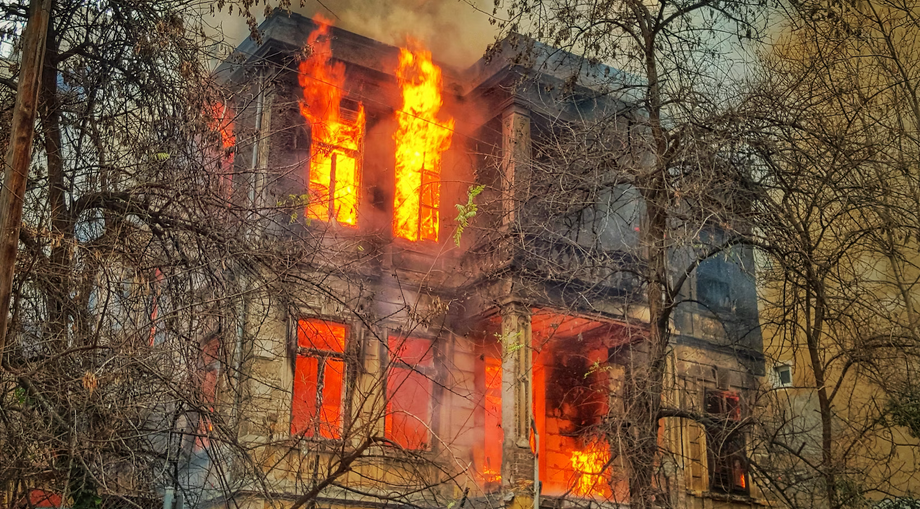
The fire department has cleared the property. The flames are out. What comes next is where most Greenville homeowners feel the most lost. The visible damage is obvious, but the full picture is not, and the decisions made in the first 24 to 48 hours after a fire have a direct effect on how much of the property can be recovered and how the insurance process unfolds.
This guide walks through what actually happens during fire recovery in a Greenville home, what to do before the restoration team arrives, and what a complete scope of work actually covers.
What to Do Before the Restoration Team Arrives
The steps taken between the fire department clearing the property and the restoration team arriving matter more than most homeowners realize.
- Do not re-enter the property until the fire department confirms it is structurally safe. Heat compromises framing and load-bearing elements that appear intact from the outside.
- Photograph every affected area before anything is moved, cleaned, or discarded. This documentation supports the insurance claim.
- Notify the insurance carrier promptly. Most policies require timely reporting.
- Do not authorize any cleanup or demolition before a professional assessment is completed. Surface cleaning before assessment drives soot residue deeper into materials and can eliminate evidence of damage that the insurance adjuster needs to see.
Soot also continues damaging surfaces with every hour it remains. The urgency is real, but it is resolved by calling a certified restoration team, not by attempting surface cleaning without the right equipment and protocols.
What Fire Damage Restoration in Greenville Actually Assesses
Fire damage restoration Greenville begins with a full property assessment that traces heat, smoke, and suppression water from the point of origin outward before any cleaning begins. In Greenville’s older neighborhoods with balloon framing construction, smoke travels from a ground-floor fire to attic spaces through continuous wall cavities without obstruction.
In newer construction with open floor plans, smoke distributes rapidly across connected living areas from a single source.
The assessment covers:
- Areas that sustained no visible fire damage but received smoke distribution through wall cavities and ceiling assemblies
- Structural components adjacent to the fire origin where heat damage may not be visible at the finished surface
- All areas affected by suppression water that require extraction and drying before reconstruction can begin
This phase is not compressible. A restoration scope written before the full assessment is complete will miss damage that surfaces later and requires reopening the job.
In Greenville’s densely developed neighborhoods, fires in attached or semi-attached structures also require assessment of whether smoke or heat transferred to adjacent units through shared wall assemblies.
The Phases of Fire Damage Repair in Greenville
Fire damage repair in Greenville follows a sequence that does not compress or skip phases.
- Stabilization — board-up and tarping secure any openings the fire created, protecting the property from weather exposure while assessment is completed.
- Suppression water extraction and drying — moisture mapping, extraction, and structural drying are completed and verified before any cleaning or reconstruction begins.
- Soot removal — dry chemical sponges lift loose soot before wet agents are applied. Each surface type receives cleaning chemistry matched to its material. Protein residue from kitchen fires requires enzyme-based treatment, not the alkaline cleaners used for carbon soot.
- Odor treatment — thermal fogging or hydroxyl generation penetrates porous structural materials where odor compounds have embedded beyond the reach of surface cleaning.
- Structural repairs — materials that could not be salvaged are removed, and restoration repairs return the property to pre-loss condition. For Greenville properties built before 1978, lead assessment is completed before any demolition under EPA RRP guidelines.
Complete Recovery Starts With a Complete Assessment
A house fire in Greenville produces damage that extends well beyond what is visible in the affected room, and recovery that addresses only the visible damage produces a property that develops problems in the weeks and months that follow.
Fire damage restoration in Greenville that begins with a thorough assessment of heat, smoke, and suppression water across the full property is what makes complete fire damage repair Greenville possible. Anything less leaves part of the problem behind.






Post Comment