Battery Innovation with dry room for battery manufacturing
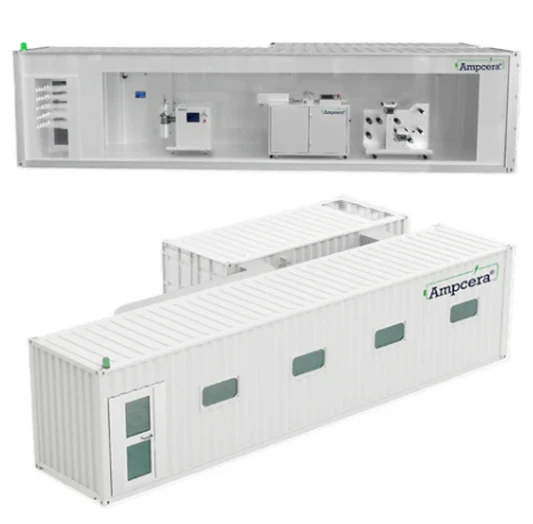
Modern battery production requires careful control of materials, equipment, and environmental conditions. Moisture can create serious challenges when sensitive battery materials are being handled or processed. This is especially important for solid state battery development, where certain electrolyte materials require controlled environments. A dry room for battery manufacturing provides a carefully managed workspace with very low humidity, helping protect moisture-sensitive materials during research, development, and production. Ampcera focuses on advanced materials and solutions for next generation energy storage. Its portfolio includes sulfide solid electrolytes, coated cathode materials, processing services, and equipment designed to support solid state battery research and pilot development.
Why Humidity Control Matters in Battery Production
Humidity is more than a comfort issue inside a battery facility. Water molecules in the surrounding air can interact with sensitive materials and affect their properties. Some battery chemicals can react with moisture, potentially creating unwanted byproducts or changing material quality.
For this reason, a dry room for battery manufacturing is designed to maintain controlled moisture levels throughout the working environment. This helps reduce exposure to humidity while materials are stored, prepared, mixed, coated, assembled, or tested.
Environmental control becomes particularly important when working with sulfide-based solid electrolytes. These materials require careful handling, making appropriate facility conditions an important part of the overall research and manufacturing workflow.
What Is a Dry Room?
A dry room is a specially designed controlled environment where moisture in the air is kept significantly lower than in a normal laboratory or production area.
Unlike a standard air-conditioning system, a dry room uses dedicated dehumidification and air-handling systems to maintain a low-moisture environment. The room may also include controlled temperature, air circulation, filtration, and monitoring systems.
The exact environmental requirements depend on the materials and processes involved. Different battery technologies can require different humidity and dew-point targets.
Key Features of a Battery Dry Room
A well-designed dry room for battery manufacturing may include:
- High-performance dehumidification
- Controlled dew point
- Temperature management
- Continuous environmental monitoring
- Suitable air circulation
- Proper filtration
- Controlled entry and exit procedures
- Material handling areas
- Appropriate storage conditions
These features work together to create a stable environment for moisture-sensitive battery processes.
Why Solid State Battery Research Needs Controlled Environments
Solid state batteries use solid electrolyte materials instead of the liquid electrolytes found in conventional lithium-ion battery designs. This opens opportunities for new cell architectures, but it also creates new material-handling requirements.
Sulfide solid electrolytes are particularly sensitive to moisture. Exposure to unsuitable environmental conditions can affect how the material behaves during processing and testing.
A dry room for battery manufacturing can therefore provide an important foundation for handling these materials. Maintaining consistent environmental conditions can also make research results more repeatable.
For research teams, repeatability matters. If environmental conditions change significantly between experiments, it can become harder to identify whether differences in battery performance came from the material formulation or from processing conditions.
How Does a Dry Room Support Battery Manufacturing?
A controlled environment can support multiple stages of battery development. These stages may include powder handling, electrode preparation, electrolyte processing, cell assembly, and certain testing activities.
The specific requirements will vary according to the battery chemistry and manufacturing process.
For example, a facility may use controlled conditions during:
- Raw material preparation
- Powder mixing
- Electrode fabrication
- Solid electrolyte handling
- Cell assembly
- Prototype development
- Material storage
- Quality inspection
Keeping sensitive processes within appropriate environmental conditions helps reduce unnecessary exposure to moisture.
Ampcera and Battery Development Solutions
Ampcera develops materials and services for solid state battery research and development. Its offerings include sulfide solid electrolytes, coated cathode materials, dry processing services, and battery development equipment.
The company’s solutions are designed to support researchers working through different stages of battery development. Environmental control can complement these capabilities by providing suitable conditions for handling moisture-sensitive materials.
Ampcera also offers a modular dry room solution intended for battery research and pilot development. This type of equipment can be useful for teams that need controlled environmental conditions without building a large-scale manufacturing facility from the beginning.
Important Factors When Choosing a Dry Room
Selecting a dry room for battery manufacturing requires more than looking at room size. The environmental requirements should match the materials and processes that will be performed inside.
Important considerations include:
- Target dew point
- Required humidity level
- Room dimensions
- Air exchange requirements
- Dehumidification capacity
- Temperature range
- Energy consumption
- Monitoring and controls
- Maintenance requirements
- Future expansion needs
A facility designed for laboratory-scale research may have very different requirements from one intended for commercial cell production.
Energy Efficiency Is Also Important
Maintaining very low humidity requires energy. Dehumidification systems must continuously remove moisture from incoming air and from moisture introduced by people, equipment, materials, and door openings.
Because of this, energy efficiency should be considered during dry room planning. Proper insulation, air sealing, controlled access, efficient air handling, and appropriate room zoning can help reduce unnecessary energy use.
The goal is not simply to create the driest possible environment. The goal is to maintain the environmental conditions required for the process in an efficient and reliable way.
What Is Dew Point and Why Does It Matter?
Dew point is a useful way to describe the moisture content of air. A lower dew point means the air contains less water vapor.
Battery facilities often monitor dew point because it provides a practical measurement for controlling moisture-sensitive processes. The appropriate target depends on the battery chemistry and manufacturing requirements.
When planning a dry room for battery manufacturing, engineers should define the required dew point based on the actual materials and processes rather than using an arbitrary target.
Continuous Monitoring
Environmental conditions should be monitored consistently. Sensors can track variables such as:
- Dew point
- Relative humidity
- Temperature
- Pressure
- Air quality
Monitoring allows operators to identify changes and respond before they affect sensitive processes.
Dry Rooms and Material Quality
Material quality can influence battery performance, so protecting materials before and during processing is important.
For example, powders may be stored under controlled conditions before they enter a production process. Electrolytes and other sensitive components may also require specialized handling.
A dry room for battery manufacturing can help create a controlled environment from material preparation through cell assembly. However, room conditions alone do not guarantee material quality. Proper packaging, storage, handling procedures, and process controls remain important.
Common Questions About Battery Dry Rooms
Why is a dry room important for battery manufacturing?
A dry room for battery manufacturing helps control moisture around sensitive battery materials and processes. This can be especially important for materials that react with water vapor or require low-humidity handling.
Does every battery factory need the same dry room conditions?
No. Environmental requirements depend on the battery chemistry, materials, process steps, production scale, and equipment. Different facilities may require different dew-point and humidity targets.
Are dry rooms expensive to operate?
They can require significant energy because air must be continuously dehumidified and conditioned. Facility design, insulation, air management, and efficient equipment can help manage operating costs.
Can dry rooms be used for battery research?
Yes. Dry rooms can be useful in research and pilot environments where teams work with moisture-sensitive battery materials. Their size and specifications can be matched to the scale of the research operation.
Are dry rooms only useful for solid state batteries?
No. Controlled low-humidity environments can be important for several battery manufacturing processes. The exact requirements depend on the materials and manufacturing steps being performed.
Building a Reliable Battery Development Environment
Battery innovation depends on the interaction between materials, equipment, processes, and environmental conditions. A strong material formulation may still produce inconsistent results if it is exposed to unsuitable handling conditions.
This is why a dry room for battery manufacturing should be considered part of the overall manufacturing system rather than an isolated piece of equipment.
For organizations developing solid state batteries, environmental control can work alongside advanced electrolyte materials, coated cathodes, dry processing, and specialized testing equipment. Together, these capabilities can create a more controlled pathway from laboratory research to pilot development.
Ampcera’s focus on advanced battery materials and supporting technologies reflects this integrated approach. By combining material solutions with practical development capabilities, the company supports researchers and battery developers exploring next generation energy storage.
Conclusion
Moisture management is an important consideration in modern battery research and production. Sensitive materials, particularly certain solid electrolytes, can require carefully controlled environments throughout handling and processing.
A dry room for battery manufacturing provides a dedicated environment where humidity and dew point can be managed according to process requirements. When properly designed and operated, it can help protect materials, improve process consistency, and support reliable battery development.
As solid state battery technology continues to advance, controlled environments will remain an important part of the manufacturing equation. Ampcera’s work across solid electrolytes, coated cathodes, processing services, and dry room solutions demonstrates how materials and infrastructure can work together to support the next generation of battery technology.


Post Comment