Custom Silicone Molds for Precision Manufacturing Solutions
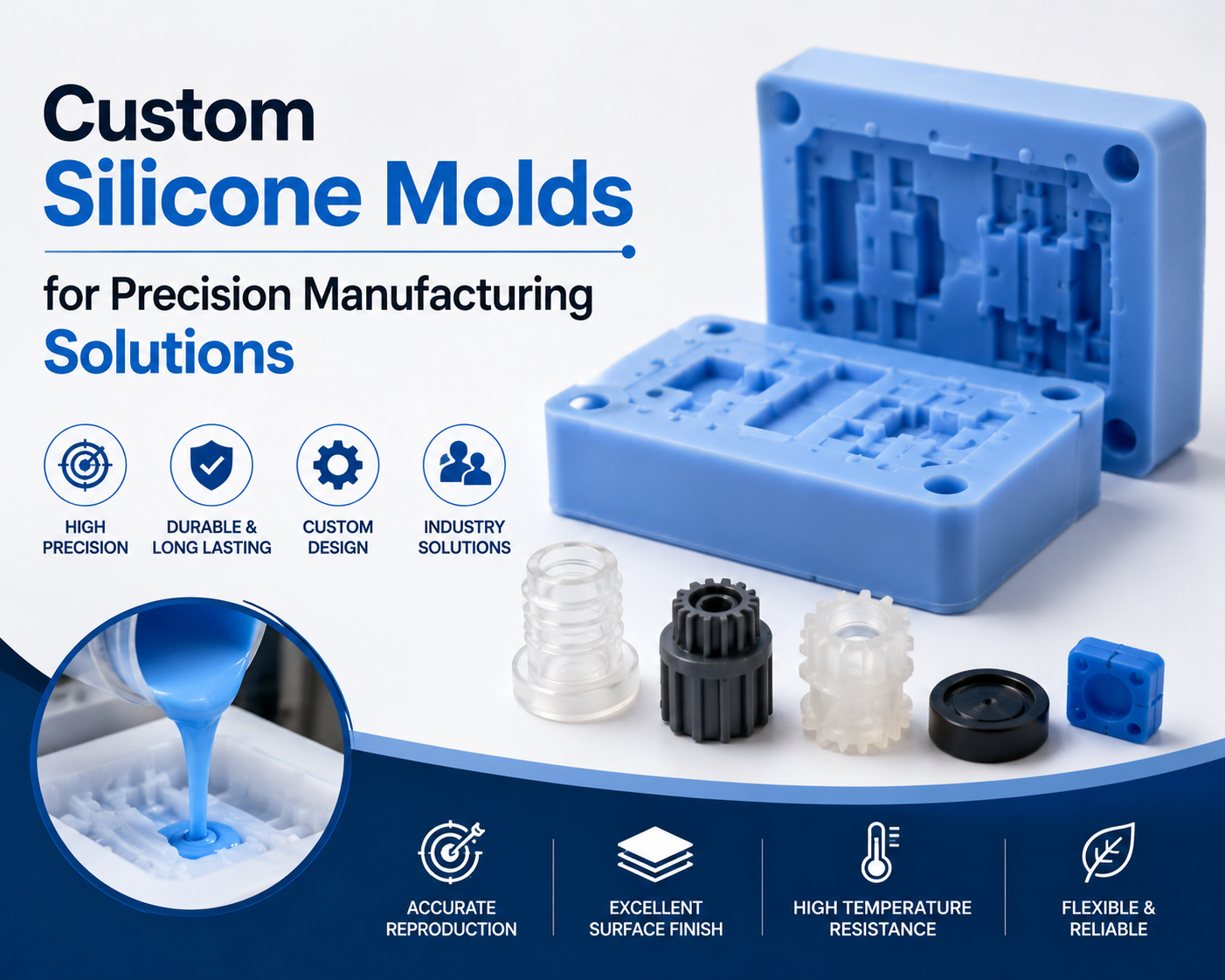
Most tooling discussions start around budget. After a few production runs, though, the focus usually shifts somewhere else. Minor design revisions begin causing handling problems, release inconsistencies, scrap build-up, or production delays. That is usually where custom silicone molds begin making more practical sense.
Not because they replace every traditional setup, but because they reduce friction in areas where rigid tooling often struggles during daily production work. Many manufacturers initially adopt flexible tooling for prototype evaluation, then continue using it far longer than planned because the process becomes easier to manage.
Several silicone molds manufacturers now support both development programs and short-run production because manufacturers increasingly want flexibility without committing immediately to expensive hard tooling investments.
Why Custom Silicone Molds Improve Production Flow
Steel and aluminium tooling still dominate large-scale manufacturing. That is unlikely to change. However, rigid systems often create challenges with textured surfaces, thin wall sections, or difficult undercuts. Parts may stick during extraction, edges can crack, and operators sometimes rush removal just to keep production moving.
That is one area where custom silicone molds behave differently. The flexibility of the material reduces stress during part removal and helps protect delicate geometries. What sounds like a small operational advantage often becomes significant over multiple production cycles.
One packaging supplier switched several sealing components to silicone tooling after repeated handling damage during testing. The biggest improvement was not production speed. They simply had fewer damaged parts and the assembly team found the handling process much easier.
Some manufacturers also integrate tooling with custom rubber extrusions to improve dimensional consistency across sealing systems and assembled products.
Precision Manufacturing Requires Consistency
People often associate precision manufacturing only with dimensional accuracy. In reality, consistency during repeated production cycles matters just as much. A technically correct part still creates problems if the release performance changes every few cycles.
Stable tooling generally helps maintain:
- Consistent surface finish
- Predictable material flow
- Cleaner extraction
- Reduced cosmetic defects
- Lower handling stress
That reliability becomes especially important in electronics and medical production environments. Small surface flaws may appear harmless during inspection but later create fitment or assembly complications.
Some manufacturers combine tooling systems with rubber extrusion profiles and sealing assemblies to maintain stable product performance across larger production runs. Those operational details usually matter far more on the production floor than they do in sales presentations.
Faster Design Changes without Expensive Delays
Development schedules move quickly now. Engineers make late-stage revisions, procurement teams push shorter timelines, and production managers still expect functional validation before final approval.
Flexible tooling helps shorten that process considerably. One manufacturer of industrial equipment used silicone tooling to test airflow housings for a ventilation system. During testing engineers discovered uneven internal airflow that was affecting heat distribution. Identifying that issue early prevented a costly hard-tool redesign later.
That flexibility becomes even more valuable for manufacturers already working with custom rubber extrusions, where dimensional adjustments frequently occur during product development stages. Small modifications become easier to test before investing in permanent tooling.
Many experienced silicone molds manufacturers now support rapid iteration programs specifically because modern manufacturing rarely follows a perfectly fixed design path.
Material Selection Plays a Major Role in Silicone Mold Making
Not every silicone compound behaves the same way during production. Temperature exposure, resin chemistry, cycle frequency, and part geometry all influence long-term tooling performance.
Experienced suppliers involved in silicone mold making typically ask practical questions early in the process:
- What materials contact the tooling?
- How many cycles are expected?
- Are difficult undercuts involved?
- Will release agents be used frequently?
- Does the process involve elevated temperatures?
Those conversations matter because poor material selection creates production problems quickly. In sensitive applications, some suppliers recommend platinum-cured formulations, while heavier industrial environments may require higher tear-strength compounds.
Successful silicone mold making depends far more on understanding operating conditions than simply choosing the lowest-cost material available.
Complex Shapes Become Easier to Manage
Certain geometries naturally create extraction problems with rigid tooling systems. Deep recesses, embossed surfaces, fragile wall sections, and intricate textures all increase production difficulty.
Custom silicone molds simplify part removal while still capturing detailed surface characteristics accurately. That advantage becomes valuable in industries where both appearance and functionality influence final product acceptance.
Consumer electronics manufacturers often use flexible tooling during housing development because cosmetic consistency directly affects product evaluation. Medical manufacturers frequently rely on textured surfaces for grip performance and handling comfort.
Some production programs also involve components supplied through a silicone gasket manufacturer to maintain sealing reliability in environments exposed to vibration, moisture, or heat. Combining flexible tooling with engineered sealing systems often improves final assembly consistency.
Manufacturers already using rubber extrusion profiles frequently adopt similar flexible tooling approaches when product geometries become difficult to handle using rigid molds alone.
Conclusion
Custom silicone molds continue gaining attention because they solve practical production challenges without forcing manufacturers into expensive tooling revisions too early in development.
Better release performance, easier handling, accurate surface reproduction, and faster design changes all contribute to smoother manufacturing operations over time. What once served mainly as a prototyping solution now supports functional production work across industries where flexibility and precision both matter.
Companies working alongside a reliable silicone gasket manufacturer or experienced tooling partner often discover that flexible production systems improve both efficiency and long-term product consistency.
Frequently Asked Questions
- What are the applications of custom silicone moulds?
You will see them throughout many sectors. Medical products, electronics, packaging items, vehicle parts, even small industrial components all of these are rather regularly made with silicone moulds.
- Can silicone moulds make very fine details?
Yeah, most of the time. They are good at replicating surface texture, minor marks, logos and fine edges without too much problem.
- Factors Influencing the Durability of a Silicone Mould
Here are some factors that can reduce the life of a mould over time: heat, production speed, the material used, and even physical handling.
- Are silicone moulds superior for complex shapes?
In some areas, yes. The flexible silicone makes it easier to extract items with deep sections or tricky edges than with rigid moulds.
- Why do some manufacturers continue to use silicone moulds after testing?
In certain cases, the process already works well enough, so there is no need to change to expensive hard tooling. It also makes it easy to do tiny design modifications later on.
CTA
Planning a prototype project or a limited production run? Custom silicone moulds can help ease the process. If you’d like to talk about your needs, contact our team.


Post Comment