Boost Structural Performance with Carbon Fiber Wrapping and Column Strengthening
Structural columns are among the most important load-bearing elements in any building, bridge, industrial facility, or infrastructure project. Over time, these columns can experience deterioration due to environmental exposure, increased loading requirements, design deficiencies, corrosion, aging, or accidental damage. When structural integrity begins to decline, timely strengthening becomes essential to maintain safety, serviceability, and long-term performance.
One of the most effective and widely adopted strengthening techniques today is Carbon Fiber Wrapping for Column Strengthening. This advanced rehabilitation method has transformed the way engineers restore and enhance structural capacity without significantly increasing the size or weight of existing members. Carbon fiber systems offer high strength, durability, and efficient installation, making them suitable for a wide range of strengthening applications.
Understanding Carbon Fiber Wrapping
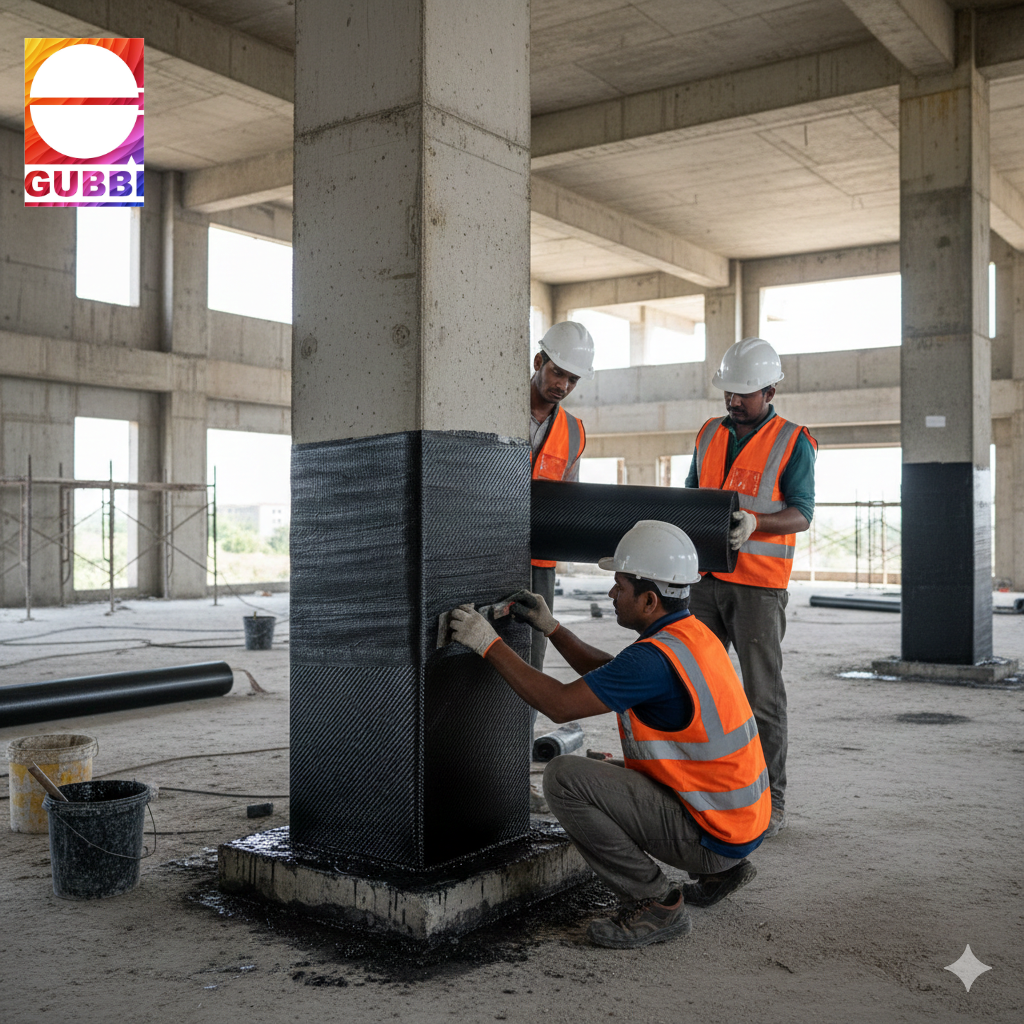
Carbon Fiber Reinforced Polymer (CFRP) Wrapping is a structural strengthening technique that involves wrapping high-strength carbon fiber sheets around existing concrete, masonry, or steel columns. These sheets are bonded using specially formulated epoxy resins that create a strong composite system capable of improving structural performance.
Unlike traditional strengthening methods that require heavy steel jackets or extensive reconstruction, carbon fiber wrapping provides significant strength enhancement with minimal disruption. The lightweight nature of the material allows engineers to strengthen structural elements without adding substantial dead load to the building.
Why Structural Columns Require Strengthening
Structural columns can become vulnerable for various reasons throughout their service life. Changes in building usage often result in higher loads than originally anticipated during design. Industrial facilities frequently install additional equipment that increases structural demands on supporting members.
Environmental exposure is another major factor contributing to deterioration. Moisture ingress, chemical attack, carbonation, and reinforcement corrosion gradually weaken concrete structures. In coastal and industrial environments, these conditions can accelerate structural degradation significantly.
Natural disasters such as earthquakes, floods, and impacts can also compromise column performance. In many cases, strengthening becomes necessary to restore structural safety and ensure compliance with updated engineering standards. Carbon fiber wrapping offers a practical solution for addressing these challenges efficiently.
How Carbon Fiber Wrapping Works
The effectiveness of carbon fiber wrapping lies in its ability to provide external confinement to structural columns. When a column experiences compressive loads, the concrete tends to expand laterally. Carbon fiber wraps restrict this expansion and create a confinement effect that enhances the overall strength and ductility of the member.
This confinement mechanism allows the concrete core to withstand higher stresses before failure occurs. The result is improved load-carrying capacity, enhanced energy absorption, and greater resistance to cracking and structural distress. The strengthening effect is particularly beneficial in seismic regions where ductility and deformation capacity are critical. By strategically applying multiple layers of carbon fiber sheets, engineers can tailor strengthening levels according to project requirements. This flexibility makes carbon fiber systems suitable for both minor rehabilitation projects and major structural upgrades.
Benefits of Carbon Fiber Wrapping for Columns
One of the biggest advantages of carbon fiber wrapping is its exceptional strength-to-weight ratio. Carbon fiber materials are significantly stronger than steel while remaining remarkably lightweight. This allows structural upgrades without increasing the overall weight of the building.
Another important benefit is the minimal increase in column dimensions. Traditional strengthening methods often require thick concrete or steel jackets that reduce usable space. Carbon fiber wraps add only a few millimeters of thickness, preserving architectural and functional requirements.
The installation process is also relatively fast compared to conventional strengthening techniques. Since extensive demolition or reconstruction is not required, project downtime can be significantly reduced. This makes carbon fiber wrapping particularly attractive for operational industrial facilities and commercial buildings.
Improved Seismic Performance
Earthquake-resistant construction has become a major priority in modern structural engineering. Existing buildings constructed under older design codes may not meet current seismic performance requirements. Carbon fiber wrapping provides an effective solution for enhancing the seismic resilience of structural columns.
The confinement provided by carbon fiber systems increases ductility, enabling columns to undergo larger deformations without experiencing sudden failure. This characteristic is essential during seismic events where structures are subjected to dynamic loading and cyclic stresses.
Strengthened columns demonstrate improved energy dissipation capacity, helping buildings withstand earthquake forces more effectively. As a result, carbon fiber retrofitting is frequently used in seismic rehabilitation projects across various infrastructure sectors.
Applications Across Different Industries
Carbon fiber wrapping is utilized across numerous industries due to its versatility and performance benefits. Commercial buildings often require strengthening when undergoing renovations, vertical expansions, or occupancy changes that increase structural loads.
Industrial facilities use carbon fiber systems to strengthen columns affected by heavy machinery vibrations, chemical exposure, and operational wear. Manufacturing plants, warehouses, power stations, and processing facilities commonly benefit from these rehabilitation solutions.
Infrastructure projects such as bridges, flyovers, tunnels, and transportation structures also rely on carbon fiber strengthening techniques. The ability to improve structural capacity without causing major traffic disruptions makes CFRP systems particularly valuable for public infrastructure upgrades.
Carbon Fiber Wrapping Versus Traditional Strengthening Methods
Traditional strengthening techniques typically involve steel jacketing, reinforced concrete encasement, or section enlargement. While these methods can be effective, they often require extensive construction activities, increased material usage, and longer project durations.
Carbon fiber wrapping offers a modern alternative that addresses many limitations associated with conventional methods. The lightweight nature of CFRP materials simplifies handling and installation while reducing labor requirements. Additionally, carbon fiber systems are highly resistant to corrosion, ensuring long-term durability.
The reduced installation time minimizes operational interruptions, making carbon fiber strengthening a preferred choice for facilities that cannot afford extended shutdown periods. These advantages continue to drive the growing adoption of CFRP technologies within the construction industry.
The Installation Process
Successful carbon fiber strengthening begins with a detailed structural assessment. Engineers evaluate the existing condition of the columns, identify deterioration mechanisms, and determine the required strengthening objectives. This assessment ensures the design of an effective rehabilitation solution.
Surface preparation is a critical step in the installation process. Damaged concrete is repaired, loose materials are removed, and surfaces are prepared to achieve proper bonding. The quality of surface preparation directly influences the performance of the strengthening system.
Carbon fiber sheets are then saturated with epoxy resin and carefully wrapped around the column according to design specifications. Multiple layers may be applied depending on the desired level of strengthening. After curing, the composite system forms a durable structural reinforcement capable of significantly enhancing column performance.
Durability and Long-Term Performance
Durability is a key consideration in any structural rehabilitation project. Carbon fiber materials exhibit excellent resistance to corrosion, moisture, and many environmental conditions that commonly affect conventional strengthening systems.
Unlike steel jackets, carbon fiber wraps do not rust or deteriorate due to exposure to aggressive environments. This characteristic contributes to lower maintenance requirements and extended service life. Properly designed and installed systems can provide reliable structural performance for decades.
The long-term stability of CFRP strengthening solutions has been validated through extensive research, testing, and field applications. As a result, engineers increasingly specify carbon fiber wrapping for projects requiring durable and sustainable strengthening solutions.
Choosing the Right Strengthening Partner
The success of a carbon fiber strengthening project depends heavily on engineering expertise, proper design, and quality execution. Every structure presents unique challenges that require customized assessment and strengthening strategies.
Professional engineering evaluation ensures that strengthening objectives are clearly defined and appropriate solutions are selected. Material quality, installation procedures, and adherence to industry standards are equally important factors influencing project outcomes.
Organizations seeking reliable structural rehabilitation services should work with experienced specialists who understand the complexities of strengthening existing structures. For projects involving advanced rehabilitation and strengthening requirements, Gubbi Civil Engineers Limited provides engineering-driven solutions focused on safety, durability, and long-term structural performance.
Future of Carbon Fiber Strengthening Technology
As infrastructure continues to age globally, demand for efficient strengthening solutions is expected to increase significantly. Carbon fiber technology remains at the forefront of structural rehabilitation innovation due to its proven effectiveness and adaptability.
Advancements in material science are further improving the performance characteristics of carbon fiber systems. Enhanced resins, optimized fiber configurations, and improved installation techniques continue to expand the capabilities of CFRP strengthening applications. Engineers are increasingly incorporating carbon fiber technologies into maintenance and rehabilitation strategies for buildings, bridges, industrial facilities, and public infrastructure. This trend reflects the growing recognition of carbon fiber wrapping as a cost-effective and sustainable strengthening solution.
Carbon Fiber Wrapping for Column Strengthening has emerged as one of the most advanced and reliable methods for improving structural performance. Its ability to increase load capacity, enhance seismic resistance, improve durability, and minimize construction disruption makes it an ideal solution for modern rehabilitation projects. Whether addressing aging infrastructure, accommodating increased loads, repairing damaged structures, or upgrading seismic performance, carbon fiber systems offer substantial advantages over traditional strengthening techniques. As engineering standards continue to evolve and infrastructure rehabilitation becomes increasingly important, carbon fiber wrapping will remain a vital technology for extending the service life and safety of structural assets. Investing in professional assessment and expertly designed strengthening solutions ensures that structures continue to perform safely and efficiently for many years. Carbon fiber wrapping represents a practical, durable, and future-ready approach to preserving and enhancing structural integrity in today’s built environment.





Post Comment