Scan to BIM for Small Contractors: A Smart Guide
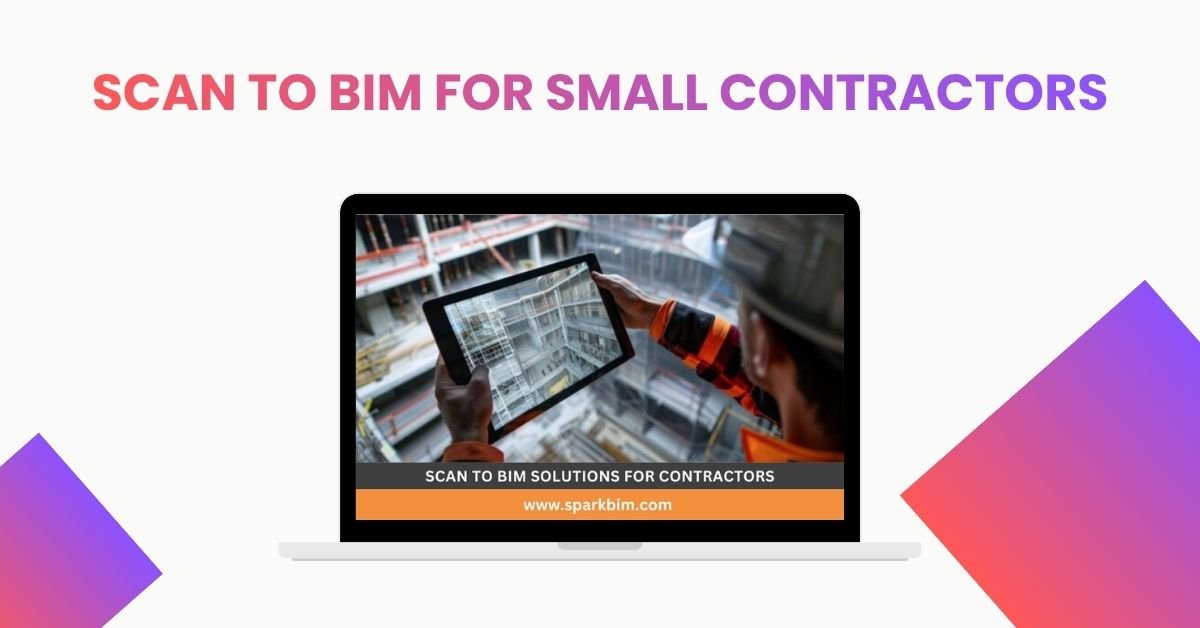
Small contractors often work with limited budgets, smaller teams, and tight project schedules. Yet, they still need accurate building information to reduce mistakes and deliver quality results. Scan to BIM for Small Contractors offers a practical way to create reliable digital building models from existing site conditions.
What Is Scan to BIM?
Scan to BIM is the process of converting laser scan or point cloud data into an intelligent Building Information Modeling (BIM) model. Laser scanners capture detailed information about walls, floors, ceilings, structural elements, and MEP systems. BIM specialists then use this data to develop an accurate 3D model.
For smaller construction companies, Scan to BIM for Small Contractors can make complex renovation, remodeling, and retrofit projects easier to manage. Instead of depending only on old drawings or manual measurements, contractors can work with updated digital information.
Why Small Contractors Need It
Small contractors cannot afford costly errors, material waste, or repeated site visits. Even a small measurement mistake can cause delays and additional expenses. Scan to BIM helps contractors understand existing conditions before construction begins.
With Scan to BIM for Small Contractors, teams can identify dimensional differences, detect clashes, and plan construction activities with greater confidence. The model also provides a clear visual reference that can help contractors communicate project requirements to clients, architects, engineers, and subcontractors.
Key Benefits for Small Construction Firms
1. Better Site Accuracy
Laser scanning captures thousands of measurements quickly. These measurements create a point cloud that represents the actual building. Contractors can use the resulting BIM model to make better decisions based on real site conditions.
2. Reduced Rework
Incorrect measurements can lead to installation problems and costly rework. Scan to BIM for Small Contractors reduces this risk by providing accurate information about existing structures and systems.
3. Faster Project Planning
A BIM model gives contractors a clear digital view of the building. Teams can review spaces, identify construction requirements, and plan work before arriving on site. This can save valuable time during the construction process.
4. Improved Client Communication
3D BIM models are easier for many clients to understand than traditional 2D drawings. Contractors can use models to explain proposed changes, renovation plans, and construction details more clearly.
5. Support for Renovation Projects
Older buildings often have incomplete or outdated drawings. Laser scanning can capture current conditions, while BIM converts that information into a usable model. This makes Scan to BIM for Small Contractors especially useful for renovation and retrofit work.
How the Process Works
The process generally starts with laser scanning at the project site. The collected data is processed into a point cloud. BIM professionals then use software such as Revit to develop the required architectural, structural, or MEP model.
The model is checked for accuracy and developed according to the required Level of Detail (LOD). Once completed, it can support planning, coordination, quantity estimation, and construction activities.
Choosing the Right BIM Partner
Small contractors should select a BIM service provider with experience in similar projects. Check the provider’s modeling capabilities, software expertise, quality control process, turnaround time, and ability to follow project standards.
A reliable Scan to BIM for Small Contractors service should deliver accurate models while matching the project’s scope and budget. Contractors should also confirm file formats and LOD requirements before starting the project.
Also read: Revit Modeling for Laser Scaning Company: Enhancing Accuracy and Efficiency in BIM Projects
Conclusion
Technology is no longer limited to large construction companies. Scan to BIM for Small Contractors can provide accurate project information, reduce rework, improve planning, and support better communication. By using scan data and intelligent BIM models, small contractors can manage renovation and construction projects more efficiently while maintaining quality and controlling costs.






Post Comment