How Smooth Motors Linear Stepper Motor Technology Enhances Accuracy in Medical Devices
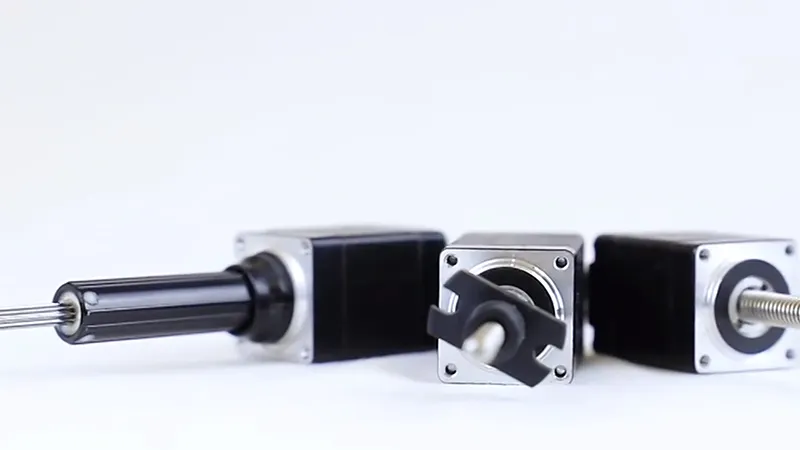
Medical devices leave almost no room for positioning error. A syringe pump that delivers the wrong dose, or a diagnostic scanner that misaligns by a fraction of a millimeter, can compromise patient safety and device reliability. This is why so many medical equipment designers turn to linear stepper motor technology, valuing its predictable, repeatable motion in applications where accuracy is not just a preference but a requirement. The stakes involved in medical design mean that every mechanical decision, including something as seemingly minor as motor selection, gets scrutinized far more closely than it might in a typical industrial project, and stepper-based motion consistently holds up well under that scrutiny.
Precision Dosing in Infusion and Syringe Pumps
Infusion pumps depend on exact, incremental plunger movement to control fluid delivery rates. Because stepper-driven mechanisms move in known fixed increments, engineers can calculate dosing with confidence, and the same movement can be repeated reliably across thousands of treatment cycles without drift or unexpected variation. This predictability also simplifies the software validation process, since developers can model expected plunger position mathematically and confirm the physical device matches that model consistently across a wide range of test conditions before it ever reaches a patient. Because the relationship between step count and fluid volume can be characterized precisely during development, engineers can also build in software safeguards that flag any unexpected deviation before it ever reaches a patient.
Diagnostic Imaging Positioning Systems
Imaging equipment such as microscopy stages, scanning platforms, and certain radiography systems needs to move a sample or sensor with extremely fine control. Even small positional inaccuracies can blur results or require a repeat scan, so the fine resolution achievable through microstepping becomes a genuine clinical advantage rather than just a technical specification. In high-throughput diagnostic settings, this reliability also translates into fewer repeated scans overall, which reduces both patient wait times and the operational cost of running expensive imaging equipment. This reliability becomes especially valuable in busy clinical settings, where equipment often runs for many consecutive hours and any drift in positioning would otherwise force technicians to repeat scans unnecessarily.
Quiet, Low-Vibration Operation Near Patients
Beyond raw accuracy, medical environments also demand quiet, low-vibration equipment, especially devices that operate near a patient during a procedure. Well-engineered stepper motion systems run with minimal audible noise and mechanical vibration compared to some alternative drive types, which contributes to a calmer clinical environment and reduces interference with sensitive nearby instrumentation. This quiet operation also matters for patient comfort during longer procedures, where the constant hum of poorly damped equipment can add unnecessary stress during an already anxious experience. Reduced vibration also protects delicate internal components from long-term fatigue, extending the usable life of instruments that represent a significant capital investment for any clinical or research facility.
Compact Form Factors for Portable Devices
As healthcare shifts toward more portable and point-of-care devices, space constraints become a real design challenge. These actuator systems are available in compact housings that still deliver strong holding torque, letting designers fit precise motion control into handheld or bedside equipment without sacrificing performance. This compactness has become especially valuable as more diagnostic and treatment capabilities move out of centralized hospital departments and into clinics, ambulances, and even patients’ homes. Designers working on wearable or handheld medical devices in particular value this combination of small size and dependable torque, since patient comfort and device weight are just as important as raw performance.
Regulatory and Reliability Considerations
Medical device development involves rigorous validation, and any motion component chosen for a design needs documented, consistent performance across its expected lifespan. Manufacturers that provide clear specifications and consistent quality control make the validation and certification process considerably smoother for device engineers working under strict regulatory timelines. Having thorough, well-organized documentation available from the outset can shave meaningful time off a certification process that might otherwise stall while engineers track down missing performance data. Manufacturers who maintain detailed change logs and consistent lot-to-lot quality also make it easier for device makers to respond quickly if a regulatory body requests supplementary performance evidence.
The Broader Impact on Patient Care
When motion control performs exactly as expected, the ripple effects reach far beyond the device itself. Clinicians can trust their equipment, technicians spend less time troubleshooting positioning errors, and ultimately patients receive more consistent, reliable care. As medical technology continues to advance toward smaller, smarter, and more automated devices, dependable linear motion will remain a quiet but essential part of that progress, supporting innovations that clinicians and patients may never realize depend on this underlying mechanical reliability. That trust extends to hospital procurement teams as well, who increasingly favor equipment with a demonstrated history of dependable field performance when evaluating new purchases for busy clinical departments.






Post Comment