Hire iOS Developer for Custom Mobile App Design and Development
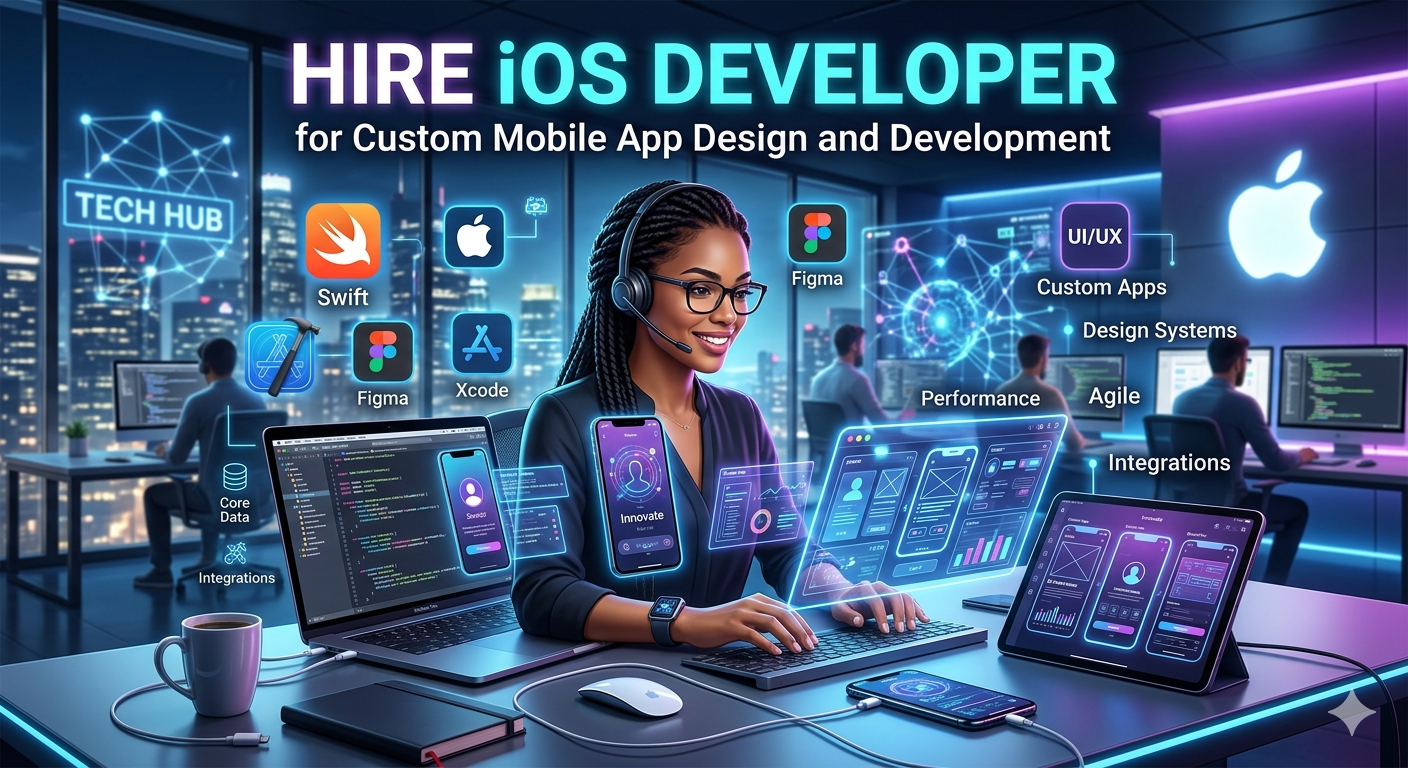
In today’s hyper-connected digital landscape, having a powerful iOS application is no longer a luxury — it’s a business necessity. Whether you’re a startup launching your first product or an enterprise looking to expand your digital footprint, the decision to hire iOS developer talent is one of the most strategic moves you can make. Apple’s ecosystem commands a fiercely loyal, high-spending user base, and tapping into that market requires expert craftsmanship from the ground up.
This guide walks you through everything you need to know about custom mobile app design and development — from understanding what an iOS developer does, to how to find, evaluate, and successfully onboard the right professional for your project.
What Does a Custom iOS App Really Mean?
A custom iOS app is built specifically for your business needs — not borrowed from a template, not repurposed from a generic framework. It reflects your brand identity, integrates with your existing systems, and delivers exactly the features your users need. This is fundamentally different from off-the-shelf solutions that force you to adapt your workflow to their limitations.
Custom development encompasses everything: UI/UX design tailored to Apple’s Human Interface Guidelines, backend API integration, push notifications, in-app purchases, Core Data management, ARKit or CoreML implementations, and seamless performance across all iPhone and iPad screen sizes.
The investment is higher than using a no-code builder — but so are the returns. Apps built with genuine craftsmanship convert better, retain users longer, and scale with your business.
Why You Should Hire an iOS Developer (and Not Cut Corners)
Many businesses make the mistake of treating mobile development as a commodity purchase. They go for the cheapest bid, hire a generalist who “knows a bit of Swift,” or hand the project to an overseas agency with no accountability structure. The result is almost always the same: delayed launches, buggy products, poor App Store ratings, and expensive rebuilds.
When you hire an iOS app developer with genuine expertise, you’re investing in:
- Swift and Objective-C mastery — the core languages of iOS development
- Xcode proficiency — Apple’s IDE with all its instruments, simulators, and debugging tools
- UIKit and SwiftUI knowledge — the frameworks that define how your app looks and behaves
- App Store submission experience — understanding Apple’s review process, guidelines, and compliance requirements
- Performance optimization — memory management, battery efficiency, smooth 60fps animations
- Security best practices — Keychain usage, certificate pinning, data encryption
These skills don’t come from a weekend bootcamp. A skilled iOS developer has years of hands-on experience shipping real apps to real users — and that experience shows in every interaction your customers have with your product.
Types of iOS Developers: Who Do You Need?
Before you hire iOS developer talent, you need to understand the different profiles available in the market:
- Junior iOS Developers
Best for smaller features, bug fixes, or supporting roles on a larger team. They’re cost-effective but need mentorship and clear technical direction. Not ideal for greenfield projects.
- Mid-Level iOS Developers
The sweet spot for most startups and SMBs. They can handle full feature development independently, understand architectural patterns (MVC, MVVM, VIPER), and communicate well with designers and product managers.
- Senior iOS Developers
The go-to choice for complex apps with demanding performance requirements, large codebases, or security-sensitive environments (fintech, health tech, enterprise). They can architect the entire project, review code, and mentor junior team members.
- iOS Consultants
Ideal if you already have a team but need expert guidance on architecture, performance audits, or App Store strategy. Typically engaged short-term.
- Full-Stack Mobile Developers (React Native / Flutter)
If you need both iOS and Android simultaneously on a tighter budget, a cross-platform developer can be practical — but native iOS performance will always be superior for complex, feature-rich apps.
Key Skills to Look for When You Hire iOS App Developer Professionals
When reviewing candidates or agencies, assess the following:
Technical Skills:
- Proficiency in Swift (Swift 5.x and above)
- Experience with SwiftUI alongside UIKit
- RESTful API and GraphQL integration
- Core Data, CloudKit, or Realm for local data persistence
- Push notifications (APNs)
- Third-party SDK integration (Stripe, Firebase, Twilio, etc.)
- Unit testing and UI testing (XCTest)
- Git version control and CI/CD pipelines
Design Collaboration: A great iOS developer doesn’t just implement what designers hand over — they actively improve it. They understand Auto Layout, Dynamic Type, Dark Mode support, accessibility (VoiceOver, haptics), and Apple’s evolving design language.
Communication: Can they explain technical constraints to non-technical stakeholders? Do they ask the right questions before diving into code? Communication failures are the number one reason mobile projects fall apart.
Portfolio: Always ask to see shipped apps. Download them. Use them. Read the reviews. Code on paper means nothing — working software in users’ hands is the only proof that matters.
Where to Find and Hire iOS Developers
There are several channels to find qualified iOS development talent:
Freelance Marketplaces
Platforms like Upwork, Toptal, and Freelancer host thousands of iOS developers. Toptal in particular screens its applicants rigorously, making it easier to find senior talent quickly. Always check portfolio quality, reviews, and communication responsiveness before committing.
Specialized Tech Agencies
iOS development agencies offer full project teams — developer, designer, QA tester, and project manager under one roof. They’re more expensive but reduce coordination overhead significantly for complex apps.
LinkedIn and GitHub
Direct sourcing through LinkedIn lets you evaluate candidates’ professional history, recommendations, and published work. GitHub profiles show real code — pull request history, open-source contributions, and code quality are all visible and telling.
Local Tech Communities
Meetups, hackathons, and university career fairs are underrated talent pipelines. Developers you meet in person tend to be more engaged, more communicative, and more invested in long-term relationships.
Referrals
Ask your network. A trusted recommendation from another founder or CTO is worth more than any algorithm-matched profile on a freelance platform.
How to Structure Your Hiring Process
Once you’ve decided to hire iOS developer expertise for your project, a structured process ensures you don’t waste time or money:
Step 1: Define the Project Scope Document your app’s core features, target audience, platform requirements (iPhone only? iPad? Apple Watch?), and expected timeline before speaking to any developer. Vague briefs produce vague proposals.
Step 2: Review Portfolios Critically Don’t just look at screenshots — test the actual apps. Note responsiveness, load times, animation quality, and whether the UX feels native to iOS.
Step 3: Conduct a Technical Interview Ask about architectural decisions they’ve made on past projects and why. Pose real-world scenarios: “How would you handle offline data sync?” or “Walk me through how you’d optimize a slow table view.”
Step 4: Assign a Paid Trial Task For freelancers or agencies, a small paid trial project (a mini-feature or technical prototype) is the best way to evaluate communication, code quality, and deadline adherence before a full engagement.
Step 5: Define Milestones and Communication Cadence Agree on sprint cycles, delivery milestones, code review checkpoints, and reporting frequency upfront. Daily standups or weekly demos keep everyone aligned.
Cost to Hire iOS App Developer Talent
Pricing varies enormously based on geography, experience level, and project complexity:
| Profile | Hourly Rate (USD) |
| Junior iOS Developer (offshore) | $20 – $45/hr |
| Mid-Level iOS Developer (offshore) | $45 – $80/hr |
| Senior iOS Developer (offshore) | $80 – $120/hr |
| Mid-Level iOS Developer (US/UK) | $100 – $150/hr |
| Senior iOS Developer (US/UK) | $150 – $250/hr |
| iOS Development Agency (full project) | $30,000 – $250,000+ |
A basic MVP app typically ranges from $20,000 to $60,000. A feature-rich consumer app with custom animations, backend architecture, and third-party integrations can exceed $150,000. Always get itemized proposals — a low headline quote that excludes design, QA, and App Store submission is rarely the bargain it appears.
Red Flags to Avoid When Hiring
- Promising unrealistic timelines (“We can build your app in 2 weeks!”)
- No questions asked before quoting — means they’re not thinking about your specific needs
- Inability to explain their code in plain language
- No interest in the App Store review process or post-launch support
- Overly defensive about code ownership or unwilling to transfer source code
Final Thoughts
The decision to hire iOS developer professionals is ultimately a decision about your product’s quality ceiling. Your iOS app will be the face of your business for millions of potential customers — it deserves to be built with precision, expertise, and genuine care.
Whether you hire iOS app developer talent on a project basis or bring someone in-house full-time, the investment pays dividends in user retention, brand credibility, and long-term scalability. Apple’s ecosystem rewards quality — and so do your users.
Start with clarity about what you need to build, find a developer whose portfolio demonstrates real-world execution, and structure the engagement with clear milestones and accountability. Do that, and your iOS app has every chance of becoming one of your most powerful business assets.





Post Comment