How to Choose the Right White Label Warehouse Management System for Your Business
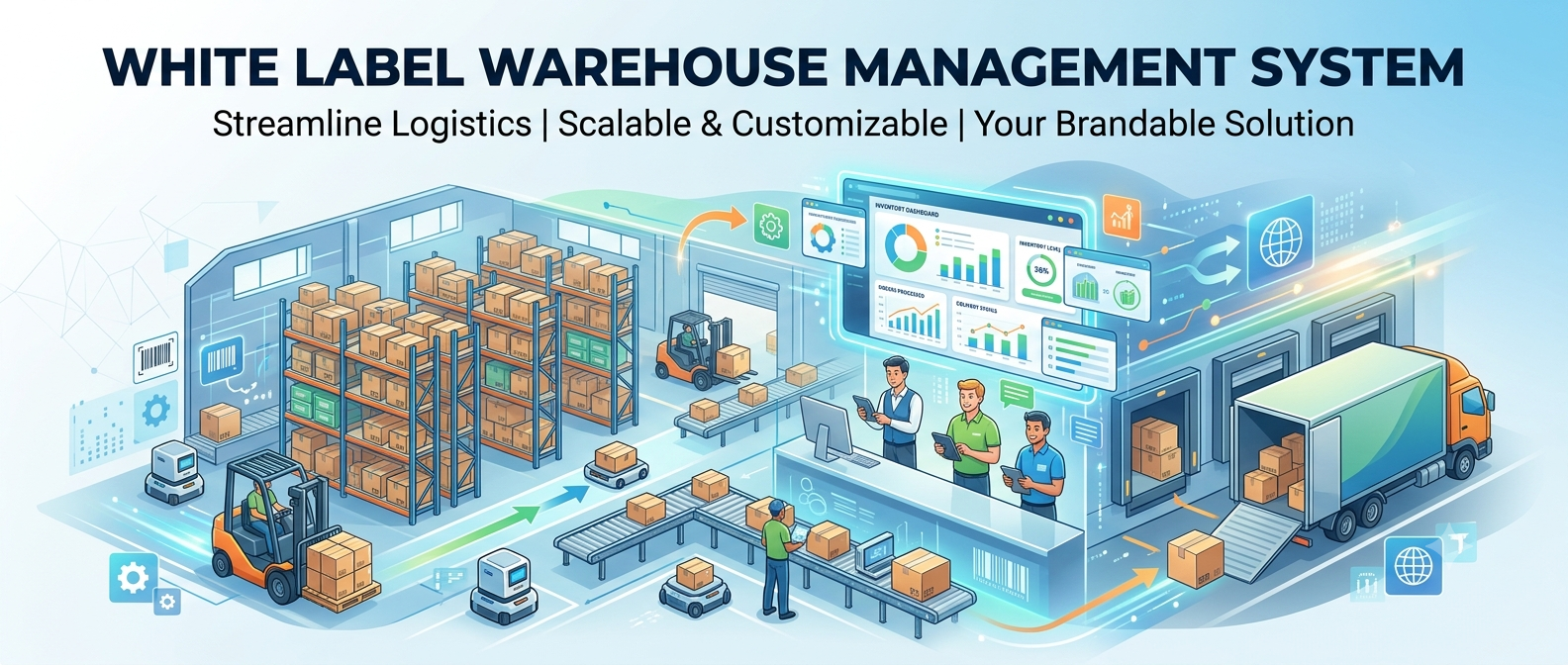
Warehouse operations have become increasingly complex as businesses manage larger inventories, multiple sales channels, faster order fulfillment, and rising customer expectations. A reliable warehouse management system can help bring these processes together by providing better visibility into inventory, orders, storage, and fulfillment activities.
For businesses that want to offer warehouse technology under their own brand, a White Label Warehouse Management System provides another advantage. Instead of developing an entire platform from scratch, companies can use an existing solution, customize its branding and selected features, and present it as part of their own technology offering.
However, choosing the right platform requires more than comparing features. The solution should fit your operational requirements, support future growth, integrate with your existing technology, and provide a practical path to deployment.
What Is a White Label Warehouse Management System?
A white label warehouse management system is a ready-made warehouse software platform that can be branded and, depending on the provider, customized for another business. The underlying technology is developed and maintained by the software provider, while the reseller or service provider can offer the solution under its own brand.
This model can be particularly useful for logistics companies, technology providers, fulfillment businesses, and organizations that want to expand their software portfolio without building a complete product internally.
Instead of investing heavily in development, infrastructure, testing, and ongoing maintenance, businesses can focus on configuring the solution around their customers’ requirements and building their own service offering.
Why Businesses Consider White Label Solutions
Developing warehouse software internally can involve considerable time and resources. Beyond the initial development, businesses also need to manage security, infrastructure, updates, integrations, technical support, and feature improvements.
A white-label approach can reduce some of this development burden while providing a faster route to market.
Depending on the provider, businesses may benefit from:
- Faster deployment compared with building a platform from the ground up
- Branding and customization options
- Access to established warehouse functionality
- Integration capabilities with other business systems
- Ongoing product updates and maintenance
- A scalable foundation for serving multiple customers
The exact benefits depend on the provider and the level of customization available, so businesses should evaluate the platform carefully before making a decision.
1. Start With Your Business Requirements
The first step is to identify what you actually need from the platform.
Warehouse operations differ significantly between businesses. A distributor managing thousands of SKUs may have different requirements from an eCommerce fulfillment provider or a third-party logistics company.
Consider the processes the system needs to support, such as inventory tracking, receiving, put-away, picking, packing, shipping, returns, stock transfers, and reporting.
You should also consider how many warehouses, users, products, orders, and customers the platform needs to support now and in the future.
Creating these requirements before comparing vendors makes it easier to separate essential functionality from features that simply look attractive during a product demonstration.
2. Evaluate Core Warehouse Features
A capable Warehouse Management Software platform should support the fundamental activities involved in warehouse operations.
Depending on your business model, important capabilities may include inventory visibility, barcode scanning, stock movement tracking, order management, picking and packing workflows, purchase order management, returns processing, warehouse transfers, and reporting.
Look beyond a feature checklist. Ask how each feature works in real operational scenarios.
For example, if your business handles high order volumes, examine how the platform manages batch picking or order prioritization. If you operate multiple locations, investigate how easily inventory can be monitored and transferred between warehouses.
The objective is to determine whether the system can support your actual workflows rather than simply checking whether a feature name appears on a vendor’s website.
3. Look Closely at Branding and Customization
White labeling is valuable only when the platform gives you enough control over the customer-facing experience.
Ask potential providers what can actually be customized. This may include:
- Company logo and brand identity
- Colors and interface elements
- Domain or application access
- Customer-facing communications
- User roles and permissions
- Dashboards and reports
- Selected workflows and business rules
Some platforms offer basic branding, while others allow deeper customization. If you plan to make the software a significant part of your own service offering, understand these limitations before signing an agreement.
4. Check Integration Capabilities
A warehouse platform rarely operates in isolation. It may need to exchange information with eCommerce platforms, enterprise resource planning systems, accounting software, shipping providers, marketplaces, customer relationship management tools, and other business applications.
This makes integration support an important selection criterion.
Review the provider’s API capabilities, supported integrations, data formats, authentication methods, and documentation. If you already use specific systems, confirm that the proposed platform can connect with them or determine whether custom integration work will be required.
Strong integration capabilities can also make it easier to adapt the platform as your technology environment changes.
5. Assess Scalability Before You Need It
A warehouse solution should be able to grow alongside your business.
Consider how the platform handles increasing numbers of users, products, orders, warehouses, and transactions. If you intend to offer the solution to multiple customers, also determine whether the provider supports a multi-tenant structure or another suitable architecture.
Scalability is not only about processing more transactions. It also involves maintaining acceptable performance, managing additional warehouses, and introducing new workflows without requiring a complete technology replacement.
This is one reason businesses should evaluate their expected growth over the next few years rather than selecting a platform solely around today’s requirements.
6. Examine Security and Data Management
Warehouse systems can contain commercially important information, including inventory data, customer details, supplier information, order records, and operational data.
Before choosing a provider, understand how it protects and manages that information.
Ask about data encryption, access controls, authentication, backups, monitoring, hosting infrastructure, and security practices. You should also understand how data is separated when the platform serves multiple businesses.
If your organization operates in a regulated industry or across different countries, review the provider’s approach to applicable data protection and compliance requirements.
Security should be considered during vendor evaluation rather than after implementation.
7. Understand the Pricing Structure
The lowest initial price does not necessarily represent the lowest overall cost.
White label platforms can use different pricing models, including subscription fees, per-user charges, transaction-based pricing, implementation costs, integration fees, and customization charges.
Ask providers to explain the complete commercial structure.
For example, determine whether additional warehouses, users, API usage, support levels, or branded applications result in extra charges. Also clarify whether upgrades and maintenance are included.
A clear understanding of total ownership costs will help you compare platforms on a more realistic basis.
8. Evaluate Support and Maintenance
Even a well-designed warehouse management system requires ongoing maintenance.
Software updates, integrations, security improvements, bug fixes, and infrastructure management can all affect your ability to serve customers.
Ask potential providers about their support process, response times, maintenance schedule, escalation procedures, and availability of technical documentation.
If your customers will interact directly with the platform, clarify who handles first-line and second-line support. A clear support structure can prevent operational issues from becoming customer service problems.
9. Consider the Provider’s Development Capabilities
Your requirements may evolve after deployment. You may eventually need new integrations, workflow changes, reporting capabilities, or customer-specific functionality.
For businesses that need extensive customization, working with experienced custom software development companies can provide additional flexibility around integrations, automation, and platform enhancements. This can be particularly useful when the standard white-label solution needs to be adapted to specialized warehouse workflows.
10. Compare the Platform With Building In-House
White labeling should not automatically be viewed as a replacement for custom development.
An in-house solution can provide greater control over architecture, features, integrations, and the long-term product roadmap. However, it typically requires a larger development investment and an ongoing technical team.
White label software can provide a more established foundation and potentially shorten the route to deployment, but customization may be limited by the underlying platform.
The right choice depends on your budget, timeline, technical capabilities, differentiation strategy, and long-term product requirements.
White Label Outsourcing vs. Internal Development
White label outsourcing can be useful when a business wants to launch a branded warehouse solution without taking responsibility for the entire technology stack.
Internal development may make more sense when warehouse technology itself is a core differentiator and the business requires extensive control over the product.
When comparing the two approaches, consider:
- Initial development investment
- Time required to launch
- Level of customization
- Integration requirements
- Internal technical resources
- Ongoing maintenance responsibilities
- Scalability requirements
- Ownership and control of the technology
The decision should be based on the role the software will play in your broader business strategy.
Questions to Ask Before Selecting a Provider
Before signing a contract, ask the provider questions that reveal how the platform will work in your specific environment.
For example:
- Which features can be customized?
- What branding options are included?
- Does the platform support multiple warehouses?
- Can it integrate with our existing systems?
- Is API access included?
- How is customer and warehouse data isolated?
- How does pricing change as usage grows?
- What technical support is provided?
- How frequently is the platform updated?
- Who handles custom development?
- What happens to our data if we leave the platform?
- Are there limitations on the number of customers we can serve?
The answers can help you identify potential costs and limitations that may not be obvious during an initial product demonstration.
How to Identify the Best Warehouse Management System for Your Needs
There is no universal best warehouse management system for every organization. The appropriate choice depends on the complexity of your operations, customer requirements, integrations, budget, and growth plans.
Rather than comparing vendors solely on the number of features they advertise, create a shortlist based on your operational requirements. Then test the most important workflows using realistic scenarios.
A practical evaluation could include receiving inventory, assigning storage locations, processing an order, picking and packing products, updating stock levels, handling a return, and generating operational reports.
This approach gives stakeholders a clearer understanding of how the software will perform in day-to-day operations.
Final Thoughts
Choosing a White Label Warehouse Management System is ultimately a technology and business decision. The right platform should provide the functionality your customers need while giving your business enough flexibility to build a reliable branded offering.
Focus on operational fit, customization, integrations, scalability, security, pricing, and long-term support. A thorough evaluation at the beginning can help avoid expensive changes later and create a stronger foundation for expanding your warehouse technology services.






Post Comment